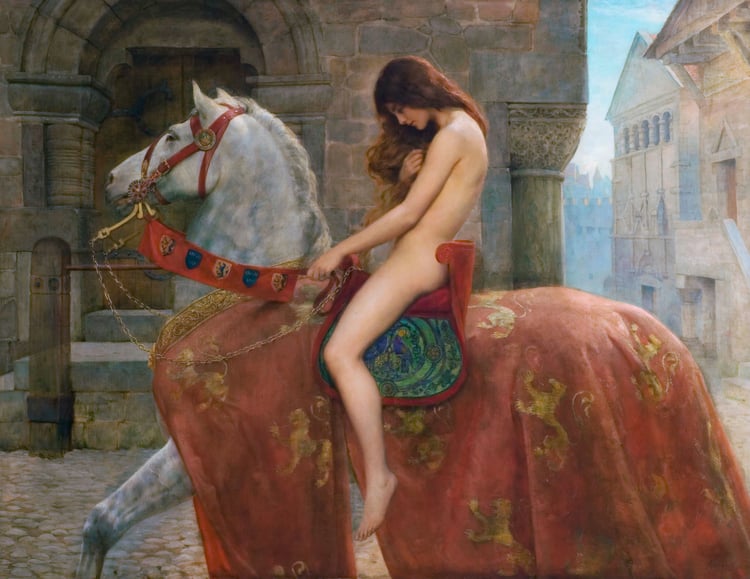
John Collier
John Collier (1850-1934) was a British painter of the late 19th and early 20th centuries who was known for his versatile works, which encompassed a range of genres and styles.
Biography:
- Collier was born on January 27, 1850, in London, England.
- He studied art at the Slade School of Fine Art in London and later in Munich.
- Collier developed a personal style influenced by realism and a penchant for mythological and historical subjects.
- Besides his artistic pursuits, Collier was also a writer and essayist, contributing essays on art and literature.
- He was a successful portrait painter, valued for his ability to capture the personality of his subjects.
- Collier was a member of the Royal Academy of Arts and was knighted in 1920.
- He passed away on April 11, 1934, in London.
Major Works:
- "Lilith" (1887) - This painting depicts a representation of the mythological figure Lilith and is one of Collier's most famous works.
- "The Death of Cleopatra" (1890) - This painting portrays the legendary Egyptian queen Cleopatra in a dramatic moment of her life.
- Portrait of Thomas Hardy (1893) - Collier painted the famous writer Thomas Hardy in one of his most renowned portraits.
- "The Prodigal Daughter" (1903) - Another of his mythological depictions, representing the return of the lost daughter from the biblical parable of the prodigal son.
- "Queen Guinevere's Maying" (1900) - A painting depicting a scene from the Arthurian legend, showing Queen Guinevere and her ladies dancing in May.
Collier's works are known for their technical finesse and rich symbolic content, earning him a significant place in British art history.