Childe Hassam
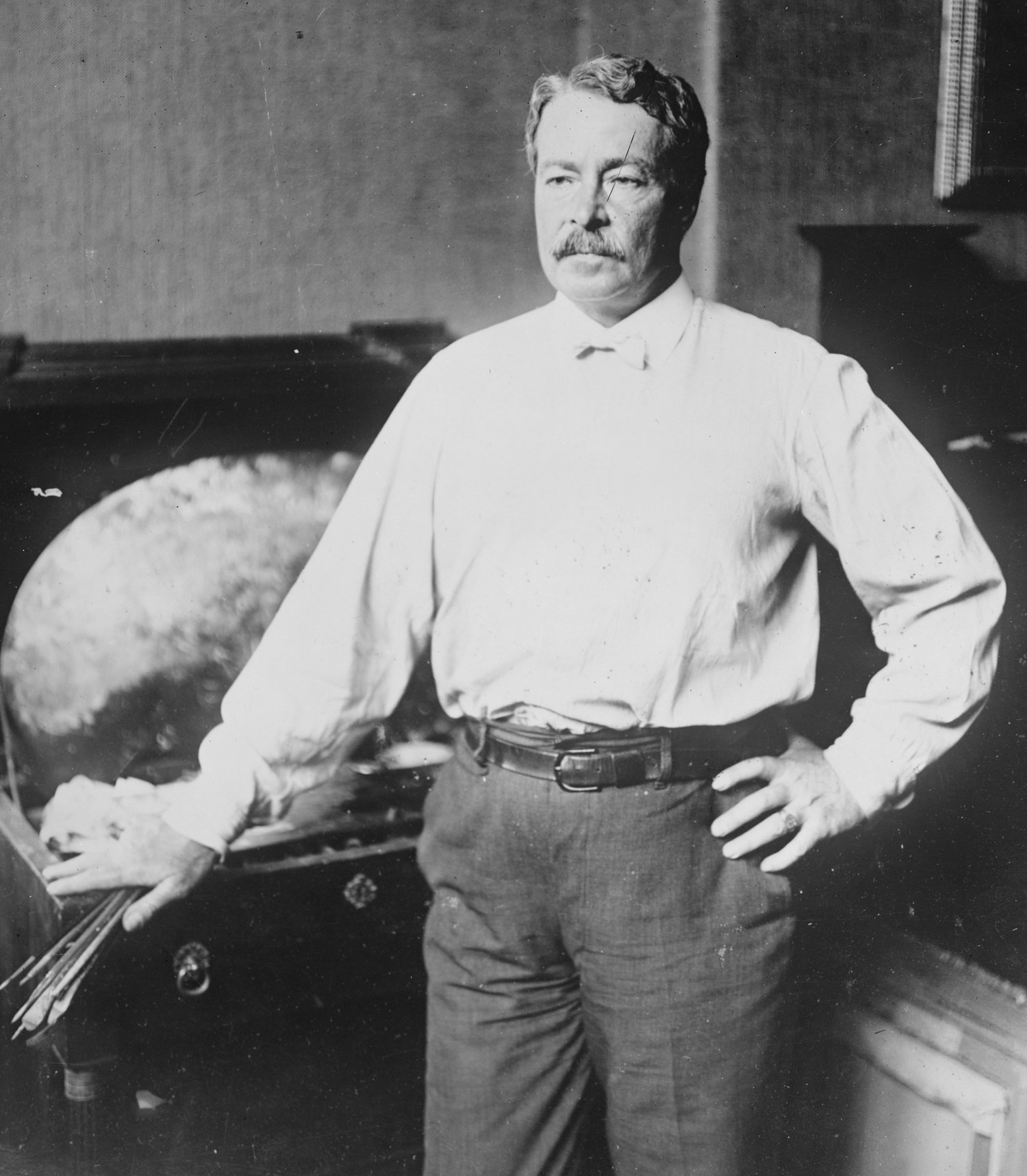
Childe Hassam (1859–1935) was an American painter and one of the leading figures of American Impressionism. Born in Dorchester, Massachusetts, he began his artistic career as an illustrator before establishing himself as a successful painter. His travels to Europe, particularly his studies in Paris, introduced him to French Impressionism and significantly influenced his artistic development.
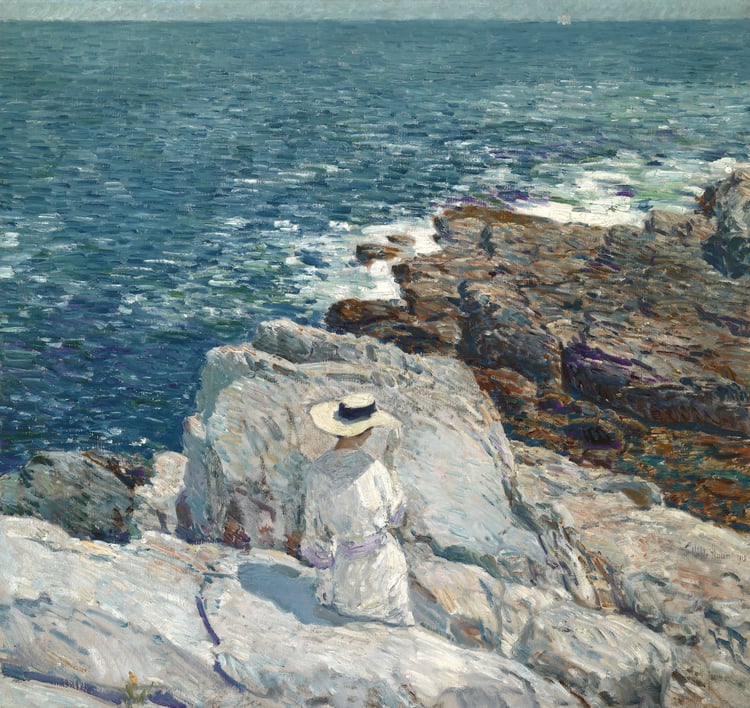
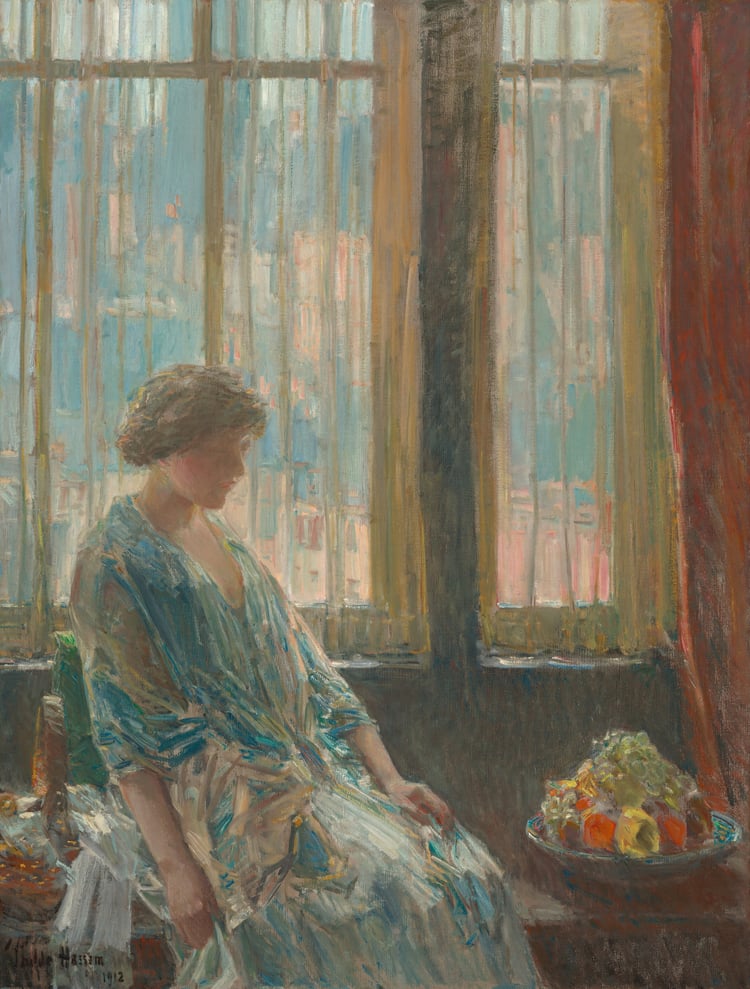
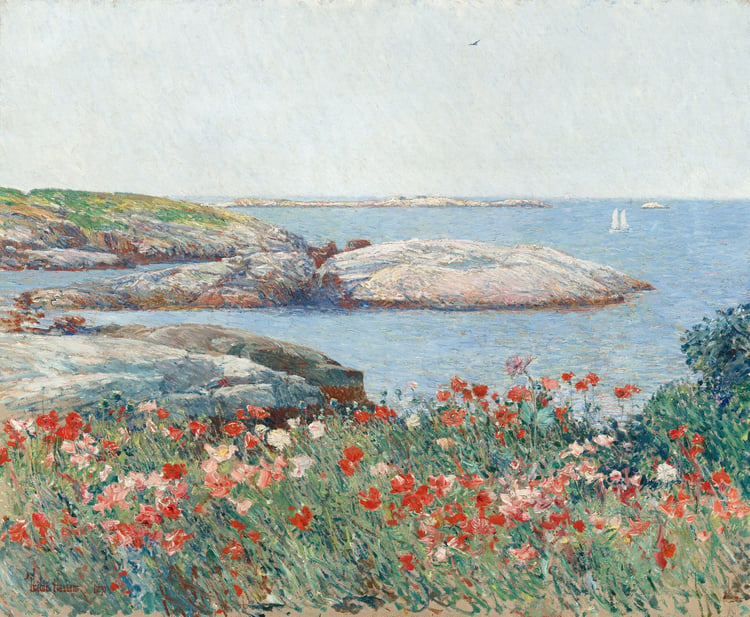
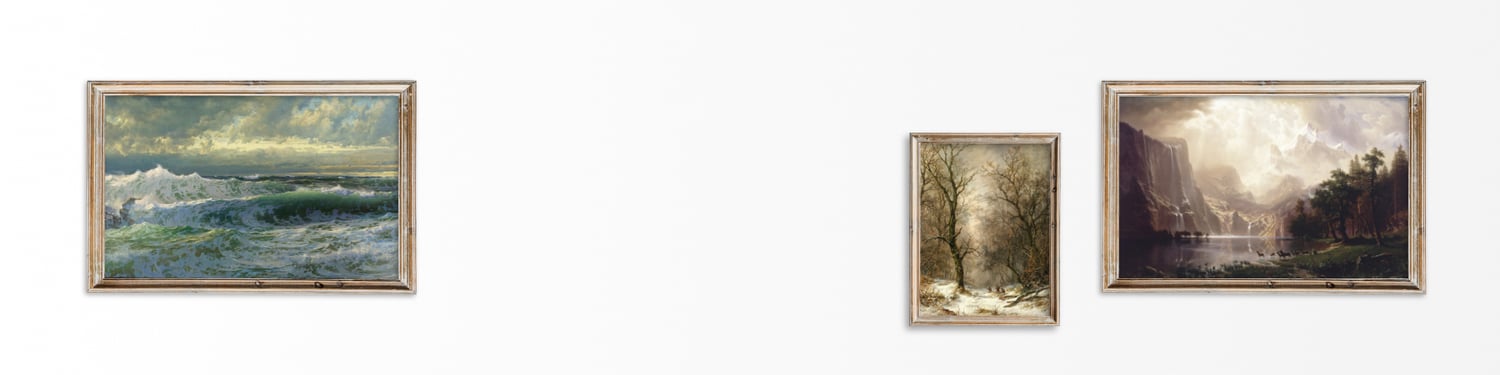
Hassam became renowned for his vibrant depictions of urban life, picturesque landscapes, gardens, and coastal scenery. His paintings frequently capture the bustling streets of New York and Boston, as well as the peaceful beauty of New England's countryside. His distinctive style is characterized by luminous colors, broken brushwork, and a remarkable sensitivity to natural light and atmosphere.
Unlike many European Impressionists, Hassam combined spontaneous brushwork with carefully structured compositions, creating a distinctive interpretation of modern American life. He was particularly fascinated by the changing effects of sunlight, seasonal transformations, and the interplay between architecture and nature.
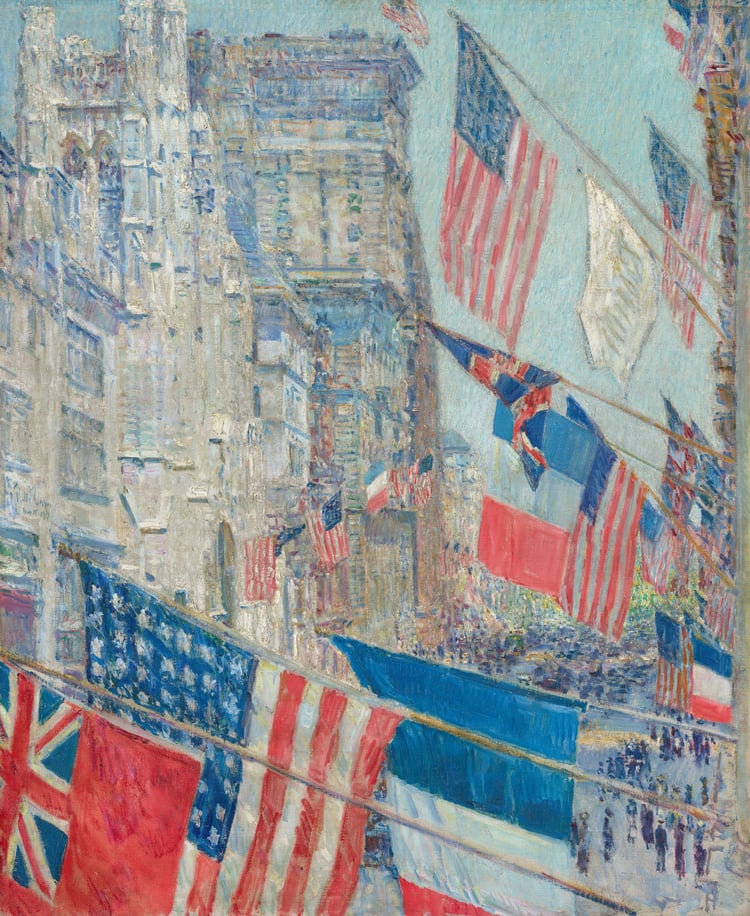
Hassam was a founding member of The Ten American Painters, an influential group established in 1898 to promote artistic independence and Impressionist painting in the United States. His celebrated flag paintings, inspired by patriotic displays along New York's Fifth Avenue during World War I, became among his most recognizable artistic achievements.
Throughout his career, Hassam remained dedicated to capturing the beauty of familiar surroundings, transforming ordinary scenes into luminous and atmospheric compositions.
Today, he is remembered as a pioneer of American Impressionism whose artistic vision helped establish the movement's distinctive identity in the United States.