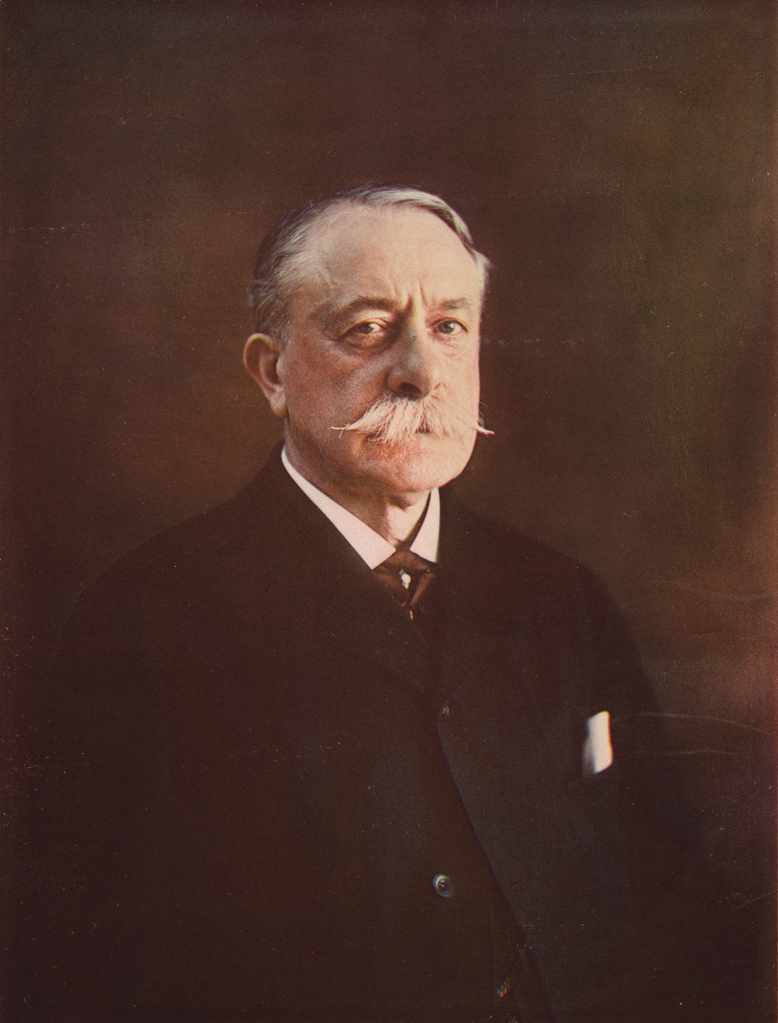
Albert Bierstadt
Albert Bierstadt was born on January 7, 1830, in Solingen, Germany, and emigrated to the United States with his family when he was just two years old. They settled in New Bedford, Massachusetts. Bierstadt showed a keen interest in art early on and returned to Germany in 1853 to study at the Düsseldorf School of Painting. There, he was heavily influenced by the detailed and precise style of the Düsseldorf School.
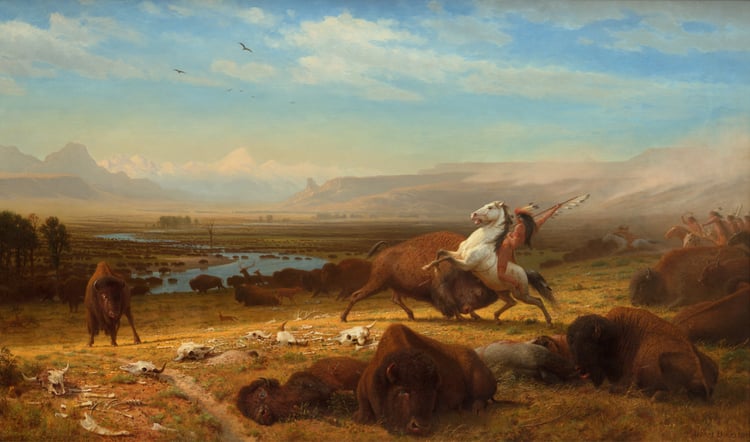
Upon returning to the United States, Bierstadt began exploring the American West, which was still largely unknown and unexplored at the time. He joined several expeditions and gathered numerous sketches and impressions during these travels, which he later transformed into large-scale paintings in his studio.
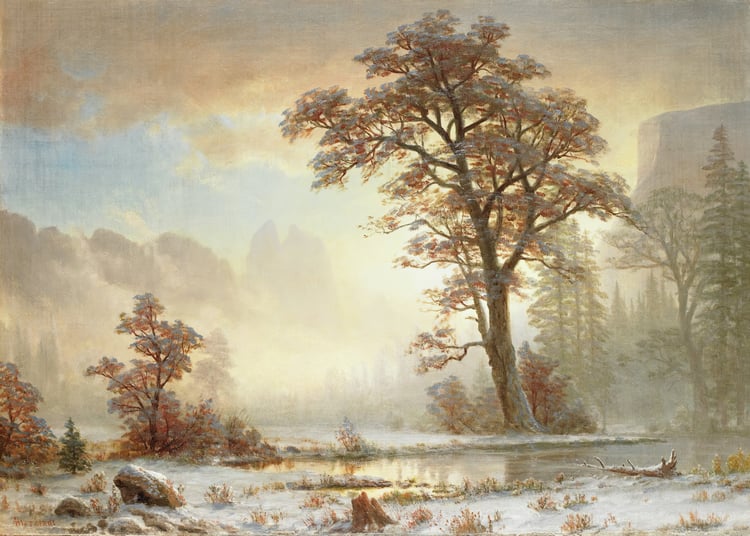
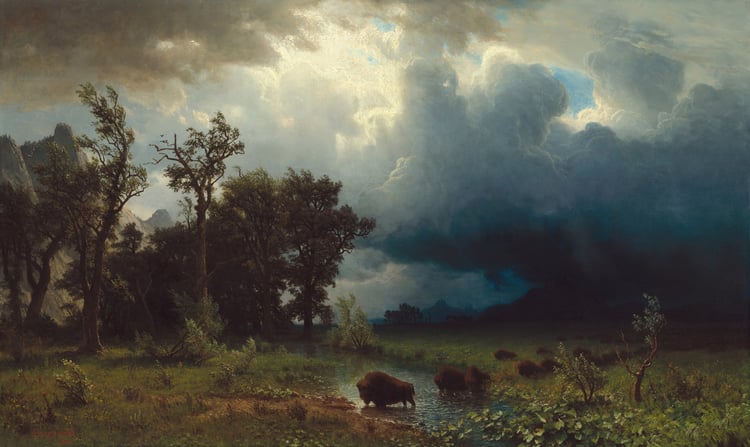
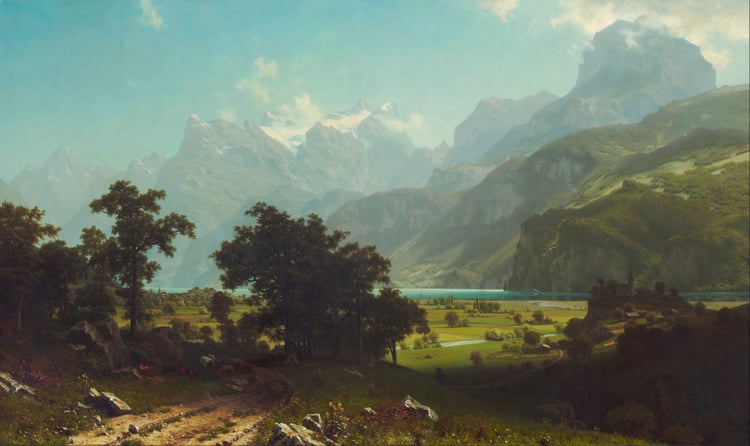
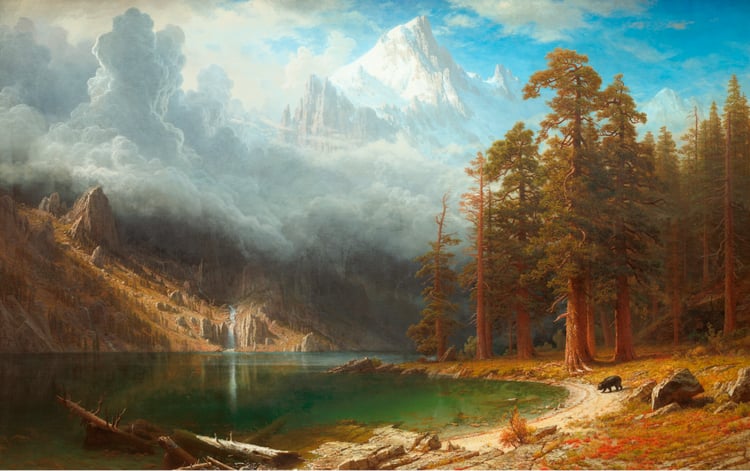
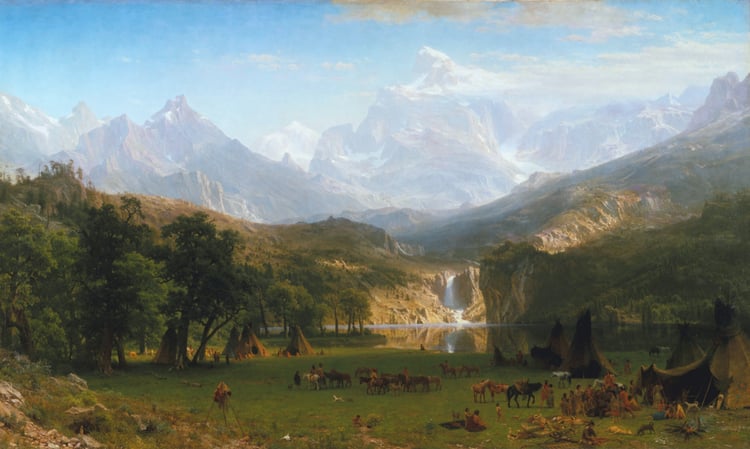
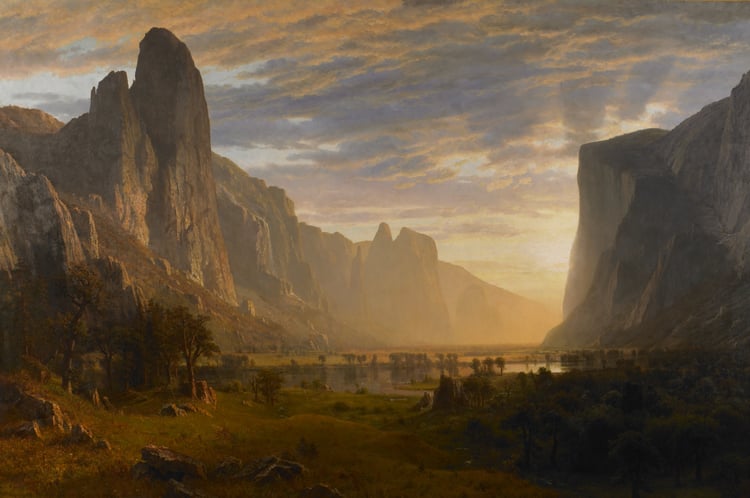
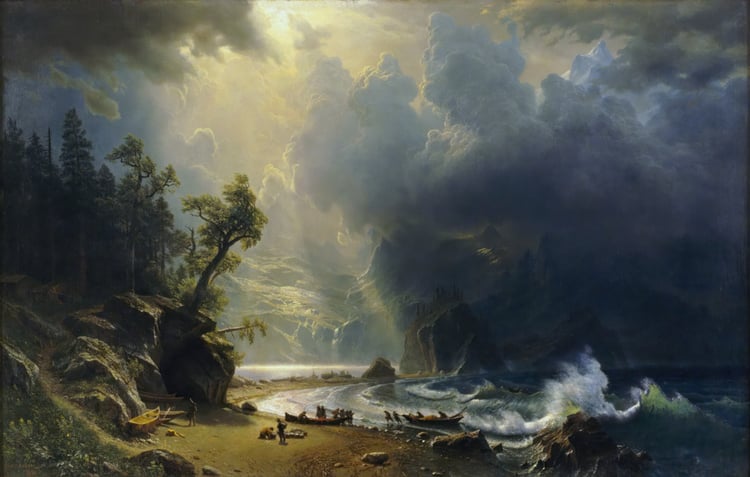
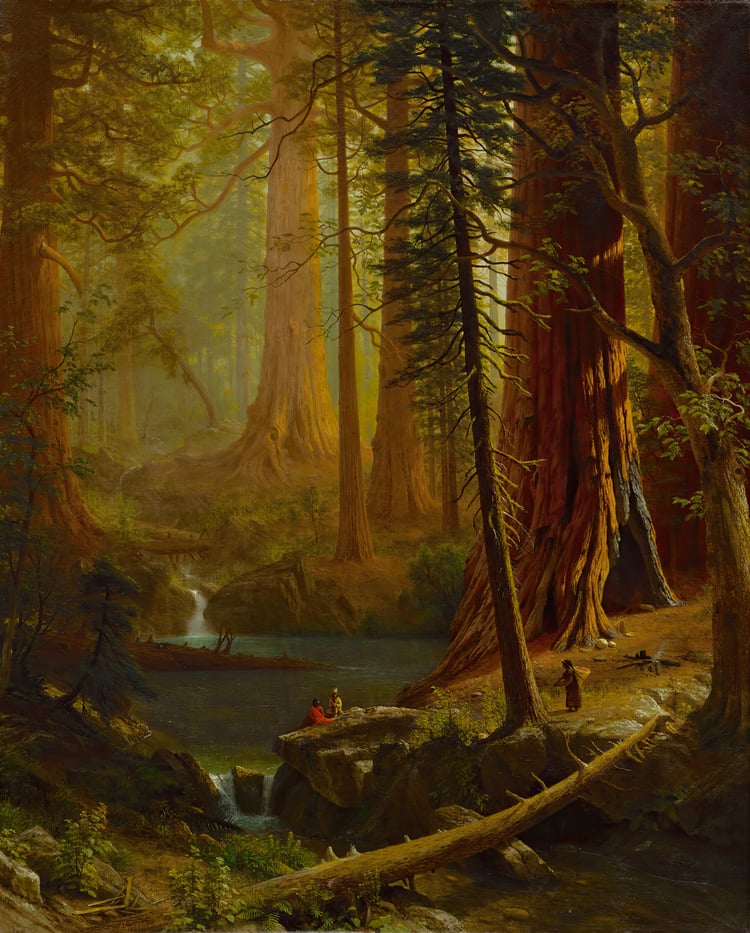
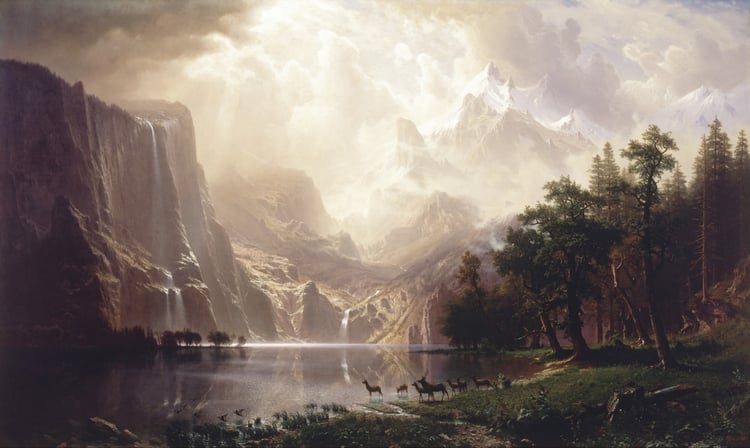
Bierstadt's work is renowned for its dramatic and meticulously detailed depictions of the American landscape. His style is often associated with the Hudson River School and Luminism. He masterfully used light and shadow to highlight the grandeur and beauty of nature. His paintings are characterized by a romanticized elevation and almost photographic precision, aiming to convey the majesty and sublimity of the American wilderness to the viewer.
During his lifetime, Bierstadt was a very successful and celebrated artist, though his works were later often criticized as being too romantic and idealized. He passed away on February 18, 1902, in New York City, but his work remains an essential part of American art history, offering a fascinating glimpse into the 19th-century vision of the American West.