

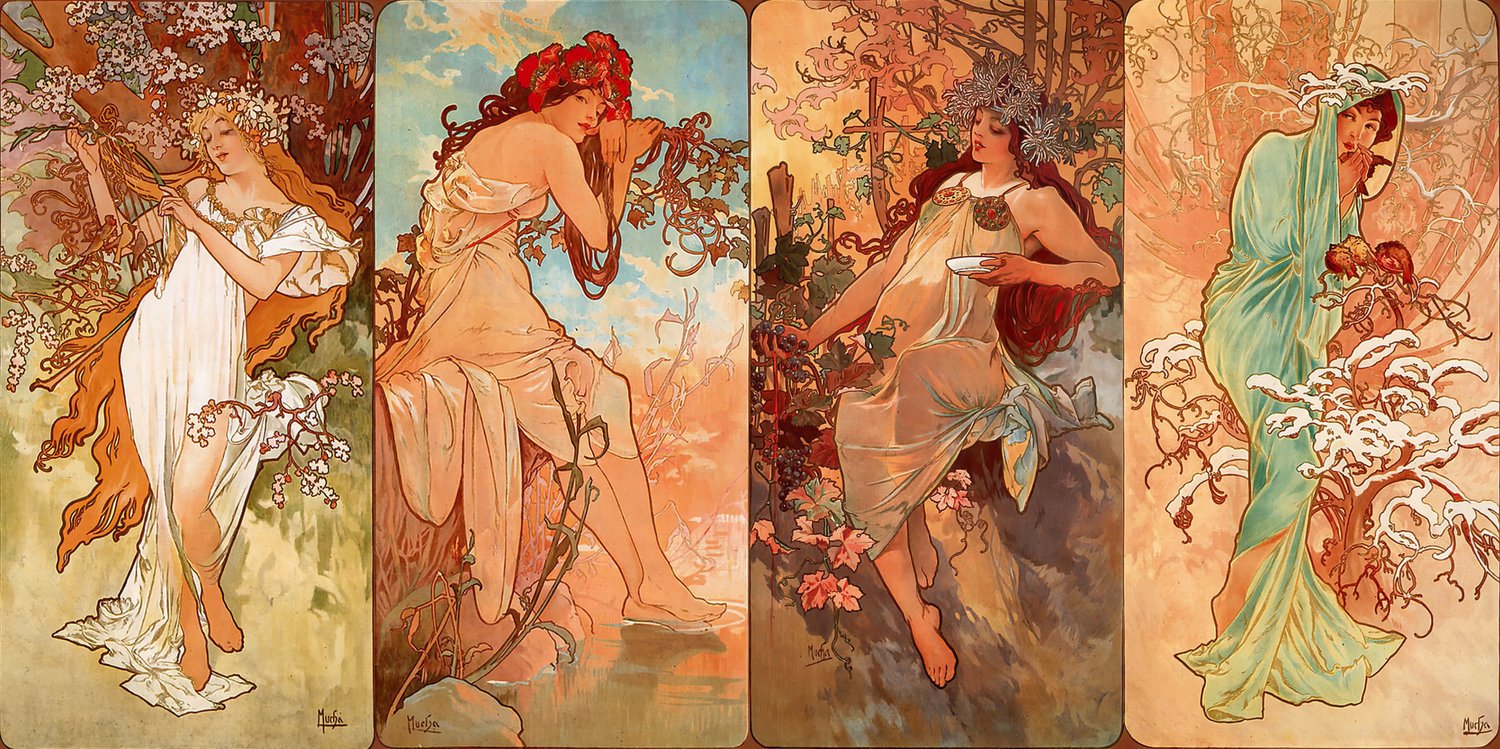
Art Nouveau is an art movement that flourished at the turn of the 19th to the 20th century, roughly between 1890 and 1910. It found its inspiration in earlier influences, with William Morris and the "Arts and Crafts" movement of the mid-19th century serving as important precursors. The name Art Nouveau derives from the Munich-based illustrated cultural magazine "Jugend" (Youth), first published in 1896, which promoted the aesthetics and philosophy of this new artistic style.
Art Nouveau manifested differently across various European countries, resulting in different names for the movement. In France, it was called Art Nouveau, while in Austria, it was known as Secessionsstil or Reformstil. In England, it was referred to as Modern Style, in Italy as Stile Floreale or Liberty, and in Russia simply as Modern.
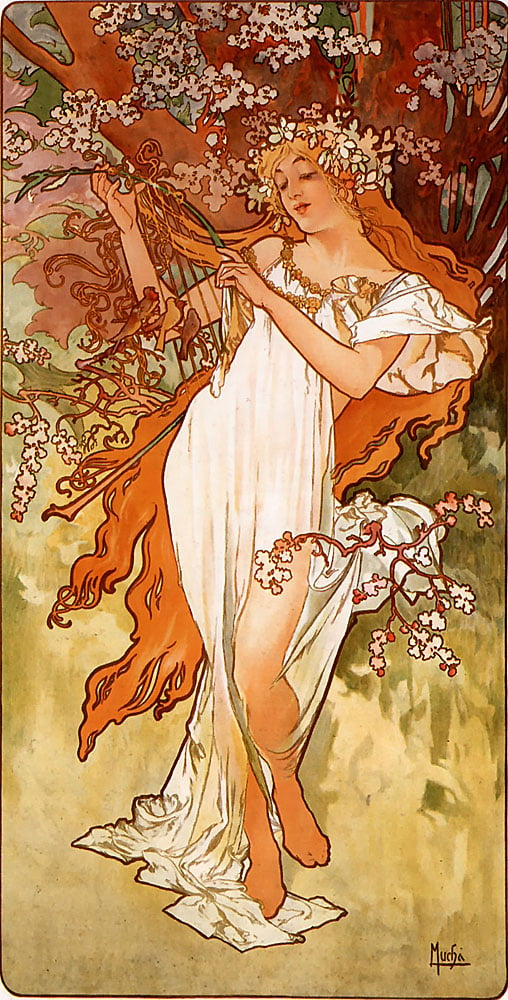
Spring by Alfons Mucha (1896)
The Artistic Vision of Art Nouveau
Artists of the Art Nouveau movement, particularly painters, sought to reconnect humanity and nature, aiming to harmonize people's surroundings with the beauty of the natural world. They envisioned a style that integrated art into everyday life, making beauty accessible to all. Their goal was to unify architecture, craftsmanship, and fine arts into a cohesive aesthetic experience, creating a "Gesamtkunstwerk" or total work of art. This unification was intended as a reaction to the rapid industrialization of the time, which often led to cheap, mass-produced goods lacking in artistic value.
Recognizing Art Nouveau Works
Nature was the principal source of inspiration for the artists of Art Nouveau. Their designs were rooted in natural forms and motifs, leading to a new aesthetic language. Their works emphasized the decoration of surfaces, the use of precious materials, and elegant framing.
Characteristic of the style were floral, ornamental abstractions, flowing decorative lines, and geometric forms. Popular motifs included animals, mythological figures, and most notably, representations of women. These female figures were often portrayed with delicate complexions, flowing hair adorned with flowers, and brightly colored, radiant garments, embodying ideals of harmony and beauty.
Art Nouveau in Various Art Forms
Art Nouveau spanned across all artistic disciplines. It found expression in painting and sculpture, furniture design and architecture, as well as in the production of jewelry, glassware, and other crafts.
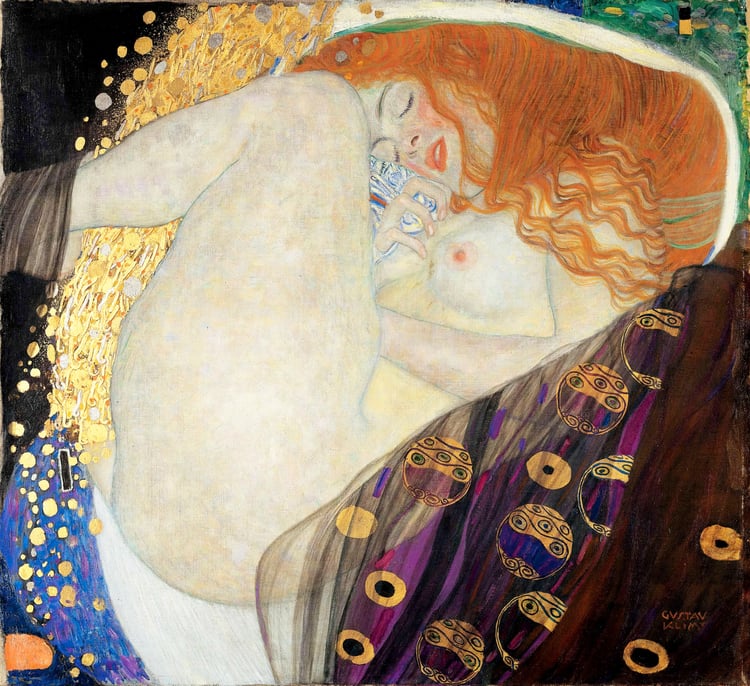
Danaë by Gustav Klimt (1907)
Prominent Art Nouveau Artists
Some of the most renowned artists of the Art Nouveau movement included Alfons Mucha, Gustav Klimt, Henry van de Velde, René Lalique, Aubrey Beardsley, Antoni Gaudí, Otto Wagner, Peter Carl Fabergé, and Louis Comfort Tiffany. Each of these figures contributed to the movement in unique ways, shaping its legacy across different mediums.

Comments ()