Stacks of Wheat End of Summer by Claude Monet
Stacks of Wheat End of Summer by Claude Monet (1891)
Resolution: 6884 × 4068 px
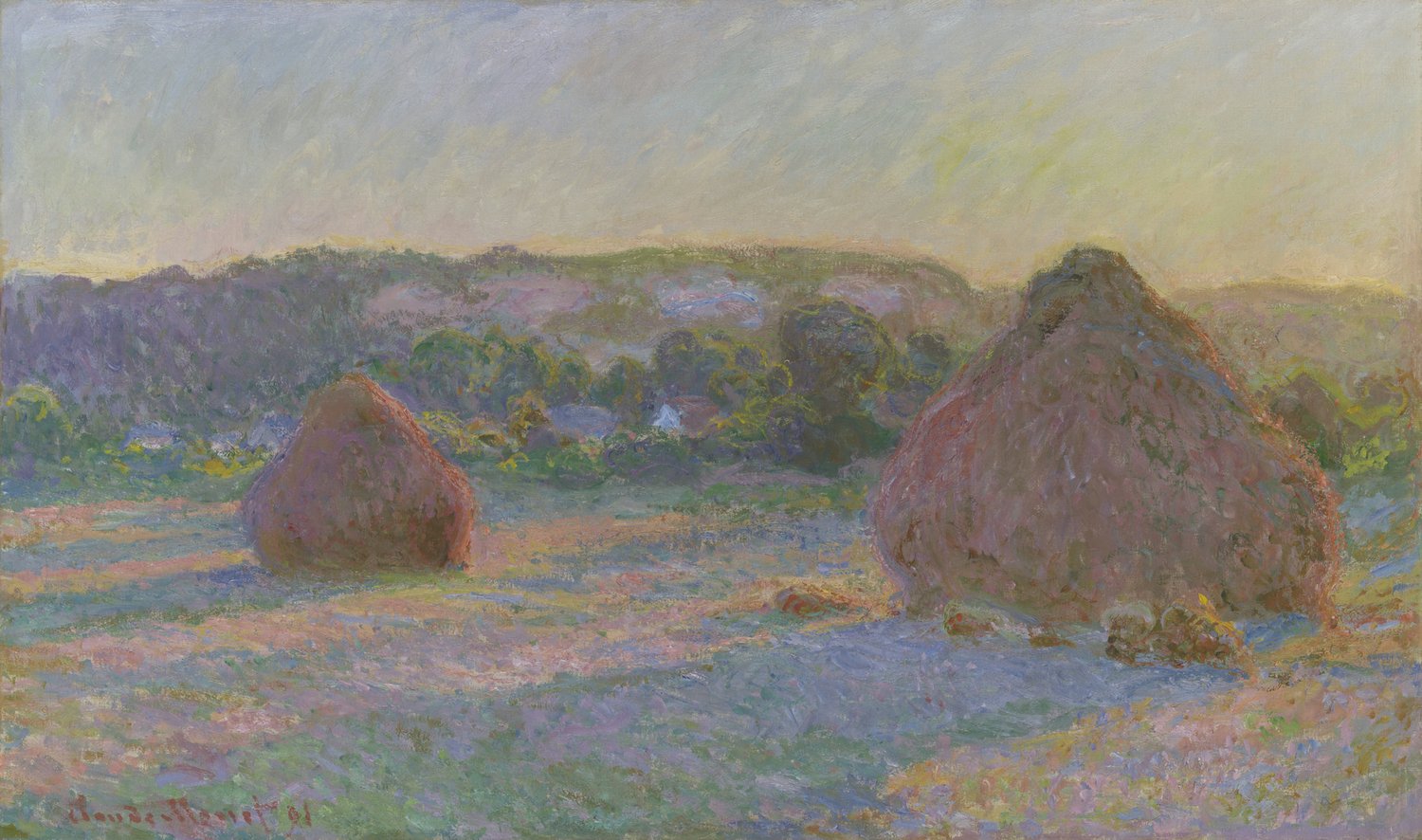
Two stacks of wheat occupy a late-summer field, set against the dense gardens, trees and distant slopes of Giverny. The larger stack rises at the right with a broad, shadowed body, while its smaller companion sits farther back at the left. Between them, paths of cool color lead toward clustered roofs and foliage, and a pale sky opens above the horizon. The familiar farm structures feel embedded in a living landscape at the moment when summer abundance begins to turn toward autumn.
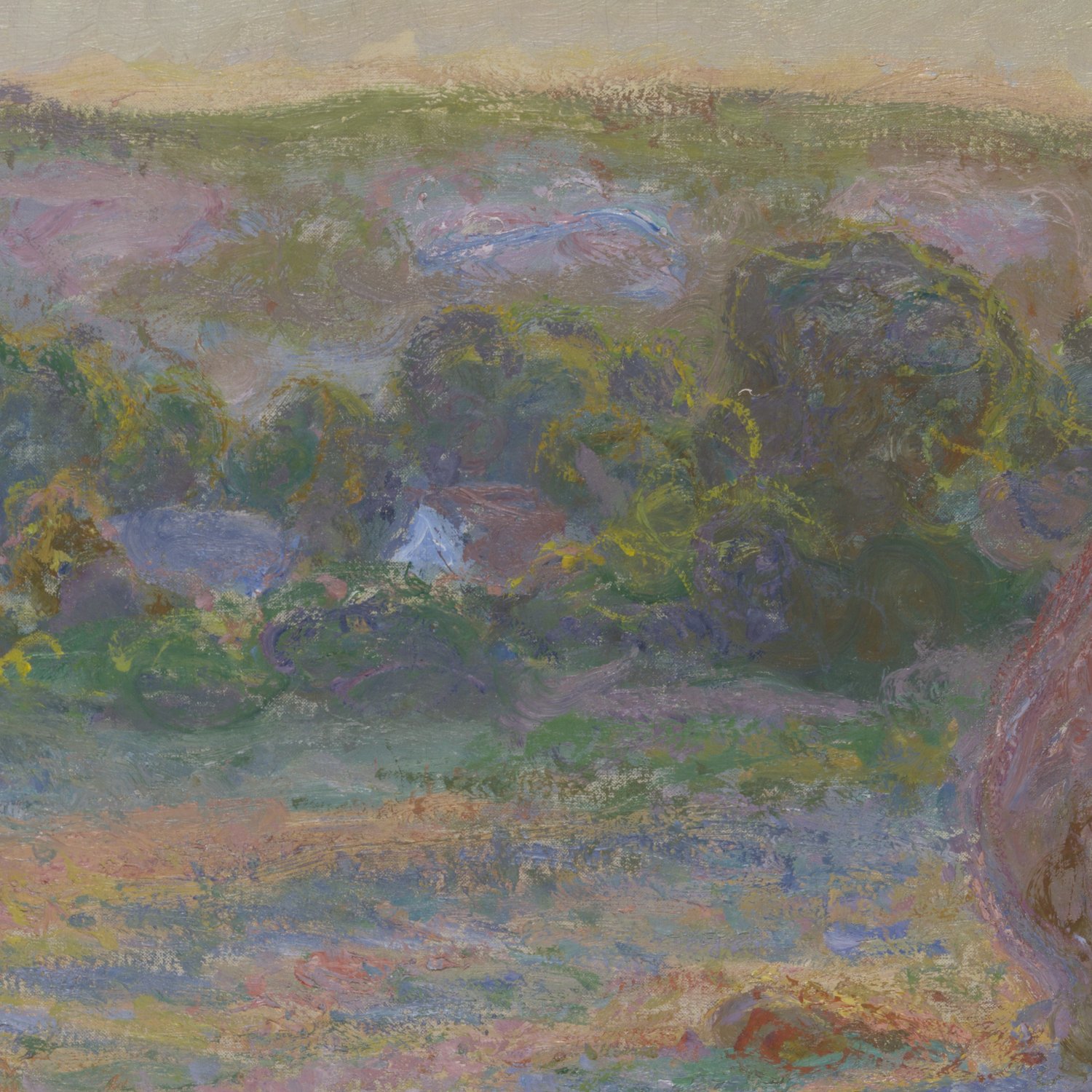
Monet balances the unequal stacks across a wide horizontal canvas, using the open interval between them to reveal the village and layered countryside beyond. Warm coral, russet and muted pink model the straw, but these notes are constantly interrupted by violet, turquoise and blue-green shadows. Across the field, touches of mint, lavender, peach and yellow flicker through one another, while vigorous curved strokes knit trees, roofs and hills into a continuous atmospheric surface. The light is broad and diffused, softening outlines without erasing the distinct weight of the two stacks.
Stacks of Wheat (End of Summer), painted in 1890–91 and signed “Claude Monet 91,” forms part of Monet’s celebrated Giverny series. By painting the same agricultural structures repeatedly, he could register minute shifts in illumination, temperature and seasonal color while holding the underlying motif almost constant. This version is especially expansive: the stacks are not isolated monuments but elements within a fertile, inhabited countryside, making the end of summer visible through the fullness of the vegetation and the complex warmth of the field.