Cornish Landscape by Charles A. Platt
Cornish Landscape by Charles A. Platt (1919)
Resolution: 5839 × 4526 px
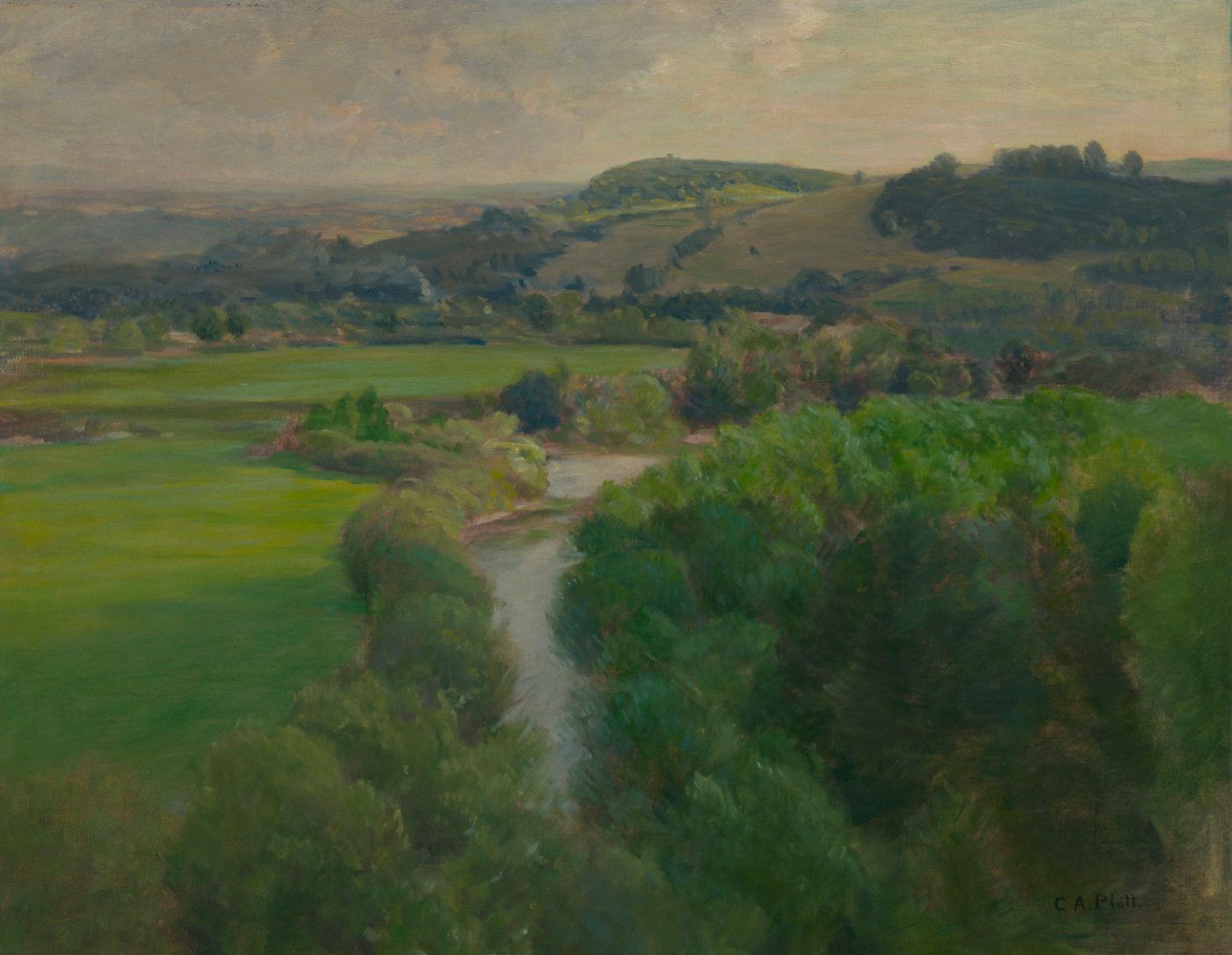
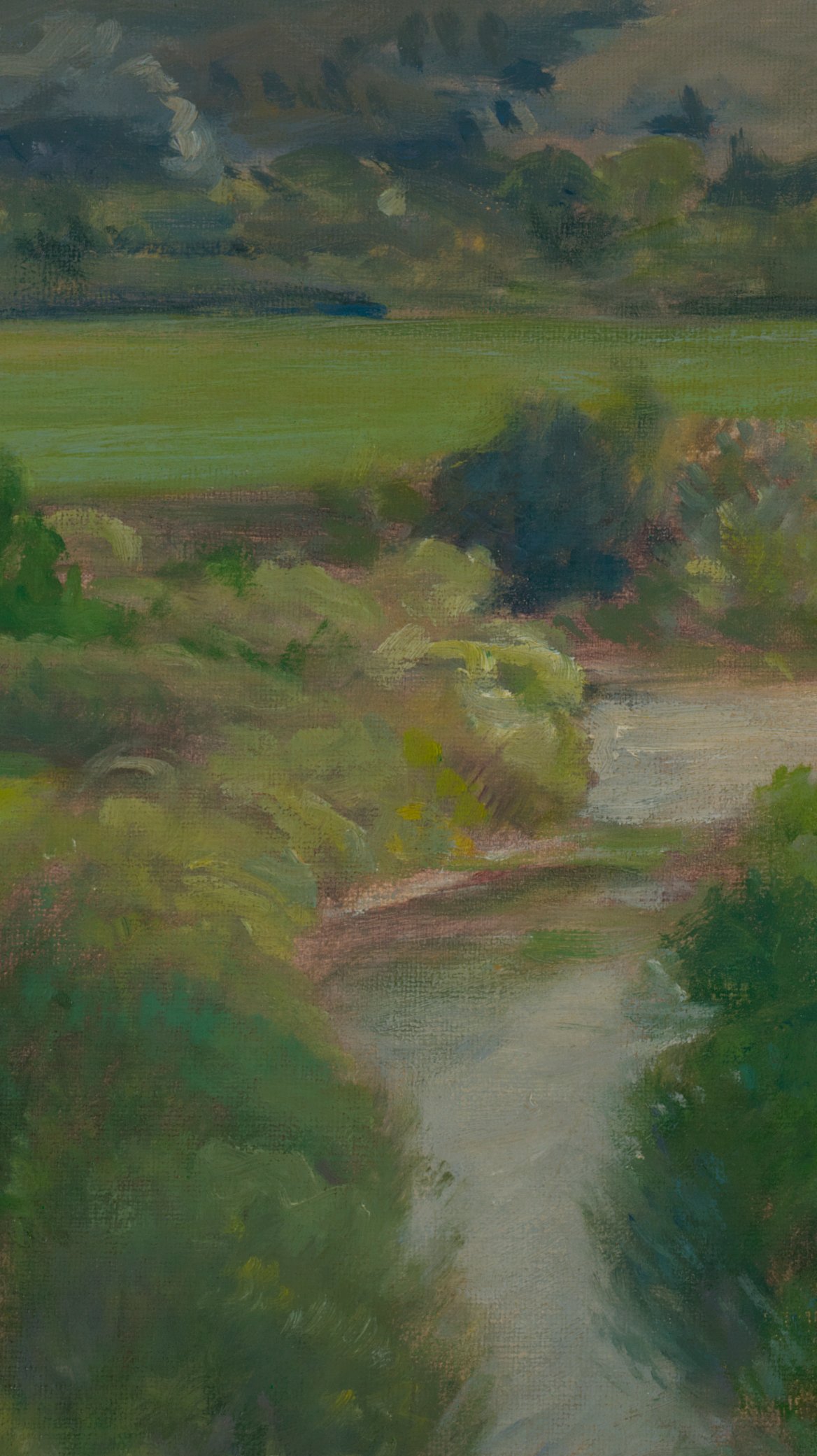
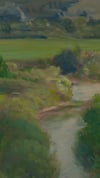
Charles A. Platt’s Cornish Landscape opens onto an expansive river landscape in Cornwall. In the right foreground, dense deciduous trees rise in rich forest green, while a bright green meadow stretches to the left. A narrow river winds from the center of the composition toward the left through the valley, its silvery-gray water reflecting the cloudy sky. In the background, gentle rolling hills rise in the distance, partly wooded and partly open, gradually dissolving into atmospheric haze.
Platt employs a classical division of foreground, middle ground, and background. The river serves as a leading line, drawing the viewer’s eye deep into the landscape. The composition is asymmetrical—the dense mass of trees on the right is balanced by the bright meadow on the left and the distant hills beyond.
The color palette is dominated by shades of green: deep forest green in the foreground, fresh meadow green to the left, and muted olive and gray-green tones in the distance. These are complemented by neutral earth tones—gray, beige, and ochre. The sky is rendered in subtle pastels: pale gray, blue, and a hint of warm yellow. There are no vivid colors; everything is subdued, harmonious, and softly blended, reflecting a Tonalist sensibility.
The light is diffuse, as on an overcast day, with no harsh shadows. It appears to come from the upper left, illuminating the meadow most strongly. The water catches the light of the sky, giving it an almost glass-like quality. Atmospheric perspective causes the distant hills to appear lighter and more bluish as they recede.
The mood is peaceful, idyllic, and pastoral. There are no people or animals—the natural world seems completely still. It is an image of an untouched rural idyll, made contemplative and almost melancholic by its muted colors and soft light. A moment of perfect stillness.