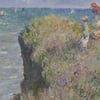
Cliff Walk at Pourville by Claude Monet
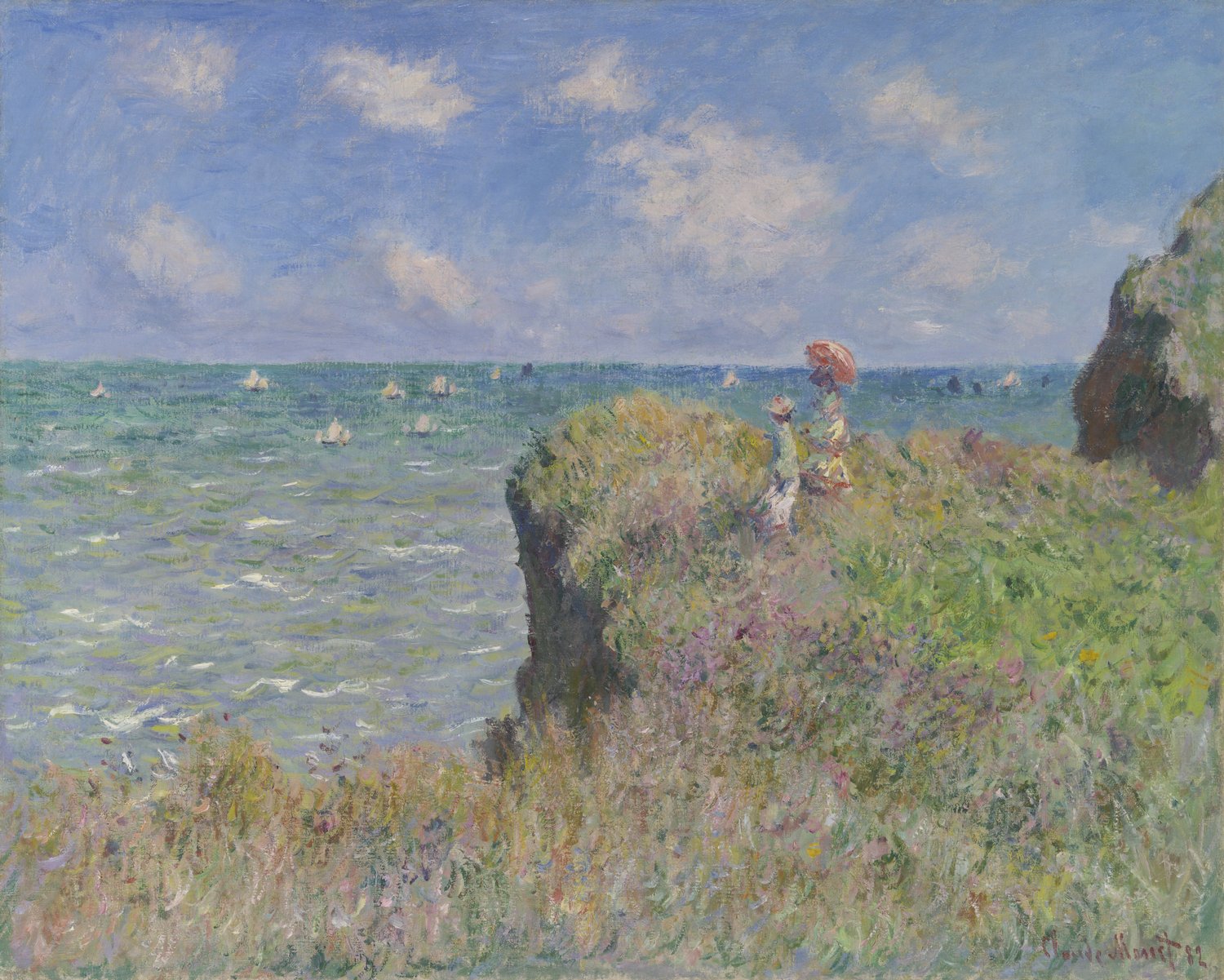
Cliff Walk at Pourville by Claude Monet (1882)
Resolution: 6356 × 5090 px
Claude Monet’s Cliff Walk at Pourville opens onto a sunlit stretch of the Normandy coast, where two figures pause above the English Channel. The high viewpoint sends the grassy bluff diagonally across the composition, balancing the open sweep of blue-green water and the cloud-filled sky. Small sailing boats punctuate the distant horizon, while touches of rose, yellow, violet, and fresh green animate the windblown vegetation.
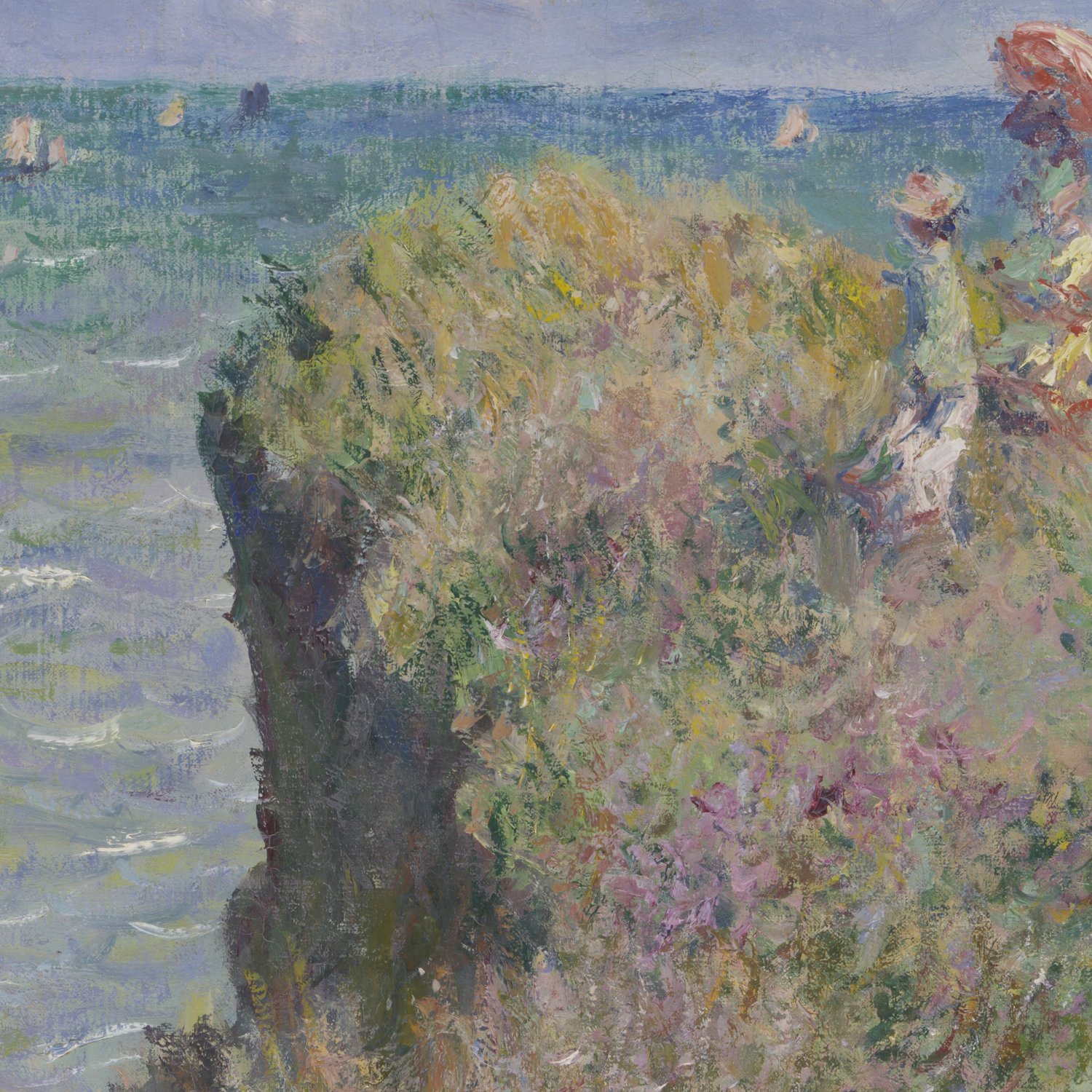
Monet builds the scene with broken, energetic brushwork rather than sharply bounded forms. The same flickering strokes that describe flowers and grass also shape the moving sea, bright air, and the figures’ fluttering clothes. This visual continuity makes weather and motion feel inseparable from the people experiencing the landscape. The close detail image reveals layered color, visible canvas texture, and rapid marks that turn a coastal view into an immediate record of changing light.
Painted during Monet’s 1882 campaign on the Normandy coast, the work is significant for the way it integrates human figures without disrupting the unity of the landscape. The Art Institute of Chicago notes that Monet used related strokes and hues across clothing, sea, and vegetation, addressing a central Impressionist challenge: preserving the sensation of a fleeting outdoor moment while maintaining compositional balance. The result combines leisure, observation, wind, and light in one of Monet’s most vivid coastal scenes.