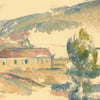
Montagne Sainte-Victoire, from near Gardanne by Paul Cézanne
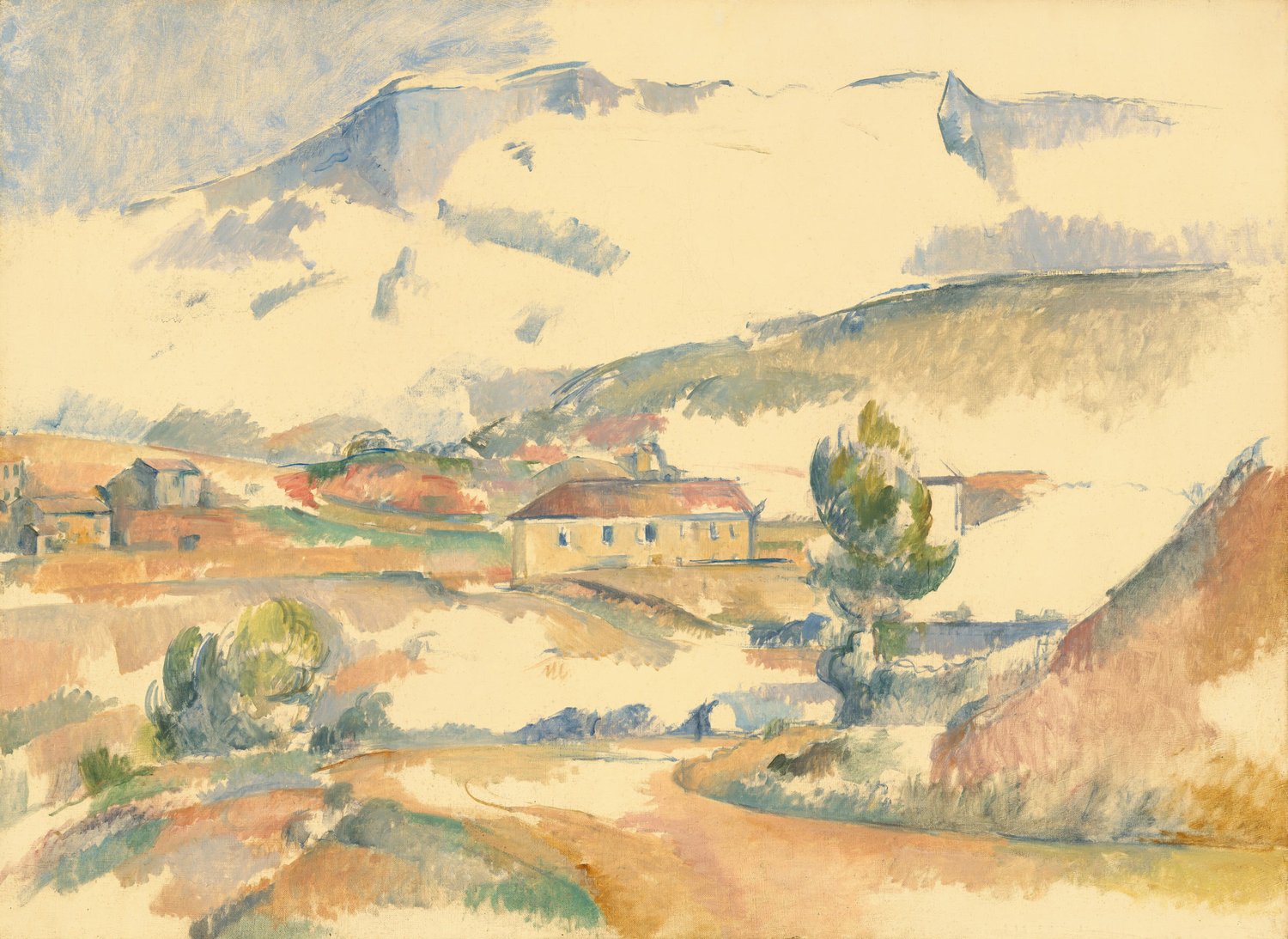
Montagne Sainte-Victoire, from near Gardanne by Paul Cézanne (c. 1887)
Resolution: 4506 × 3286 px
Montagne Sainte-Victoire, from near Gardanne presents Paul Cézanne’s celebrated Provençal landmark rising above a quiet settlement of pale houses, terracotta roofs, trees, and gently layered fields. Cool blue and violet strokes define the distant mountain, while ochre, green, and muted red passages organize the foreground into a measured sequence of planes.
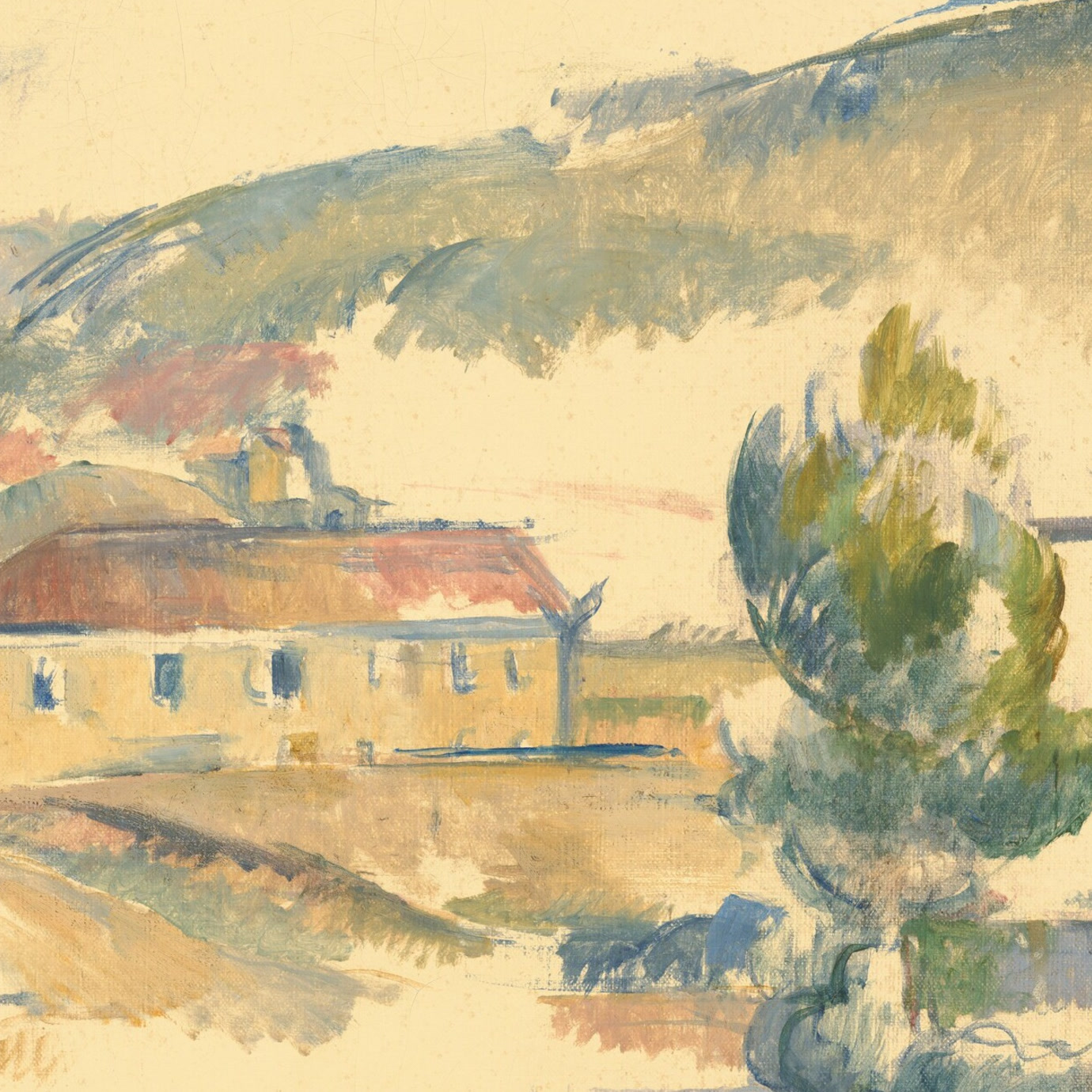
Painted around 1887, the landscape is deliberately open in appearance. Large areas of the pale ground remain visible between touches of color, allowing air and light to become active parts of the composition. Cézanne balances the mountain’s broad horizontal mass with the vertical tree and the compact geometry of the buildings below.
The work is significant because it demonstrates Cézanne’s transformation of observed nature into a stable pictorial structure. Instead of describing every surface, he builds depth through carefully related colors and directional brushstrokes. This method—simultaneously faithful to the landscape and independent of literal detail—became fundamental to the development of modern painting and deeply influenced later artists seeking new ways to represent space.
This high-resolution artwork preserves the delicate open brushwork, visible ground, subtle color transitions, and architectural rhythm of Cézanne’s distinctive view of Sainte-Victoire.