
Napoleon Crossing the Alps by Jacques-Louis David
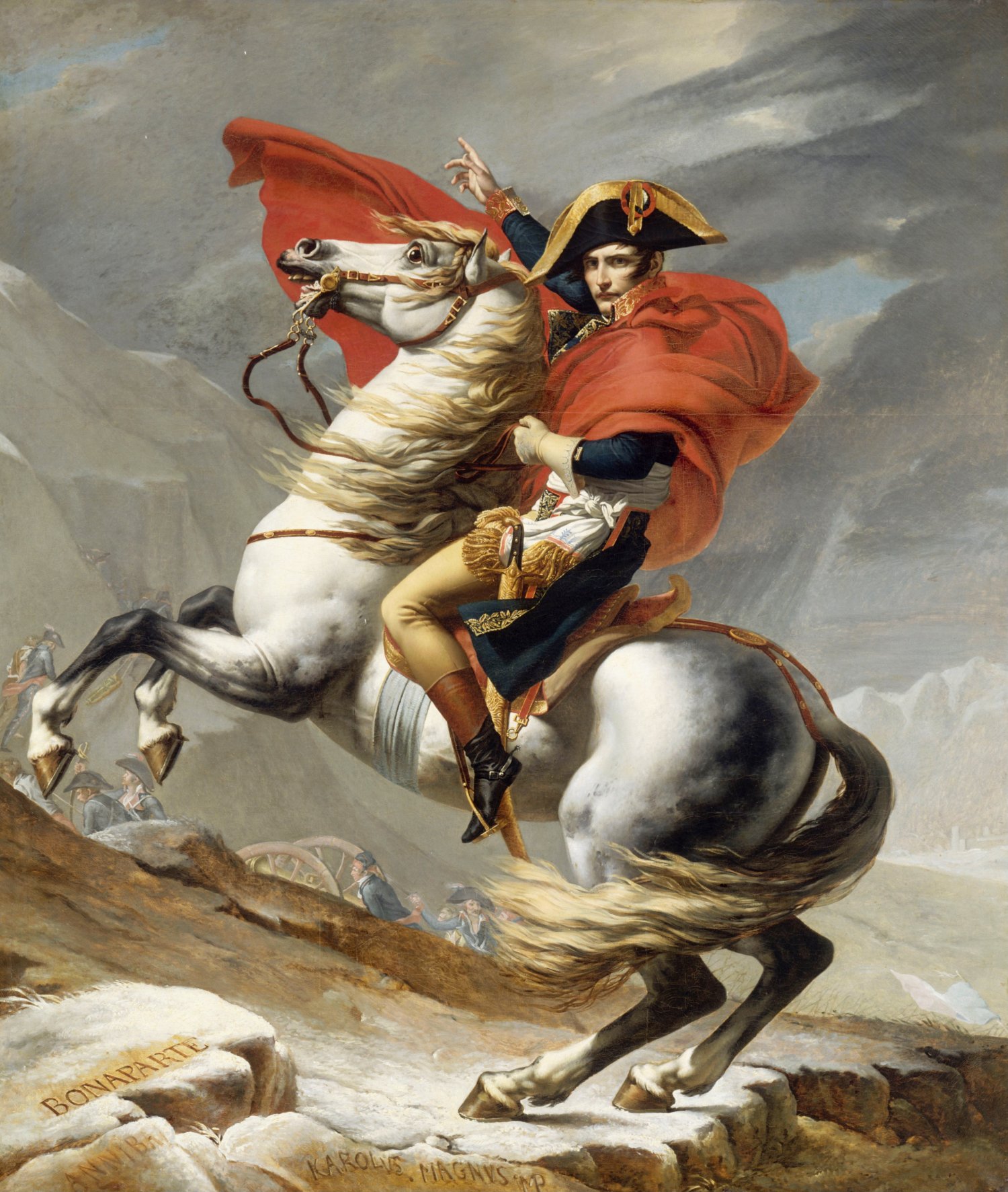
Napoleon Crossing the Alps by Jacques-Louis David (1801)
Resolution: 6768 × 8000 px
This iconic high-resolution digital reproduction presents Jacques-Louis David's celebrated equestrian portrait "Napoleon Crossing the Alps," painted between 1801 and 1805. One of the most recognizable images of Napoleonic propaganda, this heroic composition depicts Emperor Napoleon Bonaparte leading his army across the Great St. Bernard Pass in May 1800 – a daring military maneuver that resulted in a surprise victory against Austrian forces at the Battle of Marengo.
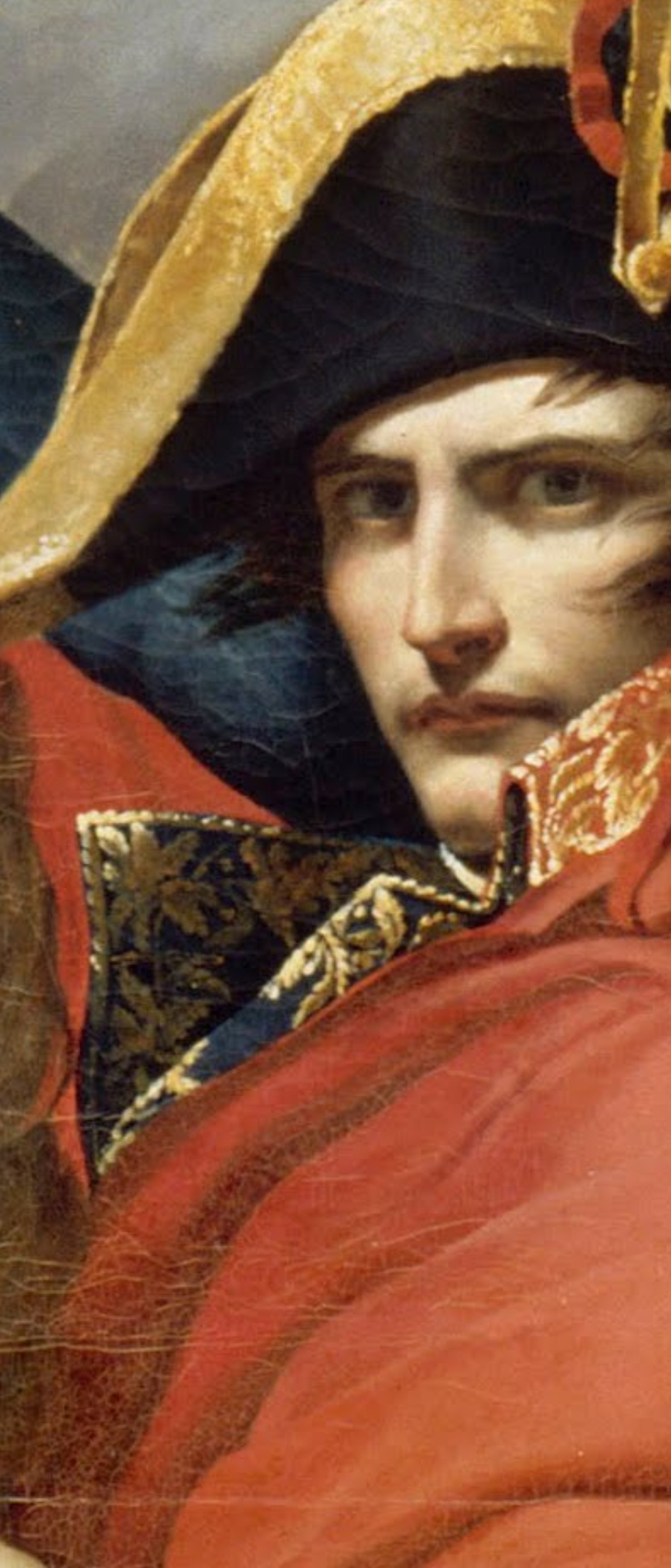
David's neoclassical masterpiece transforms historical fact into legendary iconography. While Napoleon actually crossed on a mule led by a guide, David portrays him astride a powerful rearing charger, cloak billowing dramatically in the alpine wind. The young general points upward toward the summit, embodying determination and destiny. His elaborate uniform, pristine white horse, and flowing red cape create a striking contrast against the stormy mountain landscape. Inscribed on the rocks in the foreground are the names of Hannibal and Charlemagne – legendary leaders who also crossed the Alps – positioning Napoleon within this illustrious lineage. David's polished academic technique, crisp draftsmanship, and carefully orchestrated composition exemplify the neoclassical ideal of heroic grandeur and civic virtue.
This museum-quality digital print preserves the full monumental impact and painterly precision of David's original oil painting. The exceptional 6768 × 8000 pixel resolution ensures that every detail, from Napoleon's commanding gesture to the turbulent sky and rocky terrain, remains sharp and impressive even in large-format reproductions. Perfect for art collectors, history enthusiasts, and admirers of neoclassical painting who seek to bring this timeless symbol of leadership and ambition into their homes or offices.
Ideal for framing and display in studies, libraries, executive offices, or spaces where classical grandeur and historical significance are valued.