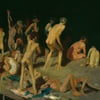
Forty-two Kids by George Bellows
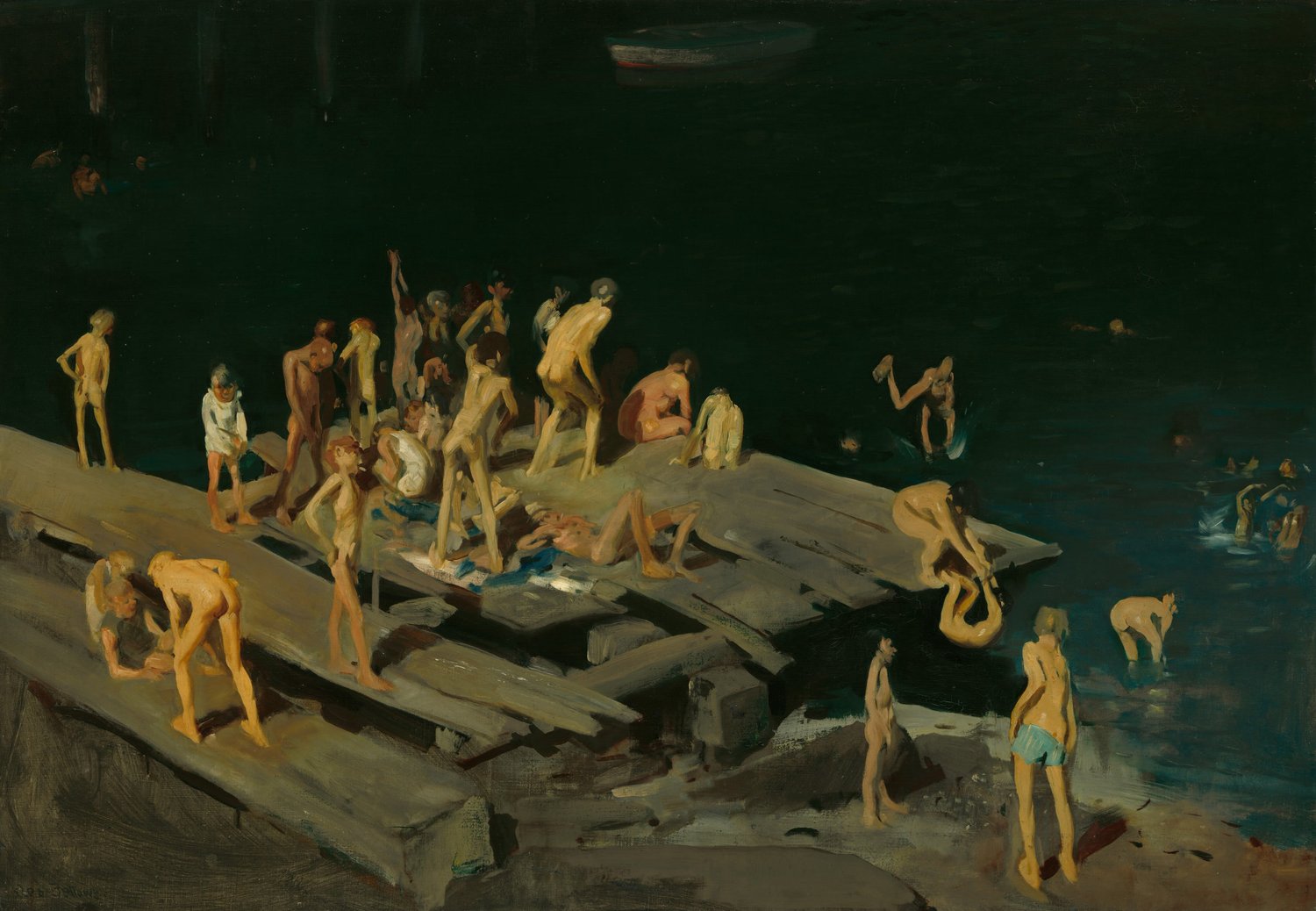
Forty-two Kids by George Bellows (1907)
Resolution: 4506 × 3121 px
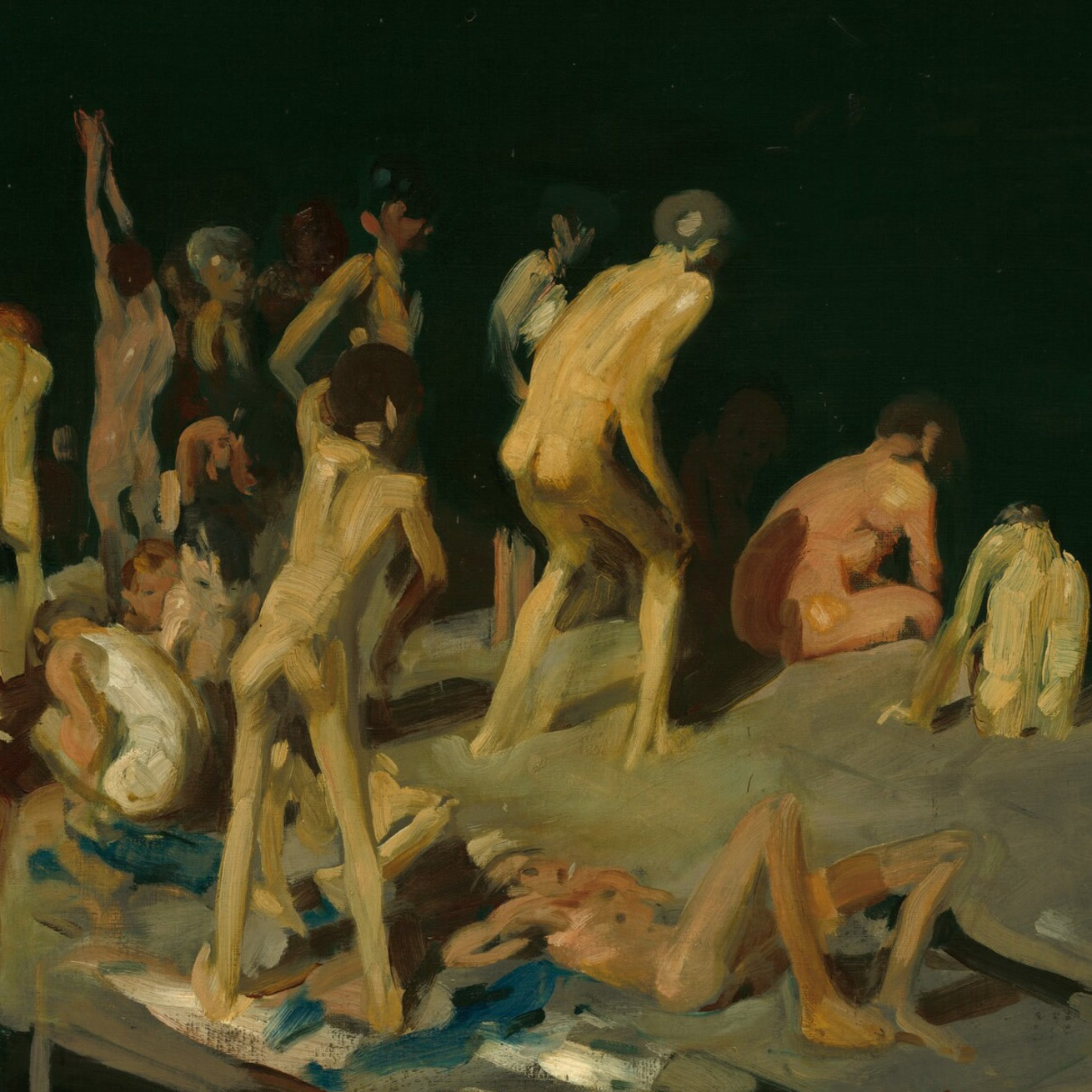
Viewed from above, a rough wooden pier cuts across the dark water of New York’s East River. Dozens of boys stand, sit, dive, swim, and sprawl across the sunlit boards, their bodies described with swift, economical strokes of ochre, cream, rust, and muted blue. The nearly black river isolates the figures and intensifies their movement, while a small boat and scattered swimmers extend the scene into the surrounding water. Bellows turns a crowded moment of summer play into a vigorous pattern of gestures, diagonals, and abrupt contrasts.
Painted in August 1907, Forty-two Kids records the improvised recreation of working-class immigrant children from Manhattan’s Lower East Side. In contemporary slang, “kids” referred to streetwise tenement children, and Bellows presented them with an immediacy rarely granted to such subjects in established American painting. The work became controversial when fears about its nude figures affected a major exhibition prize, yet it soon marked one of the first important sales of Bellows’s career. Its significance lies in combining social observation with the physical energy and direct paint handling associated with the Ashcan School, making modern urban life worthy of ambitious large-scale art.
This high-resolution image is suited to close study of Bellows’s rapid figure painting, crowd composition, tonal contrast, and early New York subjects. Its dynamic waterfront scene makes it especially relevant to collectors of American realism, Ashcan School painting, urban history, social art, and twentieth-century New York imagery.