

The Cornfield by John Constable
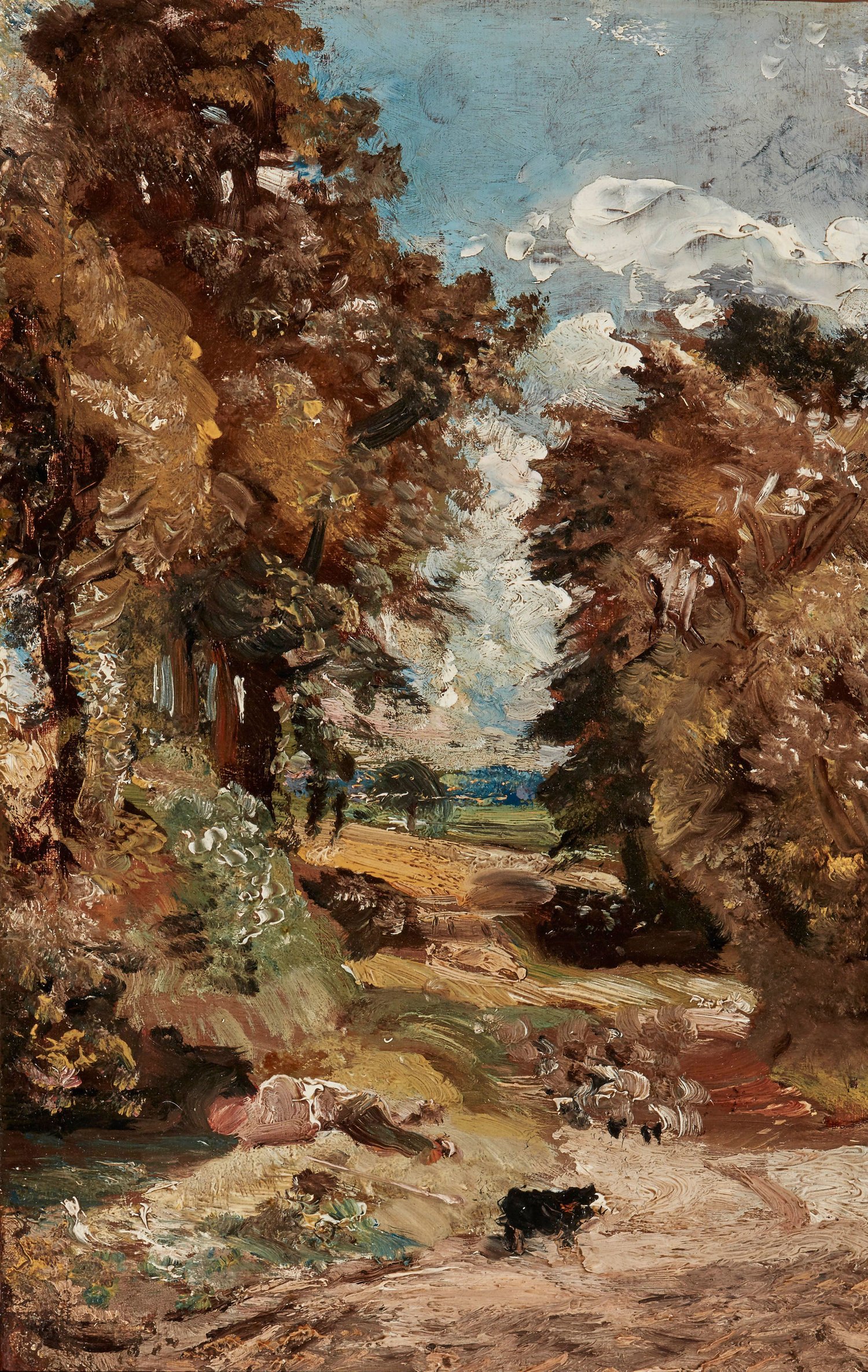
The Cornfield by John Constable (about 1816)
Resolution: 3328 × 5260 px
John Constable’s The Cornfield is a small, freely painted oil sketch of a wooded lane opening toward sunlit fields beneath a turbulent blue-and-white sky. Trees, path, distant pasture, a shepherd, animals, and the barely visible figure of a boy drinking from a pool are rapidly established through energetic strokes and passages of thick paint.
Made about 1816, the sketch is generally understood as Constable’s first conception for the much larger painting later exhibited in 1826. Probably worked directly from nature near Fen Lane between East Bergholt and Dedham, it records the artist’s immediate response to a landscape closely associated with his Suffolk childhood.
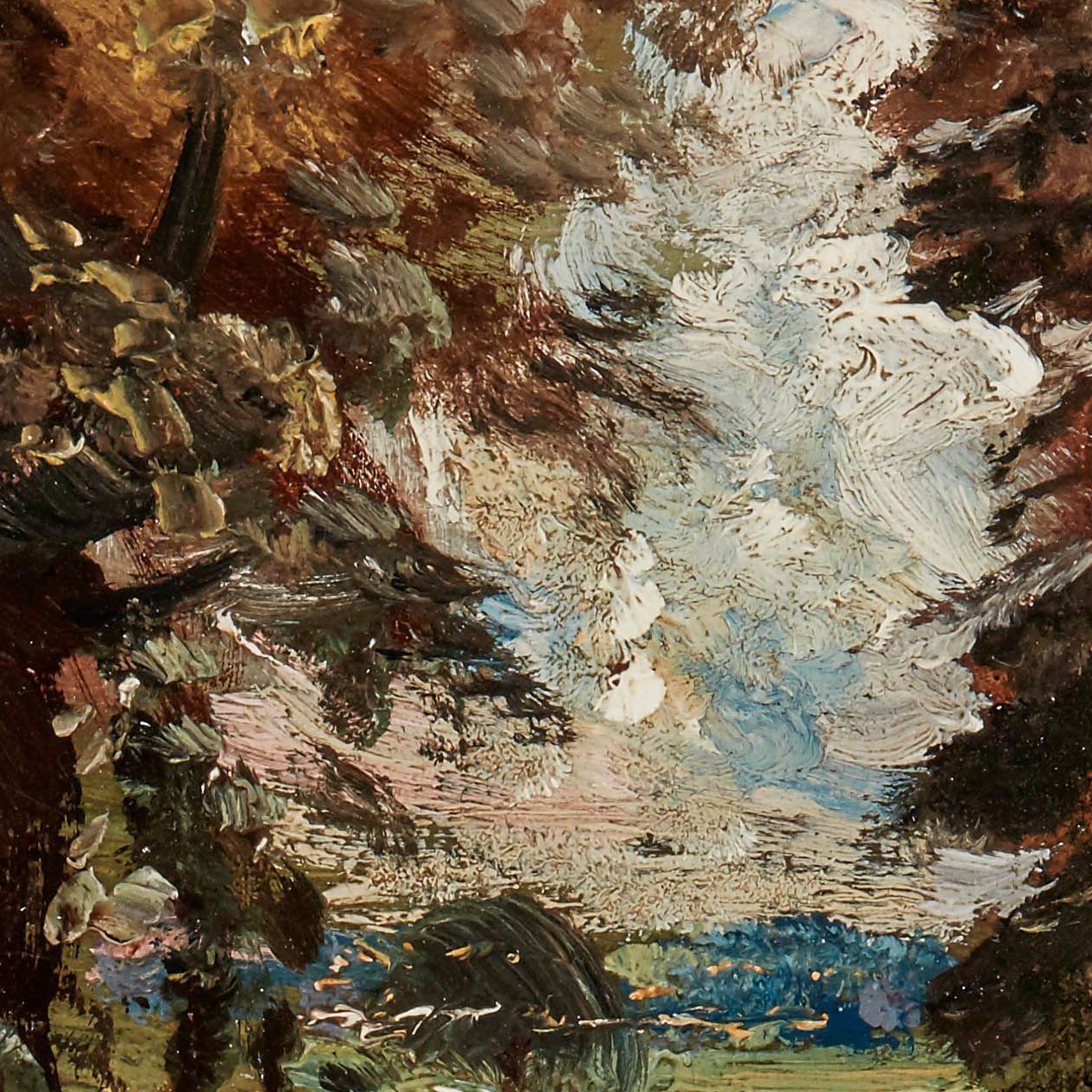
The work is significant because it reveals Constable’s creative process at its most direct. Forms are not polished into a finished exhibition picture; instead, swift brushwork, palette-knife accents, and abrupt contrasts capture changing light, weather, and terrain. The sketch demonstrates how close observation and personal memory formed the foundation of Constable’s mature landscape art and ultimately shaped one of his best-known compositions.
This high-resolution artwork preserves the wooded lane, distant fields, small figures and animals, cloud-filled sky, thick highlights, rapid brushwork, and richly varied surface of Constable’s early plein-air study.