The Unicorn Rests in a Garden
The Unicorn Rests in a Garden (1495-1505)
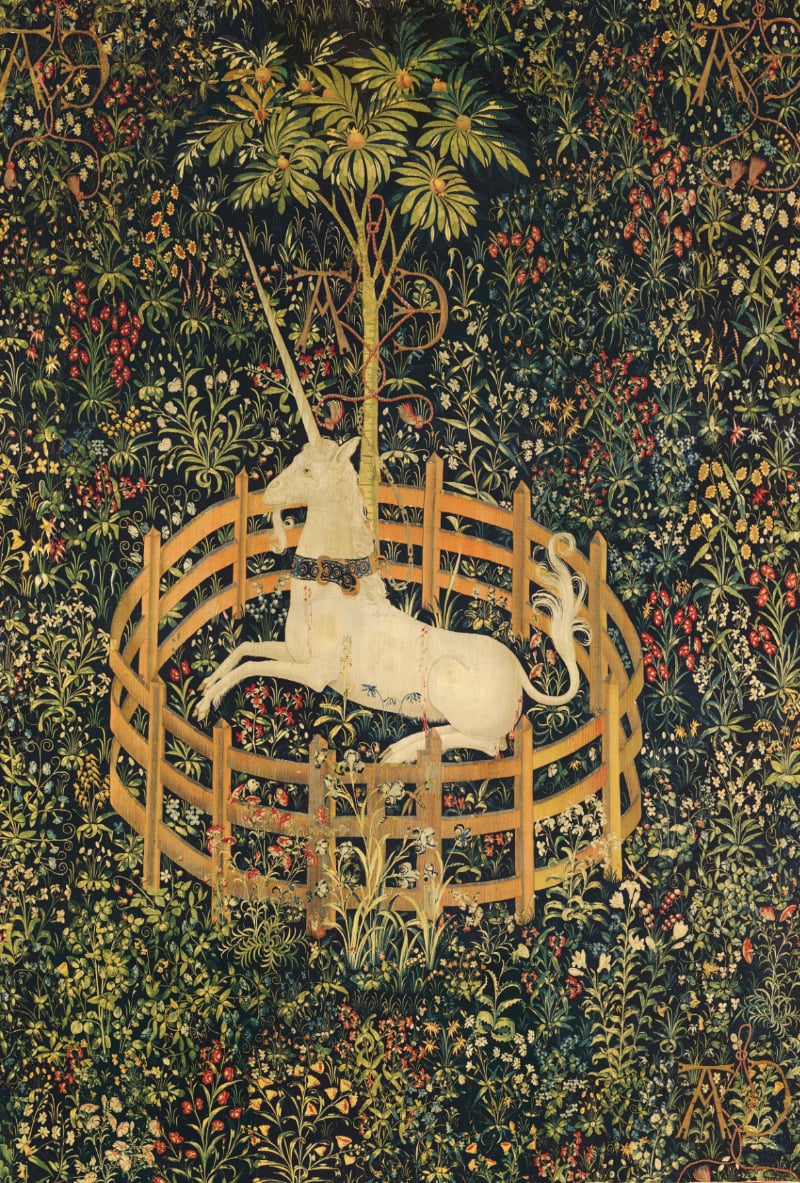
The Unicorn Rests in a Garden is one of the most iconic and enigmatic images from the late medieval tapestry cycle known as The Unicorn Tapestries. Woven between 1495 and 1505 in the Southern Netherlands, and now housed at The Met Cloisters in New York, this work showcases the refined craftsmanship and symbolic depth characteristic of late Gothic textile art.
The tapestry depicts a serene and magical scene: a unicorn lies peacefully within a small, flower-filled garden. Though the creature is tethered by a delicate chain to a tree and encircled by a low wooden fence, neither restraint appears truly binding. The chain is loose, and the fence is low—symbolizing that the unicorn could escape if it wished. Yet, it remains contentedly within the enclosure, suggesting a voluntary captivity.
Rich in symbolism, the garden is lush with plants that were associated in medieval thought with fertility, love, and marriage. Above the unicorn, a tree bears ripe pomegranates, whose bursting fruit has left red stains on the unicorn’s flank—once believed by some to be blood, but more likely representing the dripping juice of the fruit, a sign of abundance and procreation. Surrounding flora such as wild orchids, thistles, and bistort reinforce this theme, as they were commonly known in medieval herbals as aids to fertility. Even the small frog nestled among violets in the lower corner carries symbolic meaning, associated with mating and the generative forces of nature.
The unicorn itself, a mythical creature often associated with purity and the divine, takes on multiple layers of meaning in this setting. In one reading, it represents the tamed lover, bound by affection rather than force. In another, it echoes Christ’s incarnation and willing sacrifice, resting within a symbolic “hortus conclusus” — the enclosed garden that often represents the Virgin Mary or the Church.
Altogether, the tapestry weaves together themes of love, surrender, sacredness, and the harmonious union between the spiritual and the earthly. Its visual richness and symbolic complexity have made it one of the most admired and studied artworks of the Middle Ages.
Resolution 4950 x 7330 px