

The Pilgrim of the Cross at the End of His Journey by Thomas Cole
The Pilgrim of the Cross at the End of His Journey by Thomas Cole (1884)
Resolution: 6275 × 4181 px
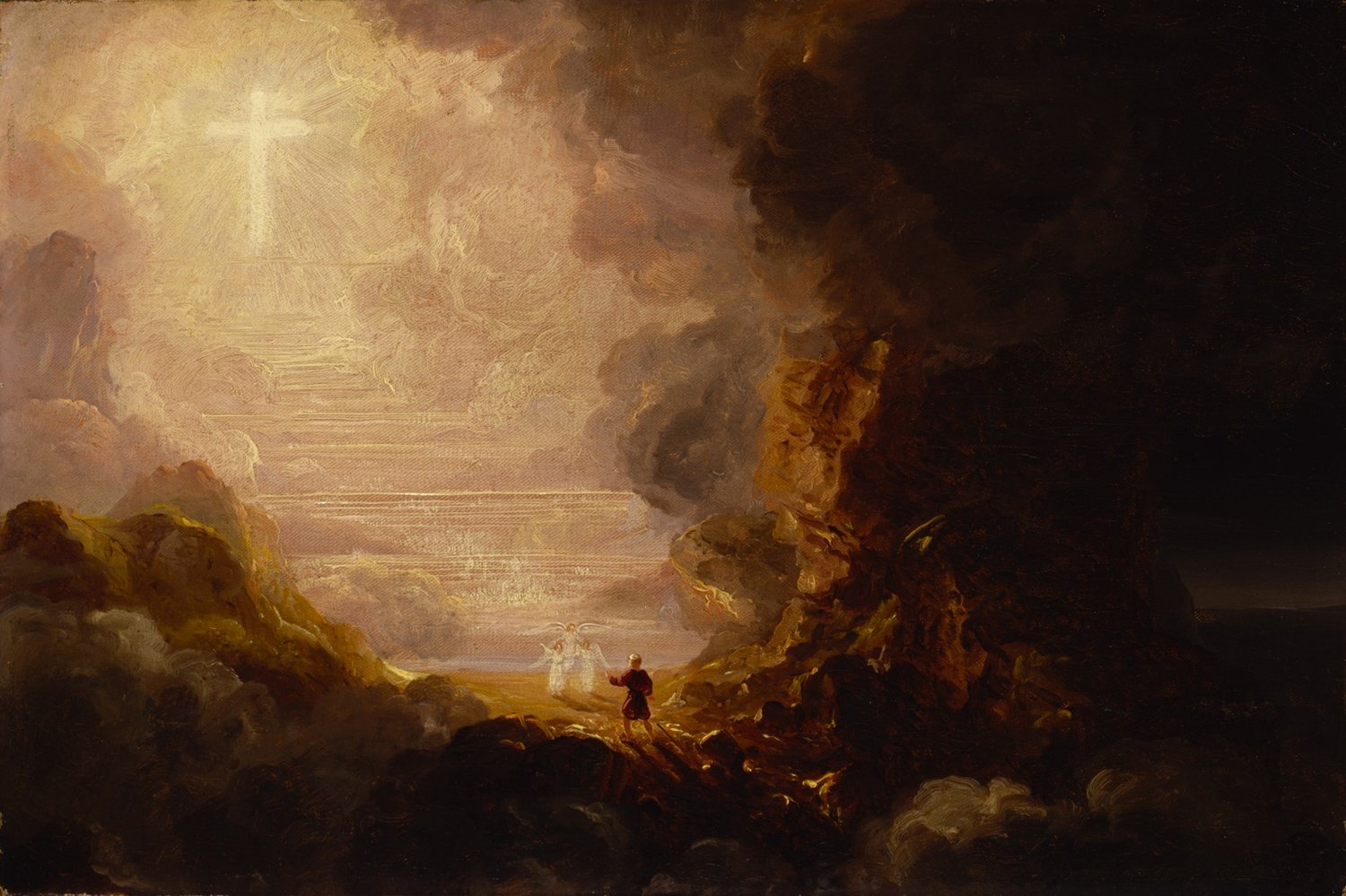
Thomas Cole organizes this visionary landscape as a passage from darkness into radiant revelation. A solitary pilgrim stands near the lower centre on a narrow rocky path, his small red-brown figure surrounded by immense cliffs and turbulent shadow. With one arm lifted, he turns toward a pale apparition ahead: luminous figures emerge through mist at the entrance to a broad ascending stairway. The steps rise diagonally into a golden cloud field and lead toward a brilliant cross suspended in the upper left.
The painting’s strongest drama comes from its division of light. The right half is dominated by a nearly black wall of rock and storm cloud, while the left opens into cream, gold and warm rose illumination. This contrast directs the eye from the pilgrim through the spectral figures, along the repeated horizontal steps and finally toward the cross. Jagged rocks in the foreground create physical resistance, whereas the dissolving edges and translucent brushwork of the heavenly zone suggest release from material weight.
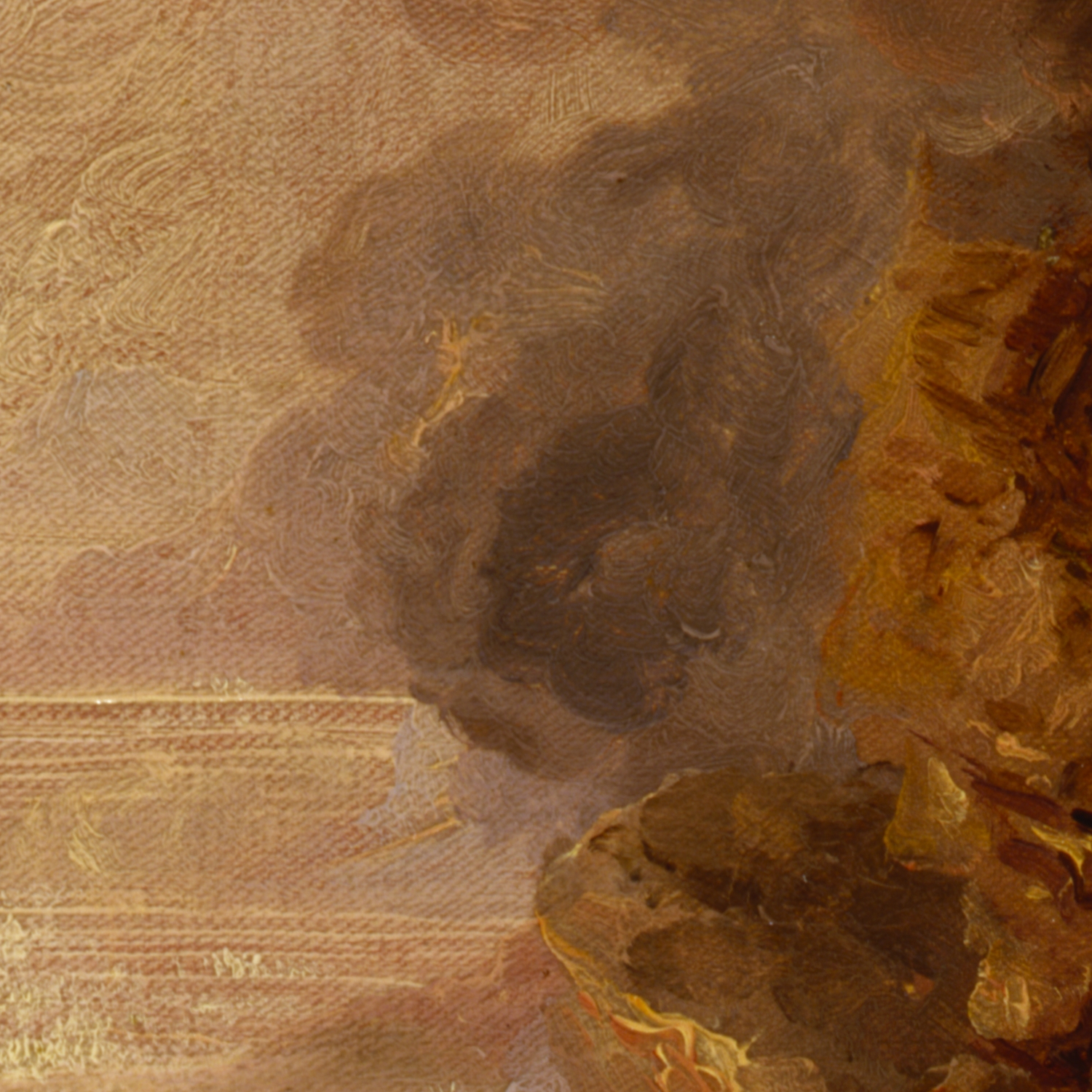
Cole keeps the human figure deliberately small, allowing the landscape to embody spiritual trial. Dark earth tones, burnt umber and deep charcoal surround the traveller; touches of red distinguish him without breaking the solemn palette. The illuminated passage is built from thin, layered strokes and scumbled light, producing a vibrating atmosphere rather than a fixed architectural space.
The scene presents the end of a difficult journey as a threshold between danger and consolation. Its meaning is carried visually by scale, direction and the transformation from enclosed darkness to ascending light. This high-resolution digital reproduction preserves the dramatic tonal structure, expressive brushwork and symbolic detail of the religious Romantic landscape.