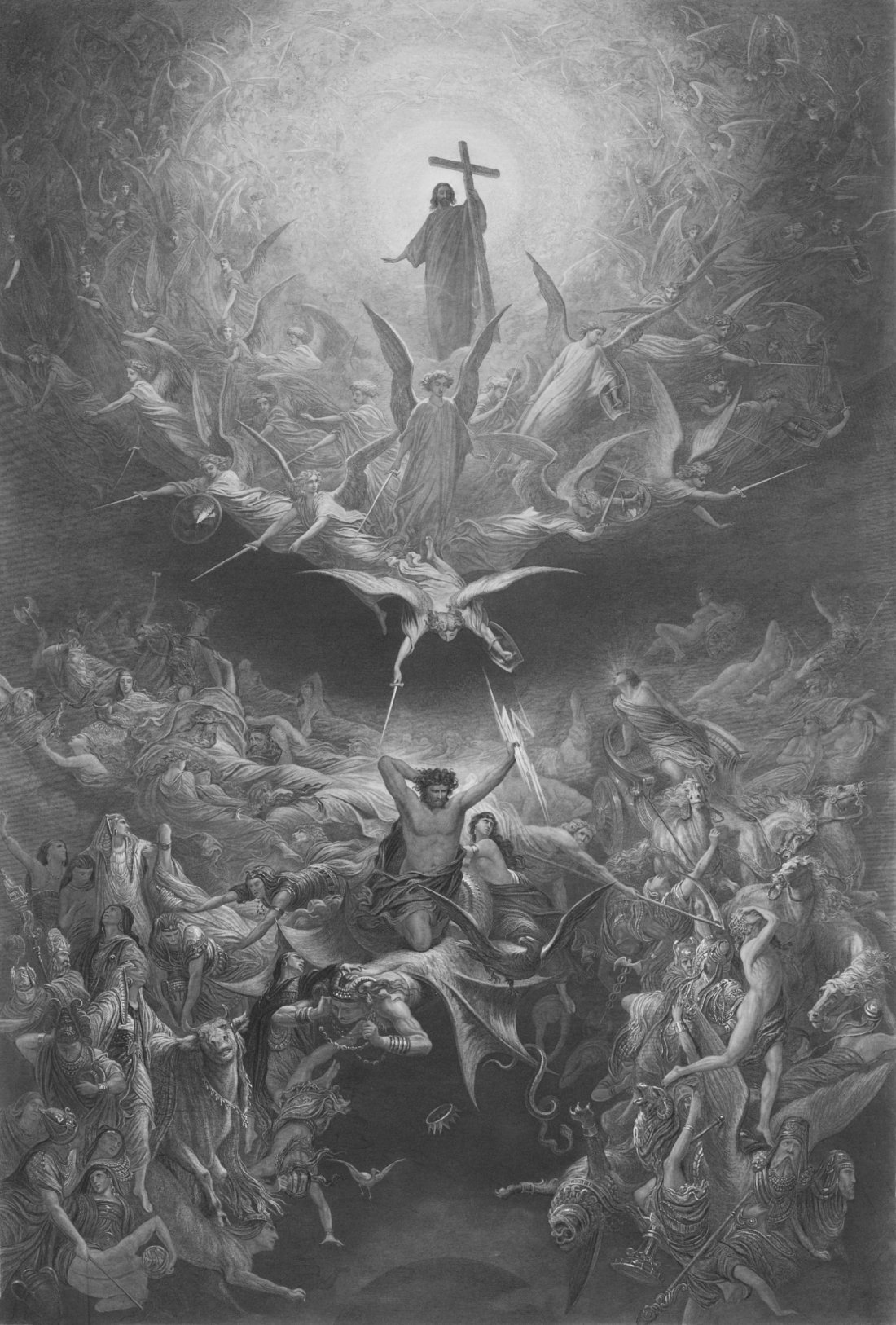



The Triumph of Christianity over Paganism by Gustave Doré
The Triumph of Christianity over Paganism by Gustave Doré (1868)
Gustave Doré’s "The Triumph of Christianity over Paganism" is a powerful, dramatic depiction of the victory of Christianity over ancient paganism. The central figure, often symbolizing the Christian Church, is bathed in radiant light, holding a flag or cross, representing the divine triumph of Christianity. This figure stands in stark contrast to the chaos and destruction in the background, where pagan temples crumble and pagan figures flee, symbolizing the decline of the old religious order. Doré’s use of light and shadow enhances the dramatic effect, with the serene, illuminated Christian figure standing in stark opposition to the decaying pagan world.
The image is not just a portrayal of religious conquest, but an allegory of cultural change. It reflects the 19th-century belief in the superiority of Christianity, a theme often seen in the period’s art, where the “old” pagan religions are depicted as dark, flawed, and in need of replacement by the light and purity of Christianity. The image also resonates with broader cultural and imperialist narratives, where Christianity was often seen as part of the civilizing mission in colonial expansions.
In sum, Doré’s work captures the ideological and cultural struggles of the time, illustrating the triumph of Christian values over the so-called darkness of ancient paganism, while reflecting the religious, political, and social currents of the 19th century.
Resolution 6700 x 10000 px