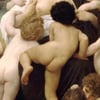
The Motherland by William Adolphe Bouguereau
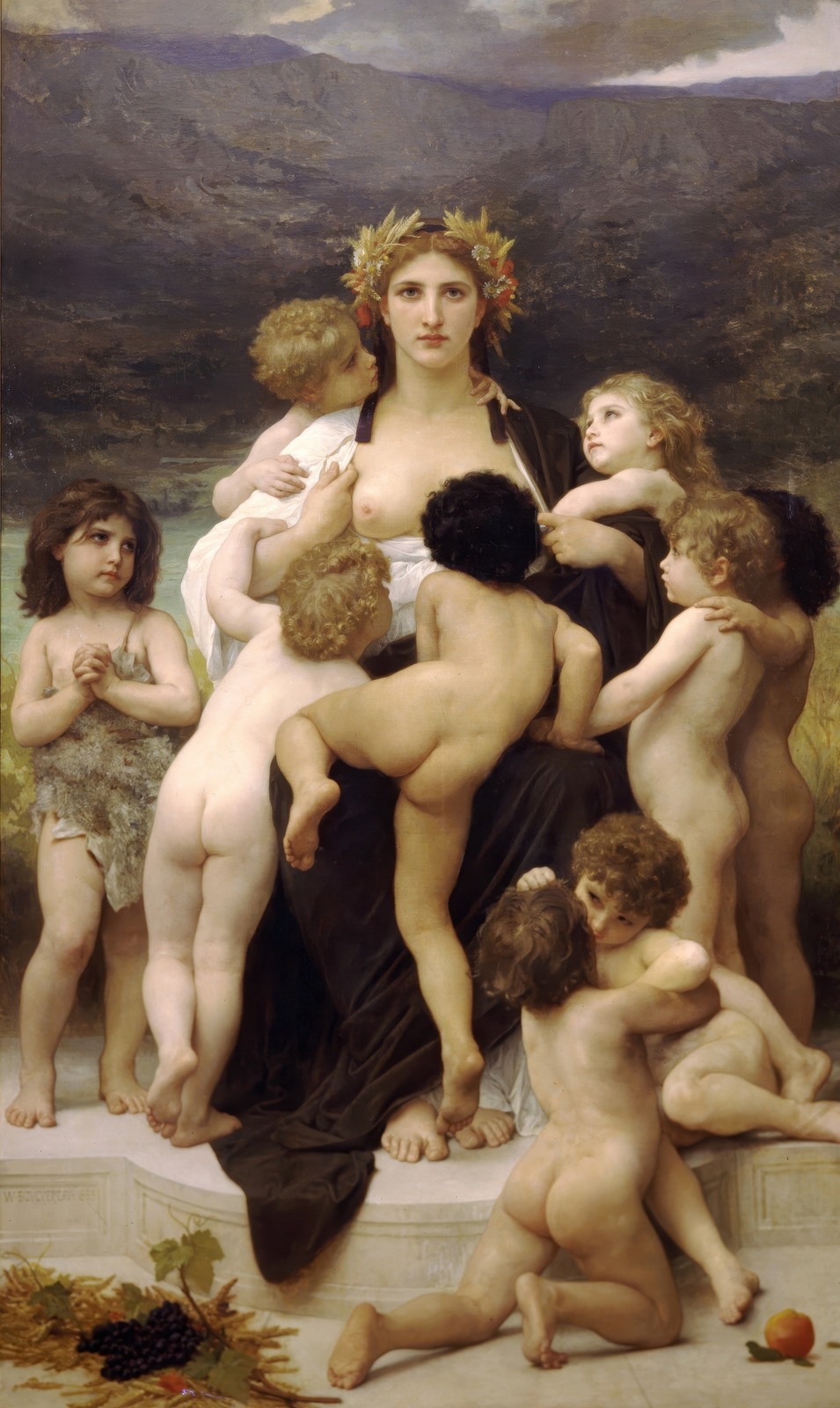
The Motherland by William Adolphe Bouguereau (1883)
Resolution: 2658 × 4454 px
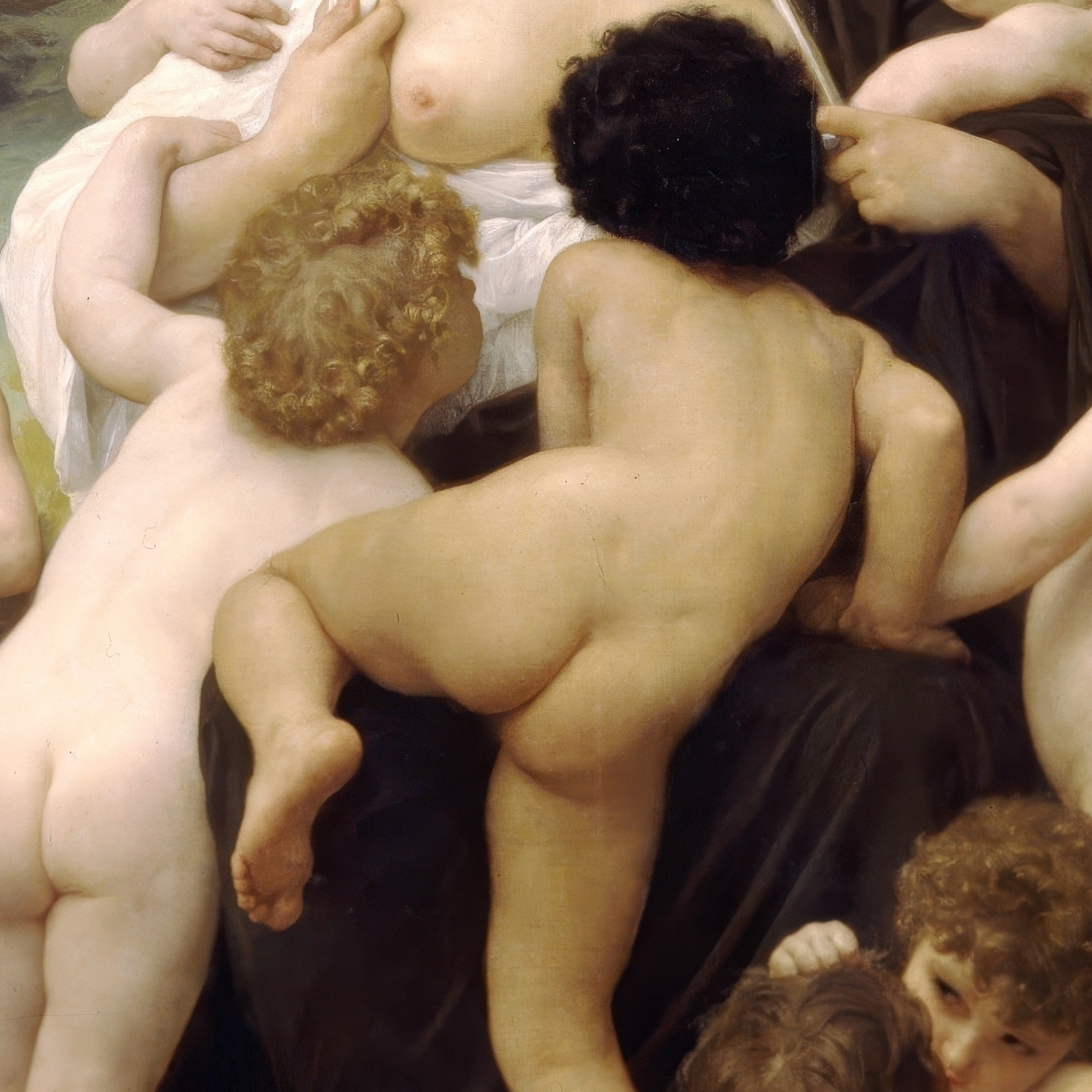
Bouguereau presents the Motherland as a monumental seated woman surrounded by children who climb, lean, nurse, embrace and seek contact with her body. Her frontal pose and direct, unwavering gaze establish a calm axial centre, while the children generate a circular movement around her through interlocking arms, turned heads and overlapping bodies. A wreath of wheat and small flowers crowns her dark hair, joining agricultural fertility with ceremonial dignity. The white cloth across her torso and the deep brown-black mantle below create a strong light-dark structure: pale skin and fabric emerge clearly, while the heavy drapery anchors the crowded group and gives the central figure visual gravity. Each child is individualized through hair, complexion, gesture and direction of attention; some look toward the mother, one stands apart with clasped hands, and others turn toward one another in intimate pairs. This variety transforms motherhood into a collective allegory, suggesting a homeland that shelters different lives within one protective body. The rocky, subdued landscape and clouded sky behind the figures prevent the scene from becoming merely idyllic, setting maternal abundance against a severe and uncertain world. At the base, grapes, grain and fruit extend the symbolism from human nurture to the fertility of the land itself. Bouguereau’s polished academic technique suppresses obvious brushwork, using precise contours, smooth transitions and carefully modelled flesh to give the allegory an idealized, almost sculptural permanence. The painting unites care, belonging, dependence and national identity in a composition that is both intimate and public. This high-resolution digital reproduction preserves the refined modelling, symbolic detail and complex figure arrangement of the original work.