Village Carnival by Paul Klee
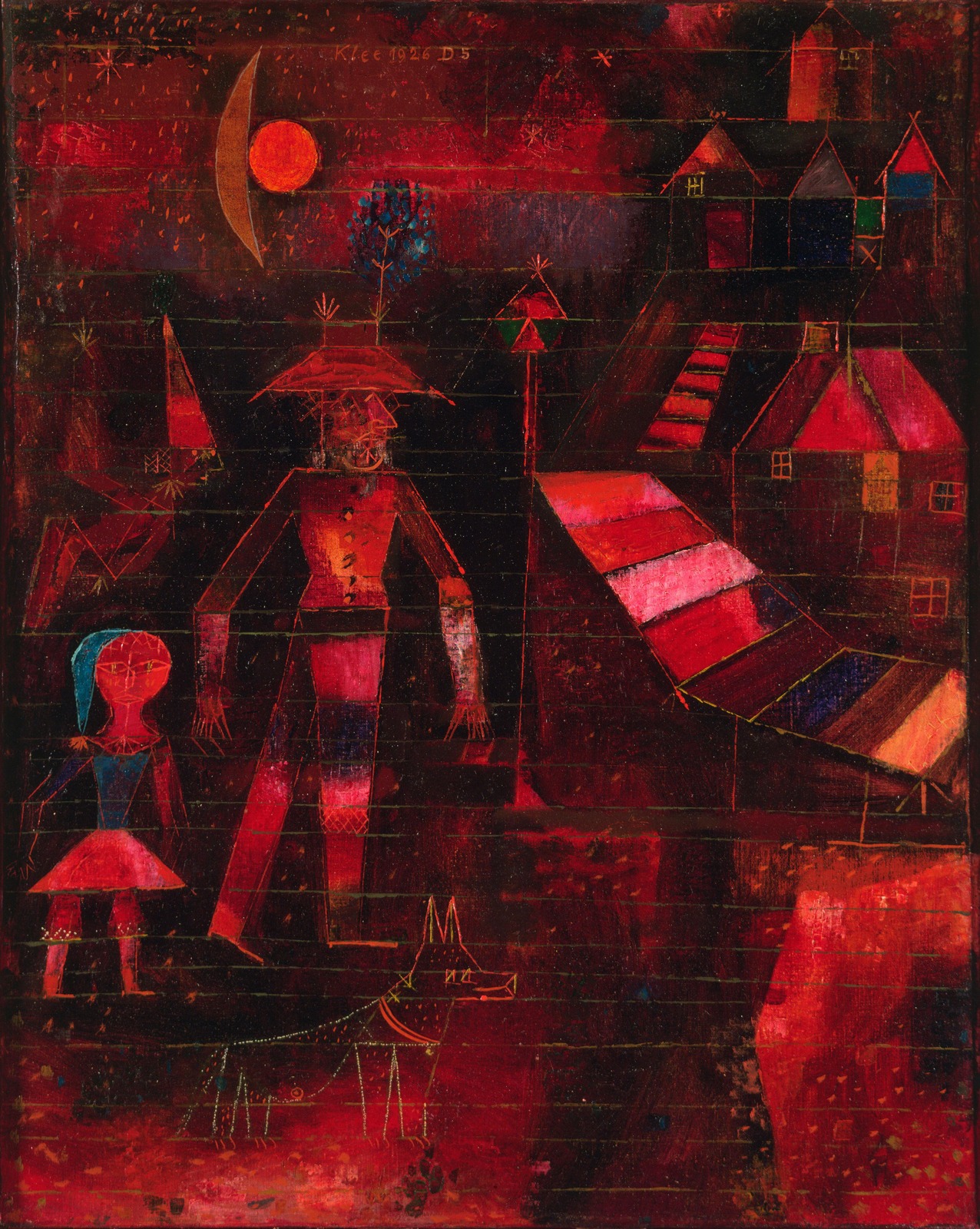
Village Carnival by Paul Klee (1926)
Resolution: 3961 × 4968 px
Paul Klee constructs this nocturnal village as a layered field of signs, figures and architecture rather than a conventional perspectival scene. Deep crimson and black form the ground, crossed by thin horizontal and vertical lines that divide the image into shifting compartments. Houses with steep triangular roofs cluster across the upper right, while tilted platforms, stairs and angular structures descend through the centre.
A large hybrid figure dominates the middle: its block-like body, long striped legs and extended arms combine human presence with the geometry of a puppet or carnival costume. Smaller figures appear at the left, and an outlined animal moves across the lower zone. Above them, a bright red-orange disc beside a narrow crescent creates an invented celestial emblem. Trees, stars, windows and decorative marks are reduced to concise linear symbols.
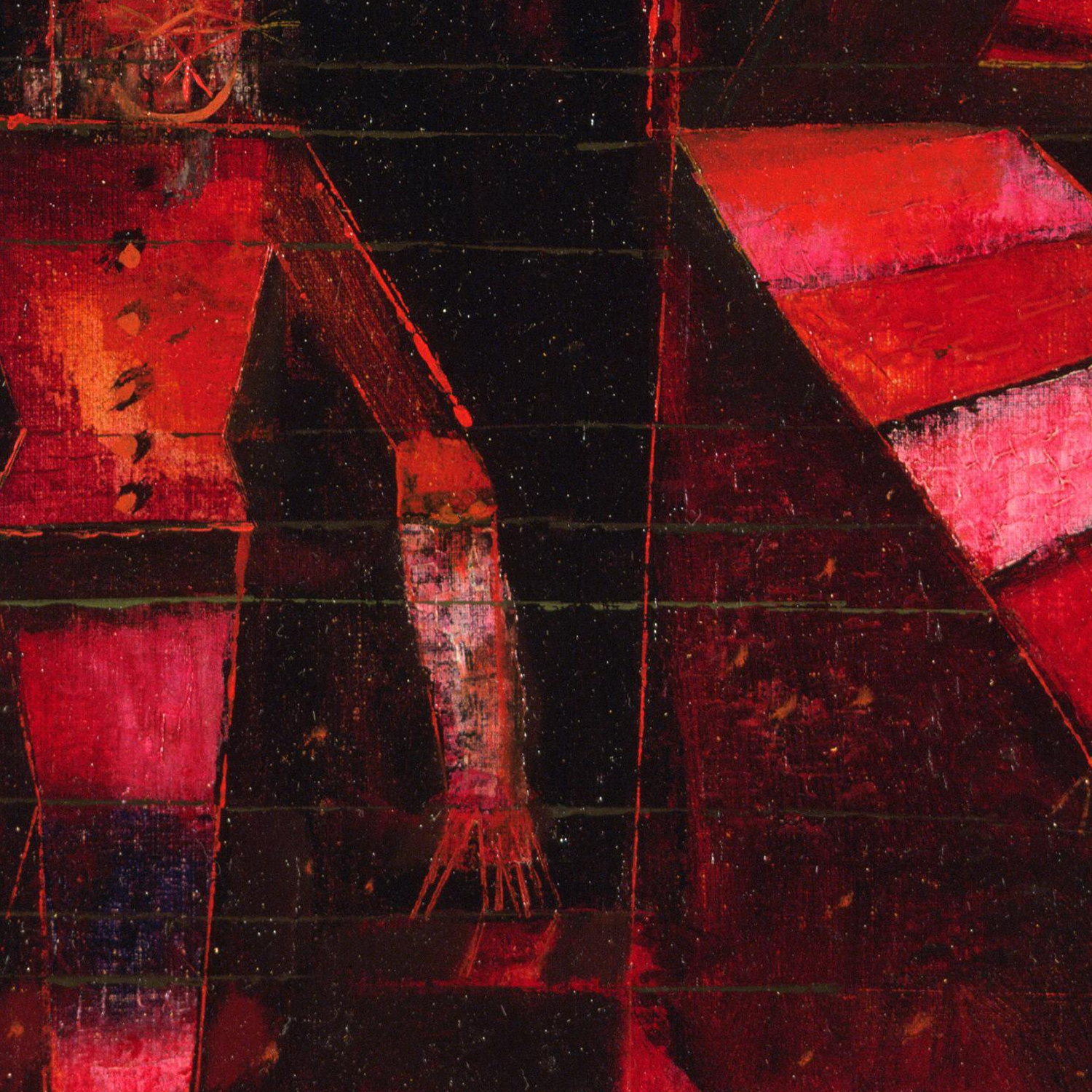
Colour carries the festive tension. Hot reds, magenta, orange and pink flare against dark burgundy and black, with small accents of turquoise, blue and green. Scratched lines, translucent layers and irregular patches reveal the worked surface, making the village feel ancient, theatrical and dreamlike at once.
The composition suggests carnival through transformation: bodies become constructions, buildings behave like props and the night sky becomes a sign system. This high-resolution digital reproduction preserves Klee’s layered colour, fine linear detail and richly textured abstract surface.