The Wood Gatherer by Jules Bastien-Lepage
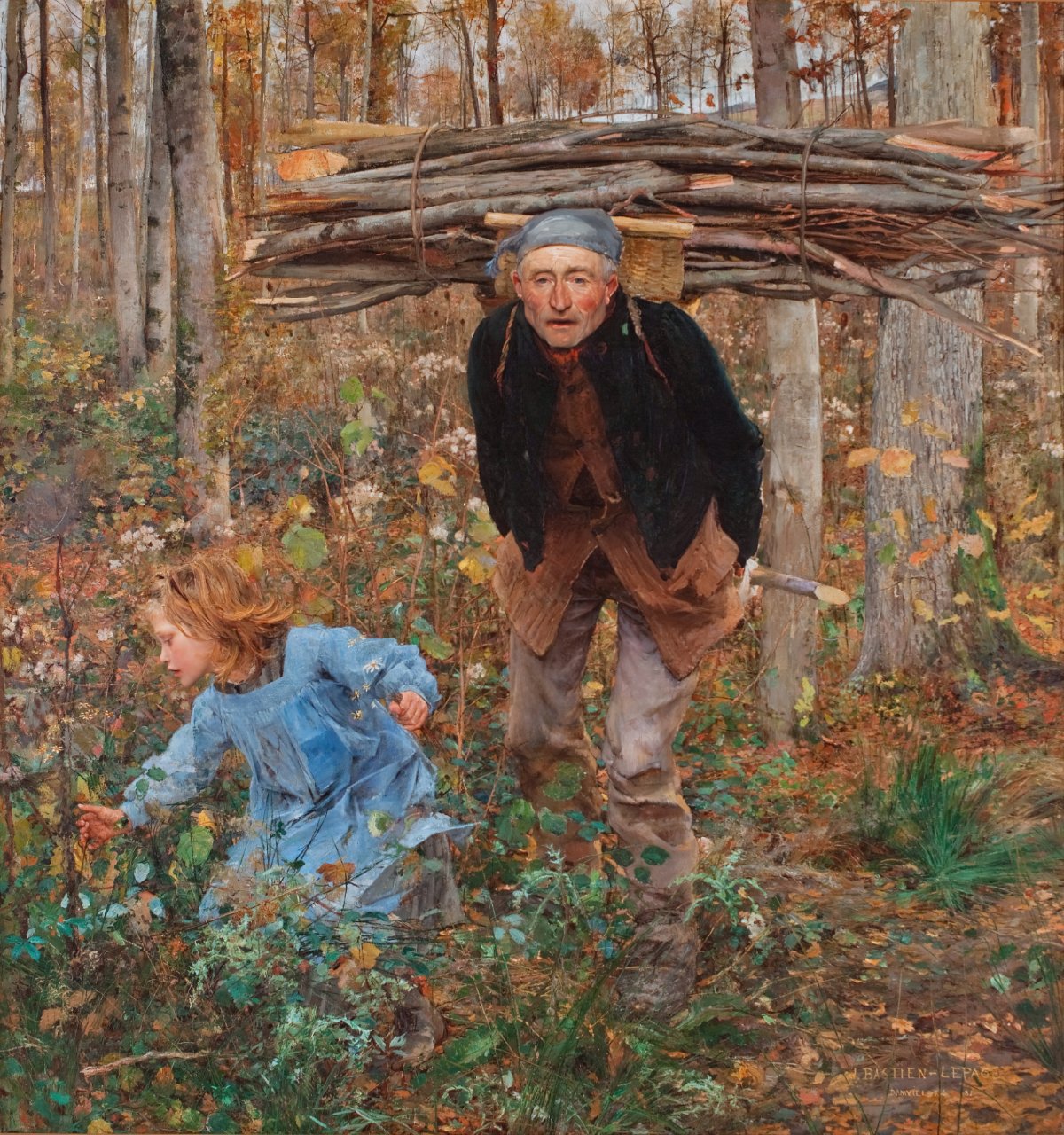
The Wood Gatherer (Le Père Jacques) by Jules Bastien-Lepage (1881)
The painting The Wood Gatherer (Le Père Jacques) by Jules Bastien-Lepage, created in 1881, depicts an idyllic yet labor-intensive scene from rural life. At the center is an older man, heavily burdened with a bundle of wood strapped to his back. His facial expression conveys exhaustion yet determination. Beside him, a young girl dressed in a light blue dress energetically and curiously reaches through the undergrowth, perhaps searching for twigs or flowers. The setting is a lush autumnal forest, rendered with warm, earthy tones and meticulous details of plants and trees. The dense woods in the background give the painting depth and a strong sense of realism.
This work belongs to Naturalism, an artistic movement that emerged in France during the second half of the 19th century. Naturalism is characterized by its precise depiction of reality, with a focus on social and everyday themes. Bastien-Lepage, one of the most renowned proponents of this style, was celebrated for his ability to authentically capture the simplicity and hardships of rural life.
In this painting, the physical strain of the older man is highlighted through his posture and the weight of the wood bundle, while the carefree girl serves as a contrasting figure, symbolizing youth and vitality. The connection between humanity and nature is emphasized through the environment and the characters’ actions. Bastien-Lepage masterfully portrays the beauty of simple life while also underscoring its struggles. The precise detailing – from the texture of the wood to the expressions on the figures' faces – reflects the ideals of Naturalism: not an idealized but an honest portrayal of reality.
Resolution 7150 x 7630 px