
Stack of Wheat Thaw Sunset by Claude Monet
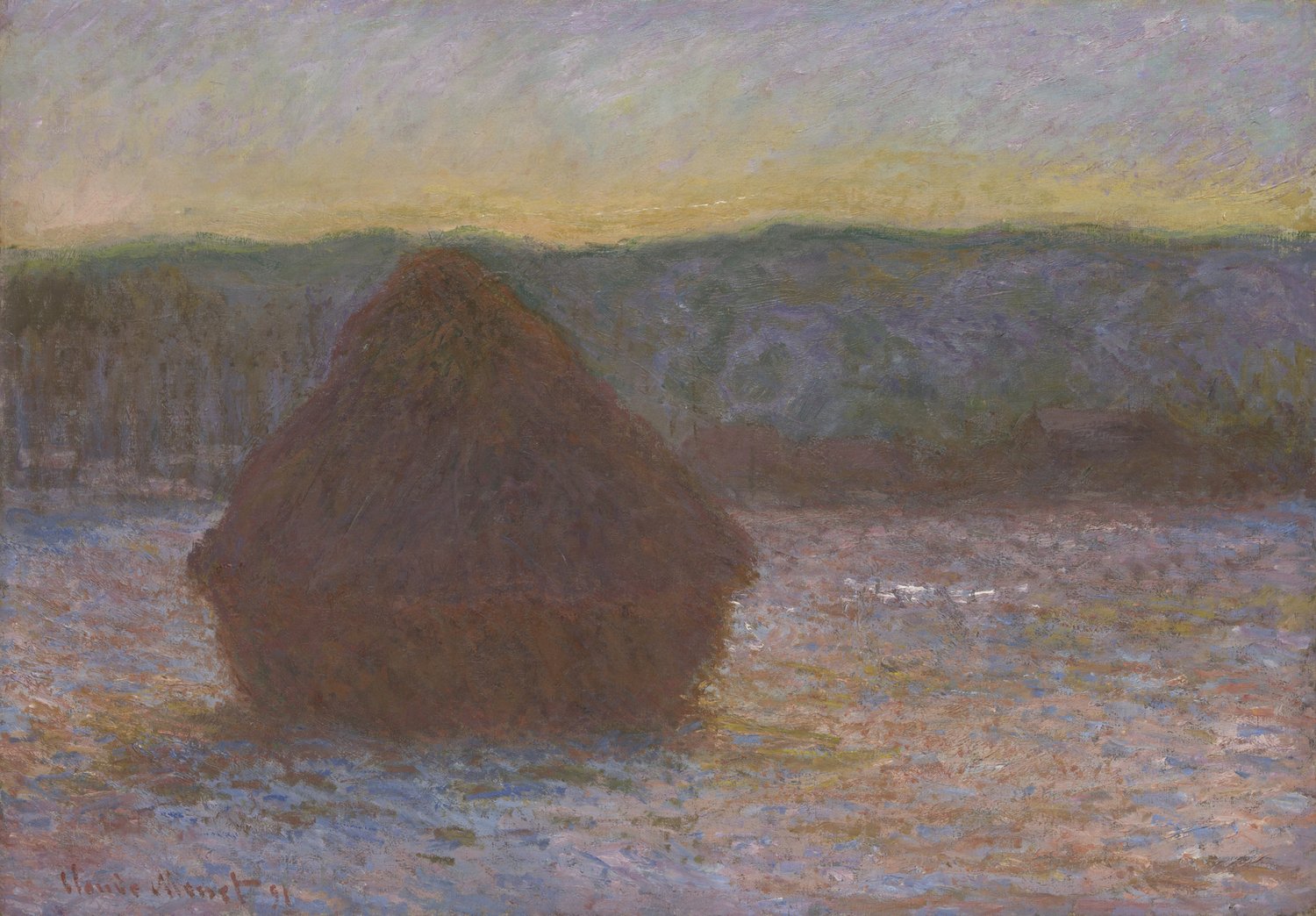
Stack of Wheat Thaw Sunset by Claude Monet (1891)
Resolution: 5922 × 4122 px
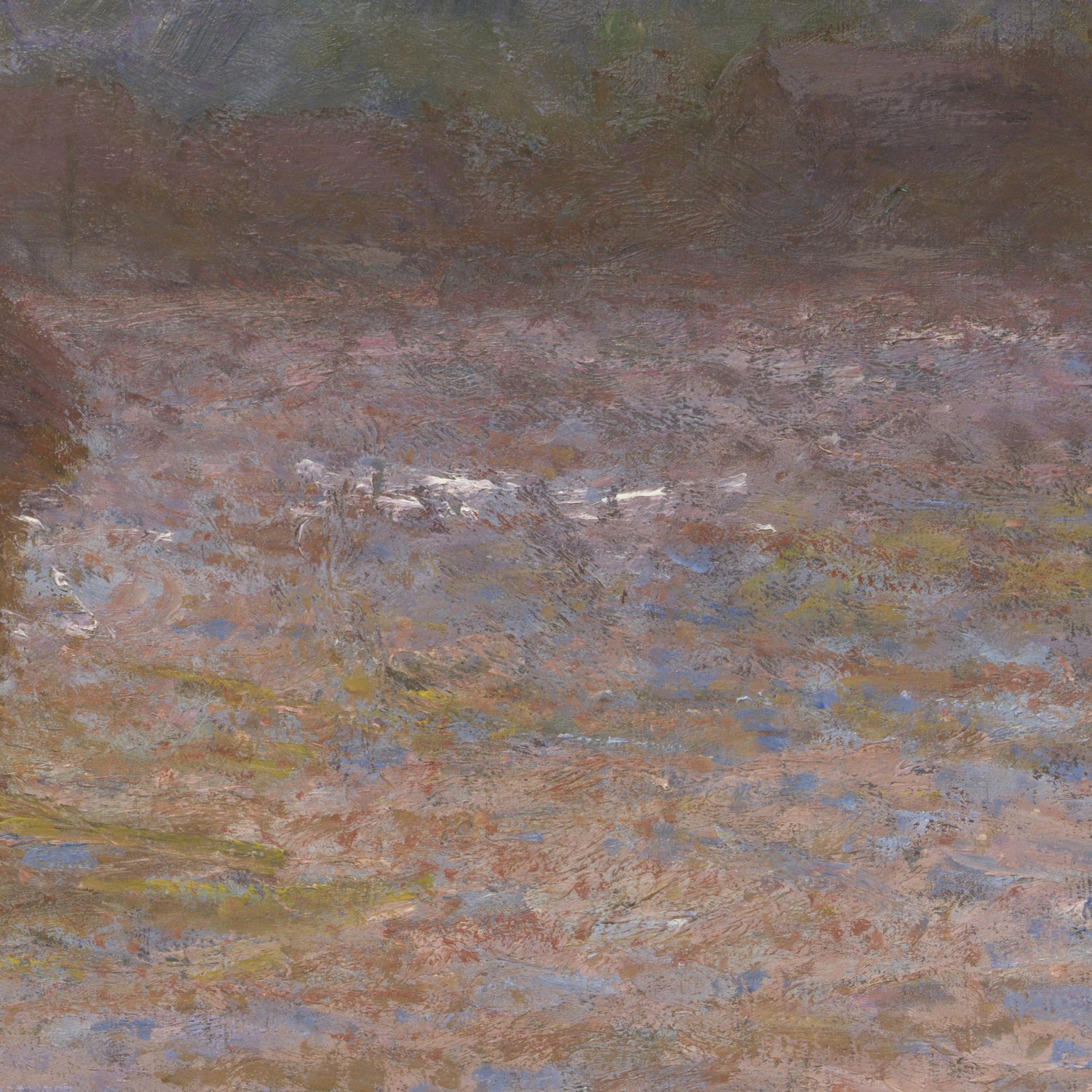
A solitary stack of wheat rises like a dark, rounded monument from a field caught between winter and spring. Patches of thawing snow spread across the foreground in broken reflections of blue, rose and pale gold, while a low line of trees and farm buildings recedes toward the horizon. Above them, the last light of sunset dissolves through a vaporous sky, turning an ordinary agricultural subject into a quiet study of seasonal transition.
Monet places the massive stack just left of center, allowing its dense silhouette to anchor the broad horizontal sweep of field and sky. Russet brown, muted violet and deep blue gather in the shaded straw, while the surrounding snow carries touches of lavender, coral, powder blue, ochre and cool white. Short, layered strokes prevent any surface from becoming static: the ground appears wet and uneven, the distant forms soften in haze, and the luminous band near the horizon seems to pulse against the colder air.
Painted in 1890–91 and signed “Claude Monet 91,” Stack of Wheat (Thaw, Sunset) belongs to the celebrated group Monet made near his home at Giverny. By returning to the same stacks under changing weather, seasons and hours of the day, he transformed repeated observation into one of Impressionism’s defining investigations of perception. In this canvas, the thaw matters as much as the sunset: solid form, melting snow and fading light meet in a landscape that feels both materially specific and continuously changing.