
Tristan and Isolde (Death) by Rogelio de Egusquiza
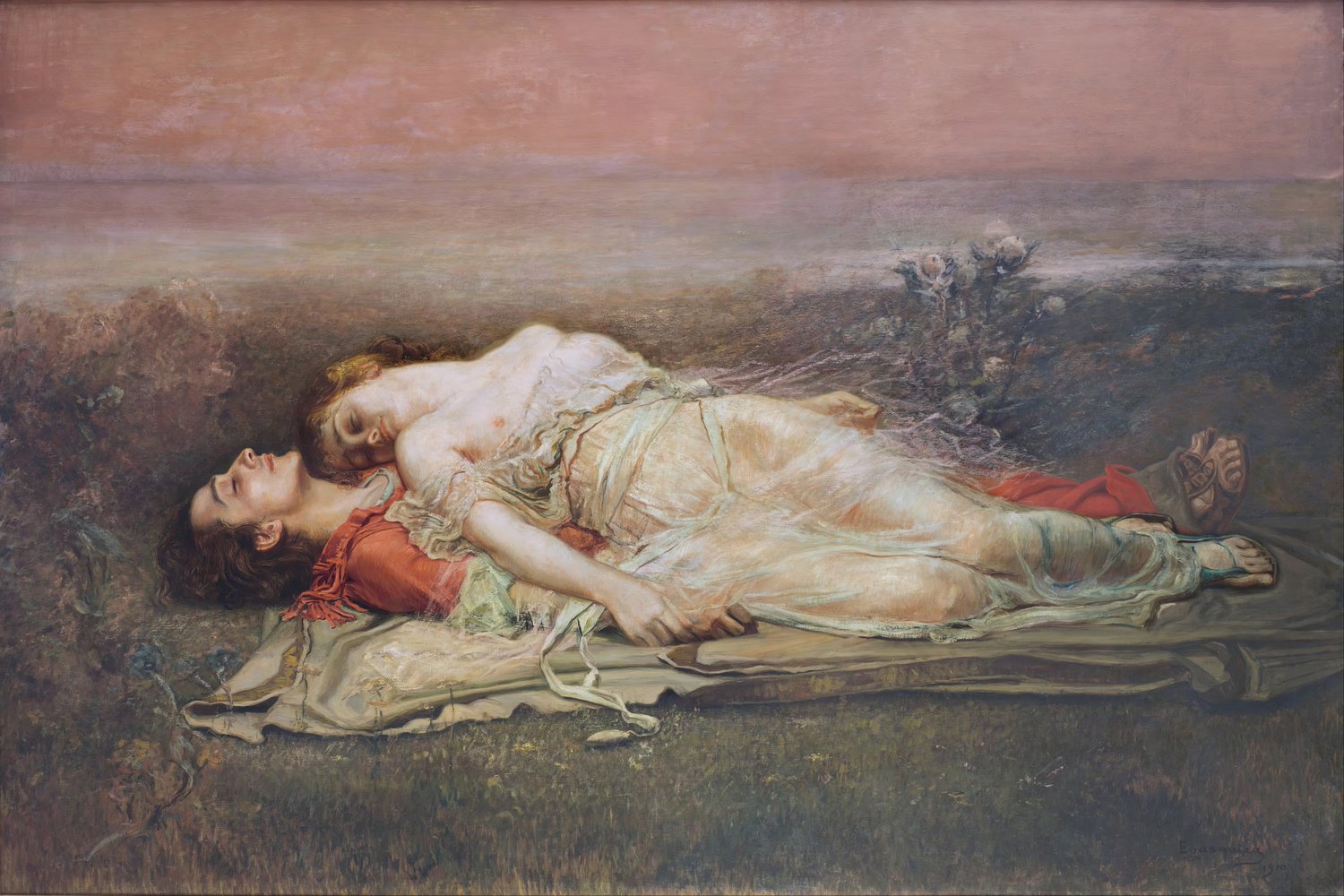
Tristan and Isolde (Death) by Rogelio de Egusquiza (1910)
Resolution: 5644 × 3766 px
Rogelio de Egusquiza’s Tristan and Isolde (Death) depicts the legendary lovers at the moment when passion and mortality become inseparable. Isolde lies across Tristan’s body in a desolate landscape, their pale forms emerging from muted earth and a fading, rose-coloured sky.
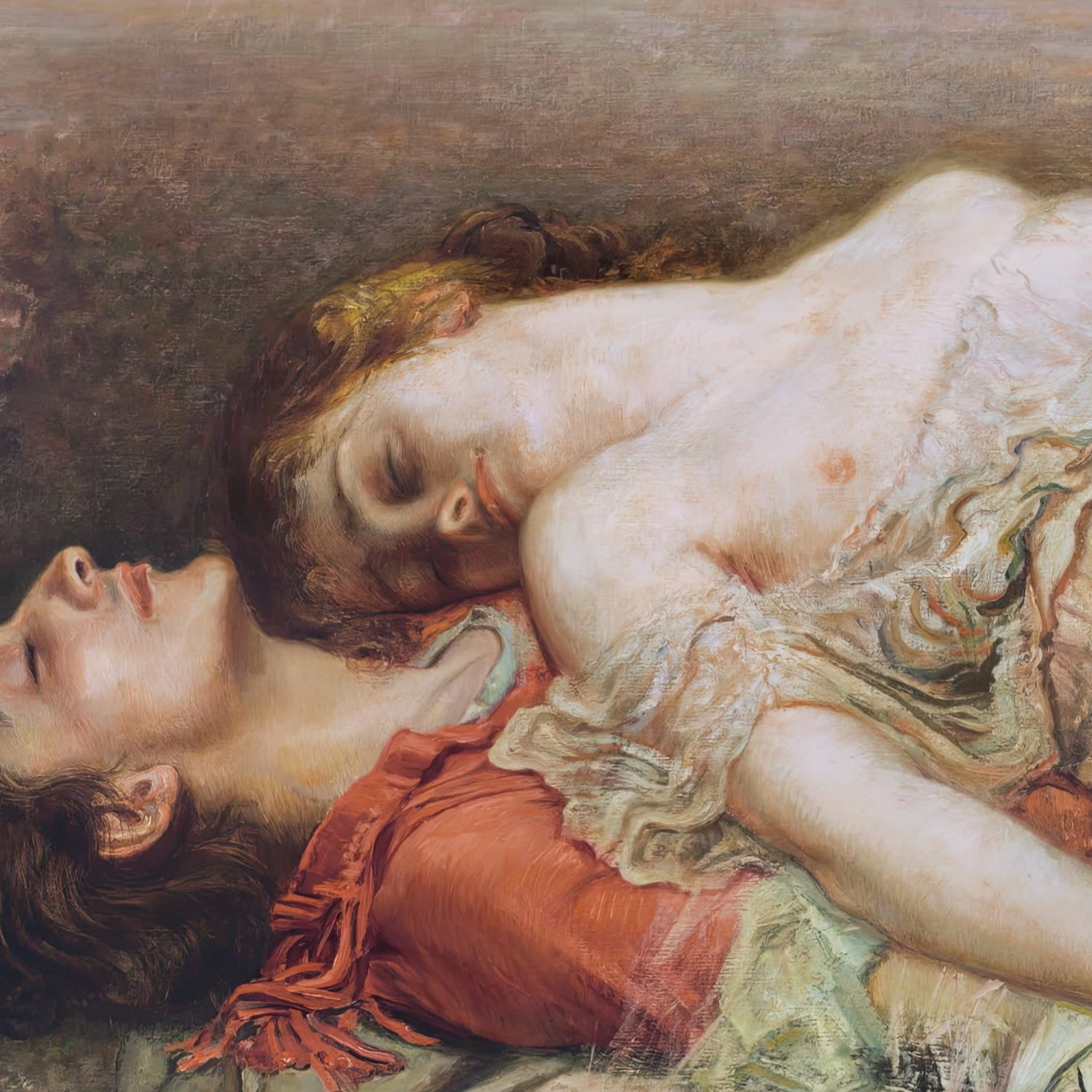
The restrained setting and elongated horizontal composition suppress narrative detail in favour of atmosphere. Delicate flesh tones, crimson fabric, translucent drapery, and the nearly empty horizon create a dreamlike stillness that transforms death into a solemn, suspended union.
Completed in 1910 after years of study, the painting reflects Egusquiza’s sustained engagement with Richard Wagner. The opera’s idea of emotion overcoming reason is recast in Symbolist terms, making the work an important Spanish interpretation of Wagnerian love, death, and transcendence.
This high-resolution artwork preserves the intertwined figures, finely modelled faces, luminous fabrics, restrained landscape, twilight palette, floral details, and subtle surface textures of Egusquiza’s monumental composition.