The Crucifixion by Thomas Eakins
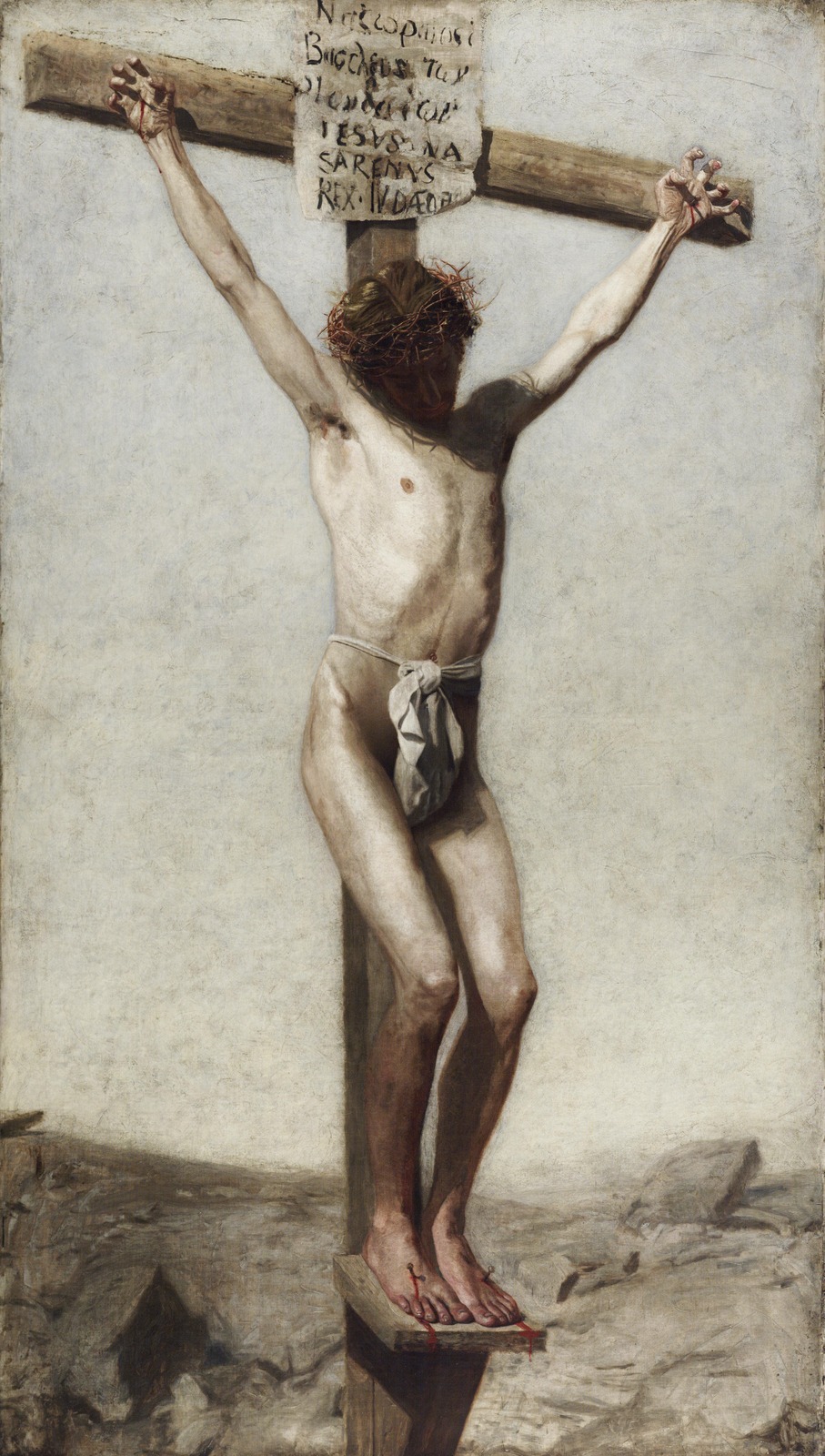
The Crucifixion by Thomas Eakins (1916)
Resolution: 4110 × 7254 px
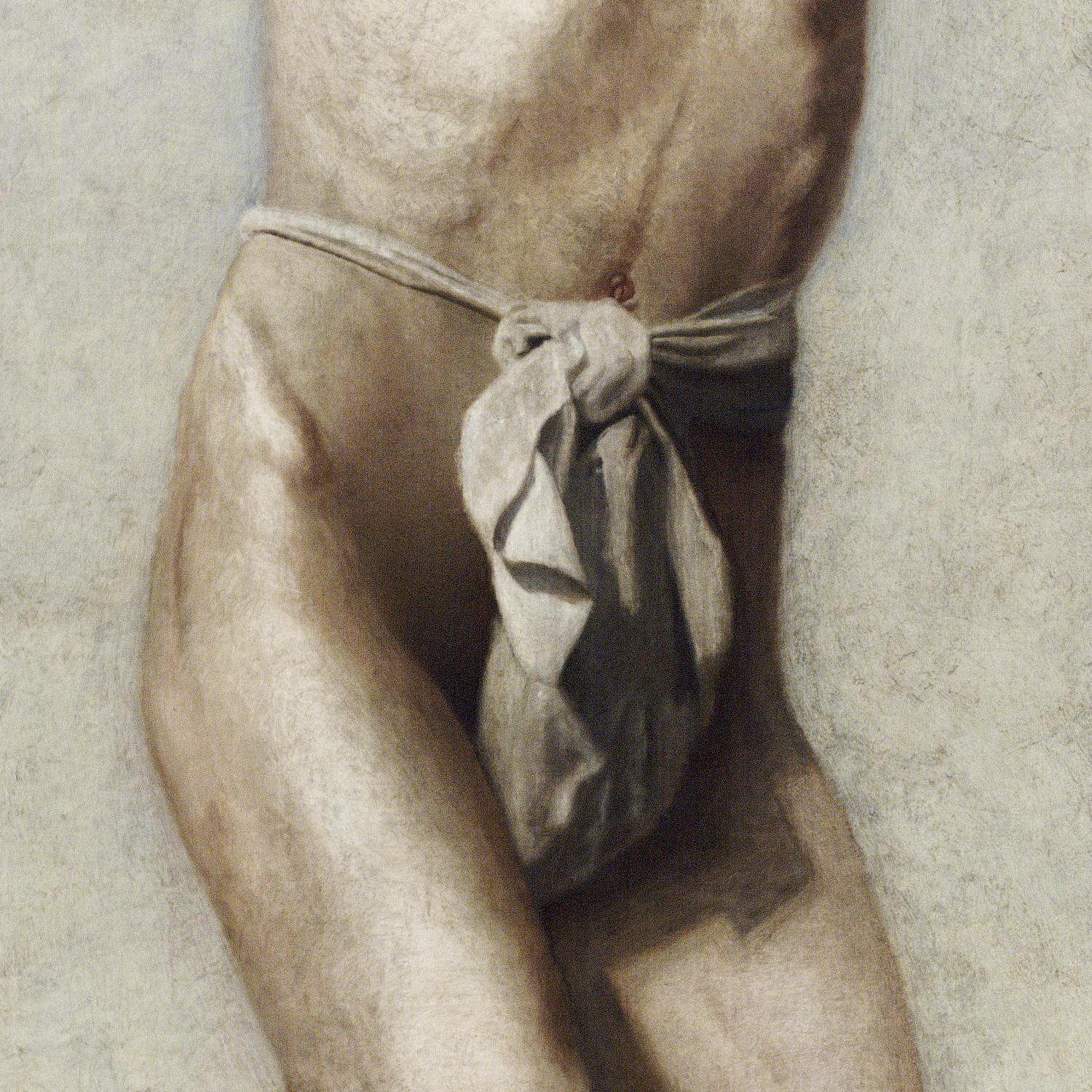
Thomas Eakins isolates the crucified Christ against an almost empty, chalky landscape, stripping the scene of crowds, architecture and theatrical spectacle. The tall vertical format is governed by the cross: its upright runs through the centre, the beam cuts firmly across the upper field, and the extended arms create a severe triangular structure around the bowed head and torso. Christ’s body is observed with uncompromising anatomical attention—the weight pulls through the shoulders, the rib cage and abdomen are carefully modelled, and the knees bend inward above feet fixed to a narrow support. Small streams of red at the hands and feet are visually restrained, making physical tension rather than abundant blood the primary expression of suffering. The crown of thorns and lowered face form the darkest concentration beneath the handwritten inscription, drawing the eye to humiliation and exhaustion rather than triumphant display. Eakins uses a limited range of bone white, grey, earth brown and muted flesh tones; the body remains distinct from the pale ground through subtle changes of temperature and shadow rather than sharp outlines. The barren rocks at the base barely establish place, intensifying the figure’s isolation and confronting the viewer with the human reality of the Crucifixion. This fusion of sacred subject and unsentimental realism turns the work into a meditation on pain, mortality, sacrifice and spiritual endurance. The high-resolution digital reproduction preserves its austere tonal structure and finely judged anatomical modelling.