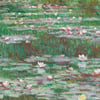
The Japanese Footbridge by Claude Monet
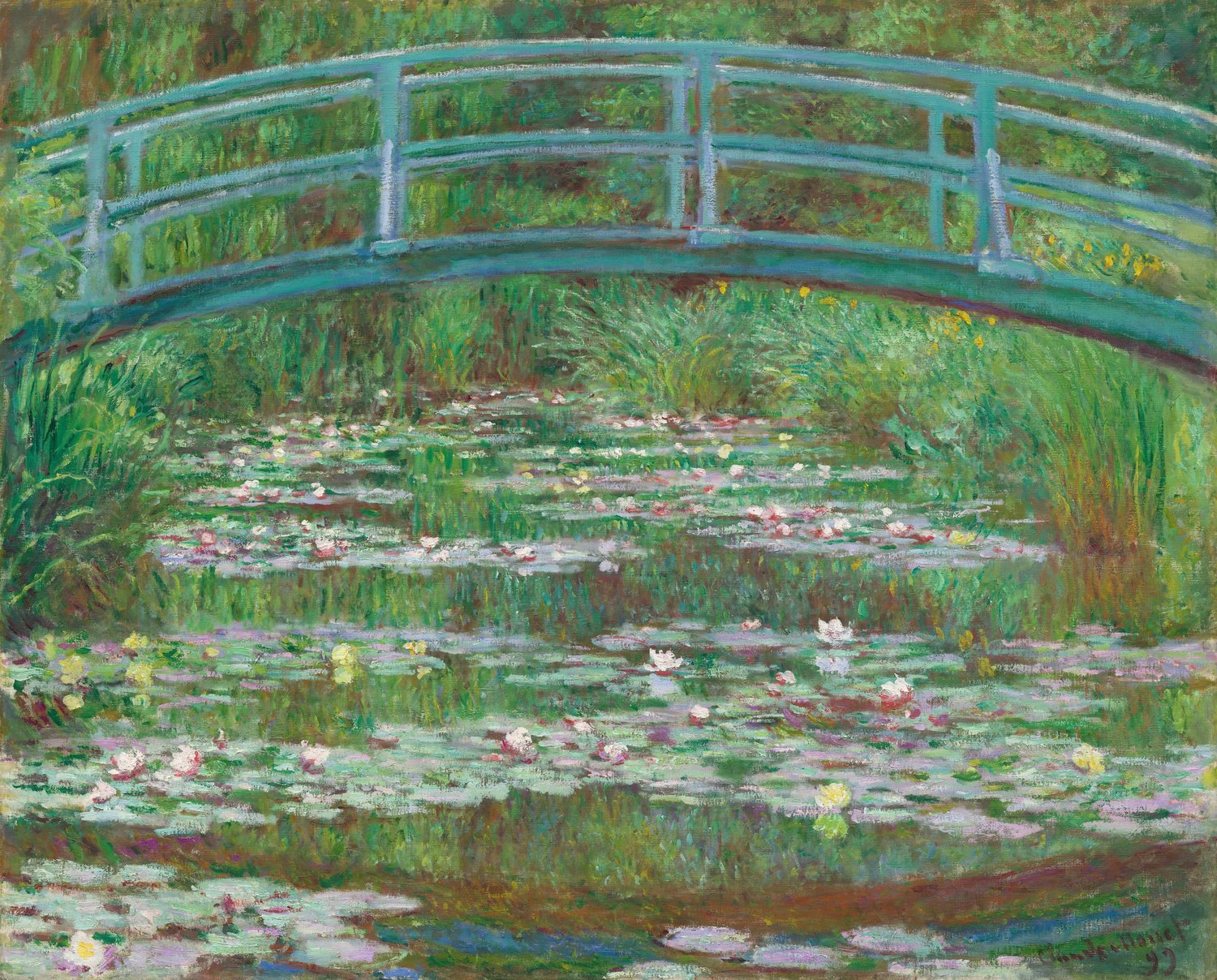
The Japanese Footbridge by Claude Monet (1899)
Resolution: 4506 × 3632 px
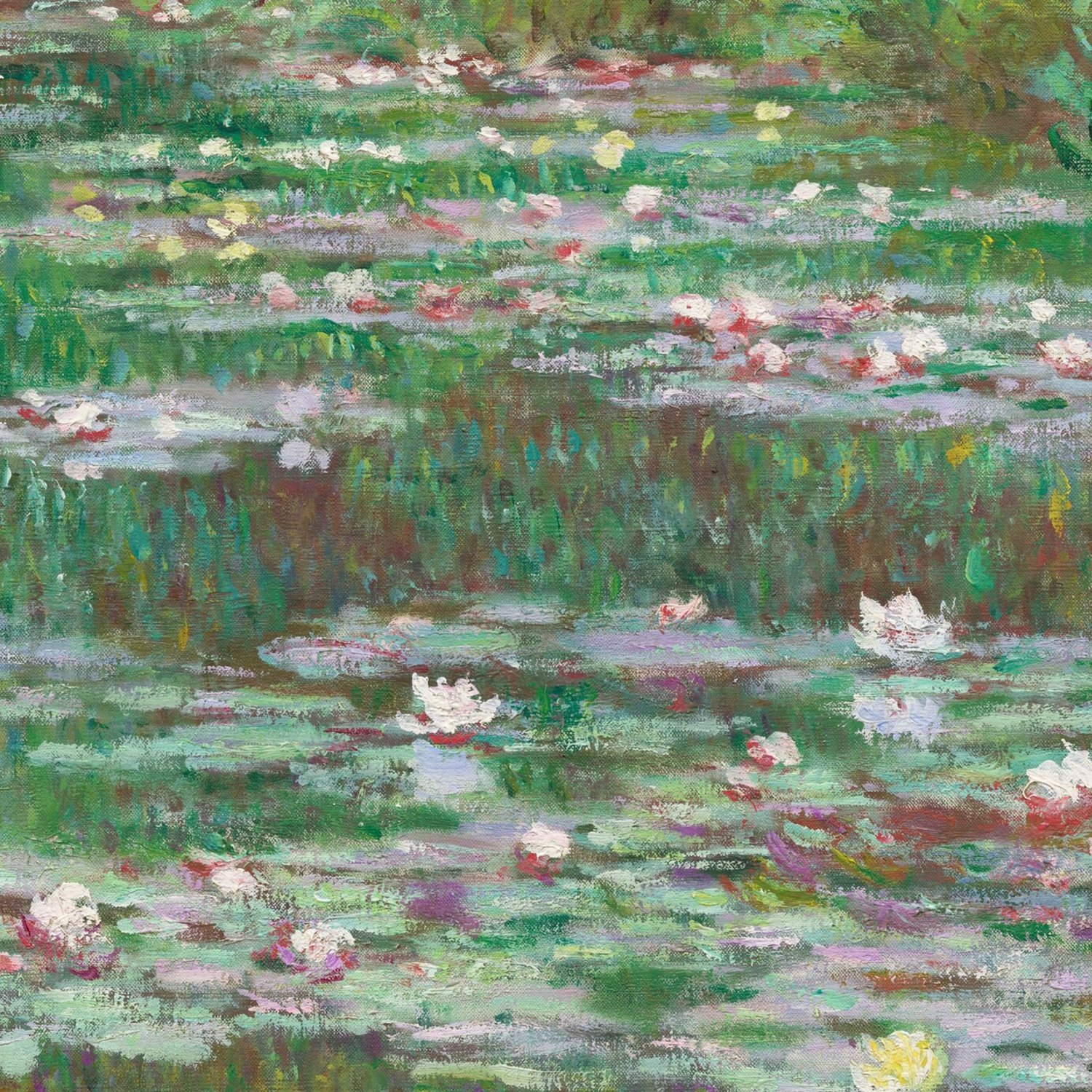
Claude Monet’s The Japanese Footbridge presents the arched bridge at Giverny suspended above a pond filled with water lilies and layered reflections. The bridge’s pale turquoise curve anchors the composition, while reeds, leaves, blossoms, and mirrored color dissolve the distinction between solid garden and shifting water.
Painted in 1899, the work belongs to Monet’s first sustained series of the Japanese bridge. He had created the water garden at Giverny with Japanese plants and an arched wooden bridge inspired by the prints he admired. The pond nearly fills the canvas, and the sky appears indirectly through reflected light rather than as a separate band above the landscape.
The painting is significant because Monet transformed a deliberately designed garden into a laboratory for modern vision. Repeated observation of the same motif allowed him to explore light, color, reflection, and the instability of perception. The enclosed surface anticipates the increasingly immersive and abstract qualities of his later water-lily paintings.
This high-resolution artwork preserves the turquoise bridge, floating pink and white lilies, dense green reeds, layered reflections, summer light, broken color, visible canvas texture, and lively Impressionist brushwork of Monet’s Giverny garden.