
Stacks of Wheat End of Day Autumn by Claude Monet
Stacks of Wheat End of Day Autumn by Claude Monet (1891)
Resolution: 6840 × 4455 px
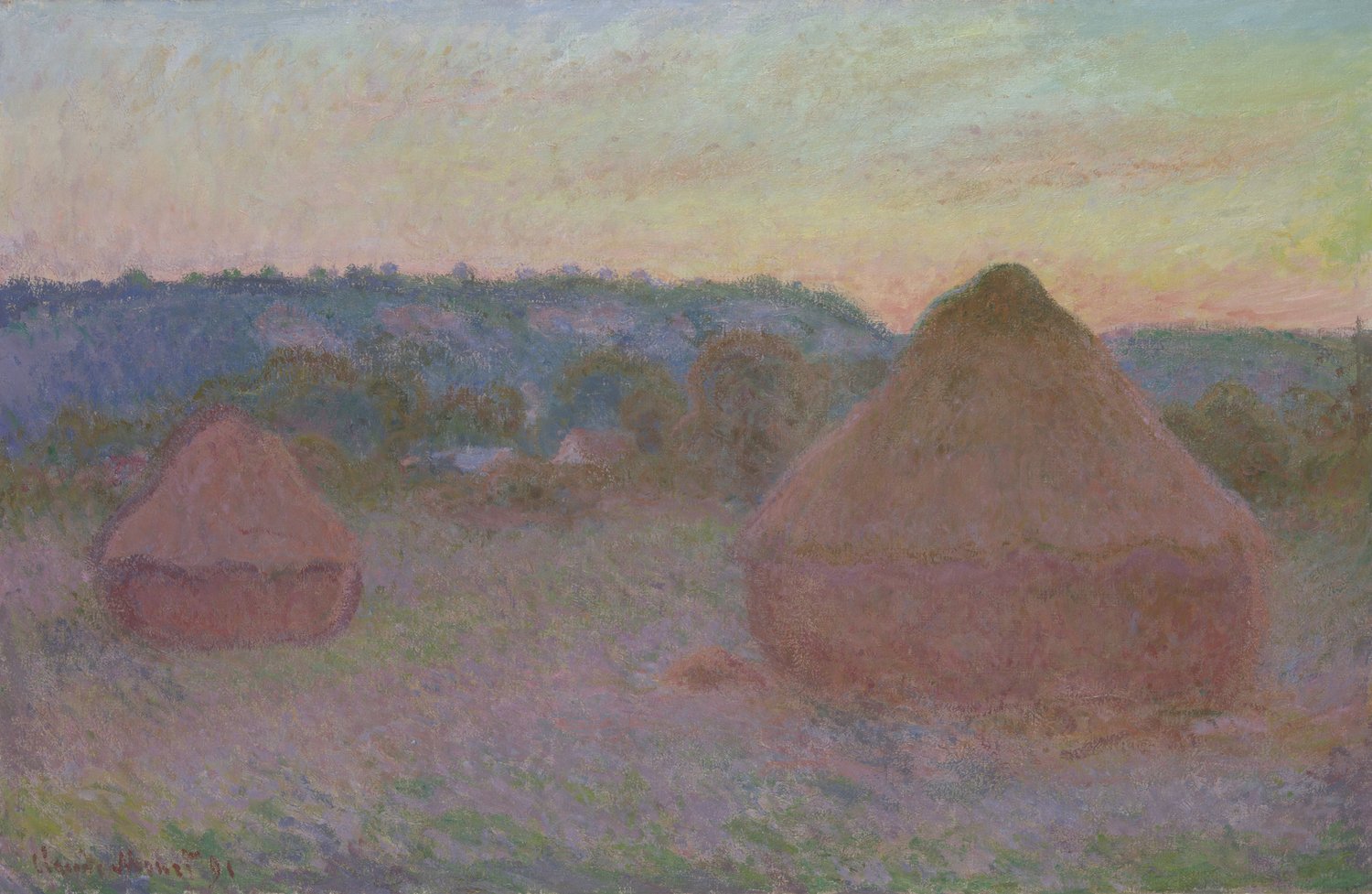
Two stacks of wheat stand in an autumn field at the close of day, their rounded silhouettes emerging from a landscape already absorbed by evening. The larger stack dominates the right foreground, while a smaller companion rests at the left and establishes a measured visual rhythm across the field. Beyond them, scattered trees, roofs and the low ridge of the countryside merge into a cool band of distance beneath a wide, softly illuminated sky.
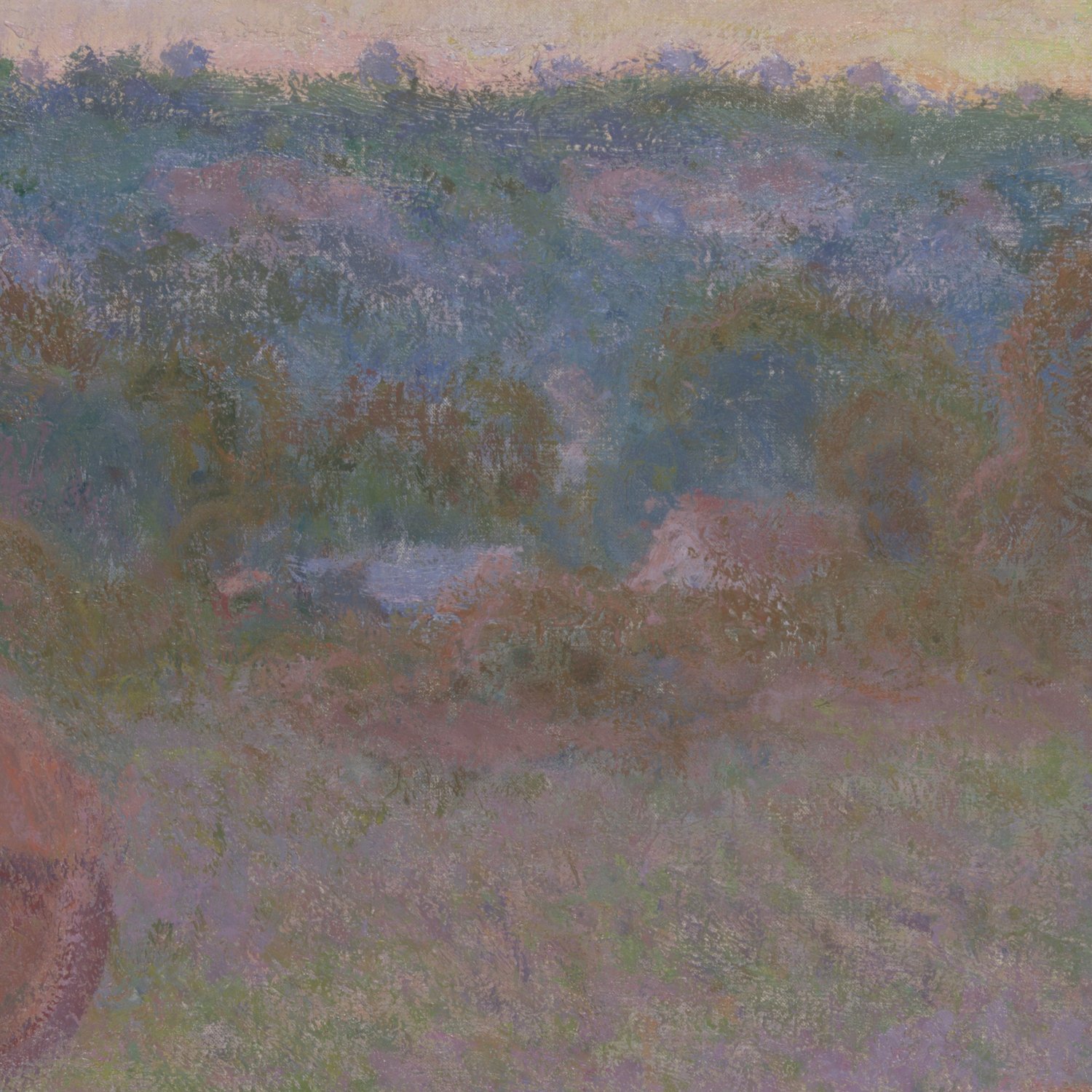
The unequal scale of the two stacks gives the composition both weight and movement: the eye travels from the compact form at left through the open center toward the monumental mass at right. Monet tempers the autumn earth with mauve, dusty rose, blue-violet, muted green and warm brown, then lifts the horizon with pale lemon, peach and silvery blue. Dense, broken strokes describe straw and uneven ground, while thinner, more diffuse touches dissolve trees and clouds, allowing solid forms to hover within the changing light.
Created in 1890–91 and signed “Claude Monet 91,” Stacks of Wheat (End of Day, Autumn) belongs to Monet’s landmark series painted beside his home at Giverny. The stacks were practical structures for storing grain, yet Monet treated them as stable reference points through which differences of season, weather and hour could be observed. This autumn evening version demonstrates the radical premise of the series: a familiar rural motif becomes inexhaustible when color and perception are allowed to change from one moment to the next.