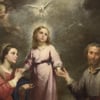
The Heavenly and Earthly Trinities by Bartolomé Esteban Murillo
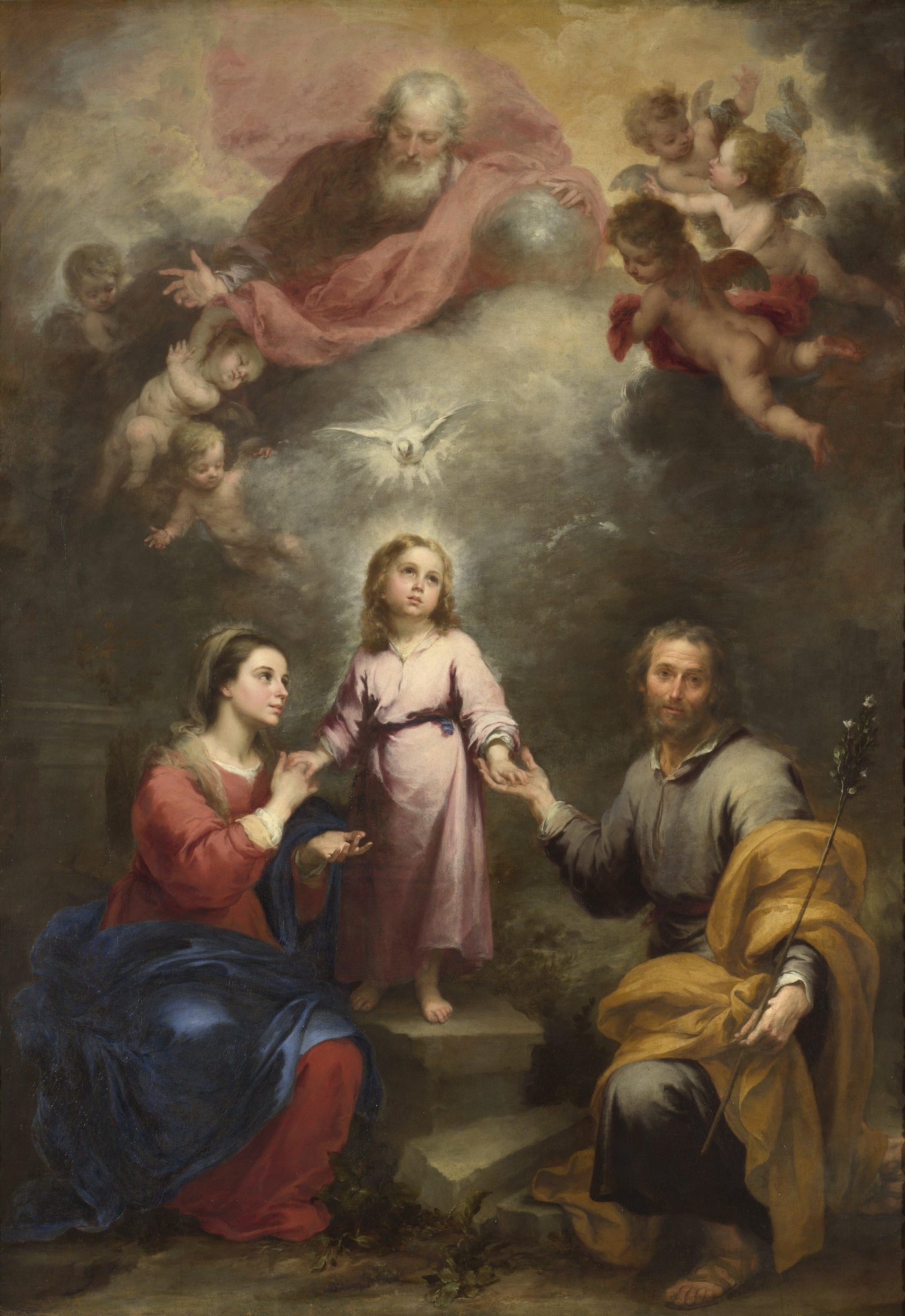
The Heavenly and Earthly Trinities by Bartolomé Esteban Murillo (ca. 1675–1682)
Resolution: 3531 × 5131 px
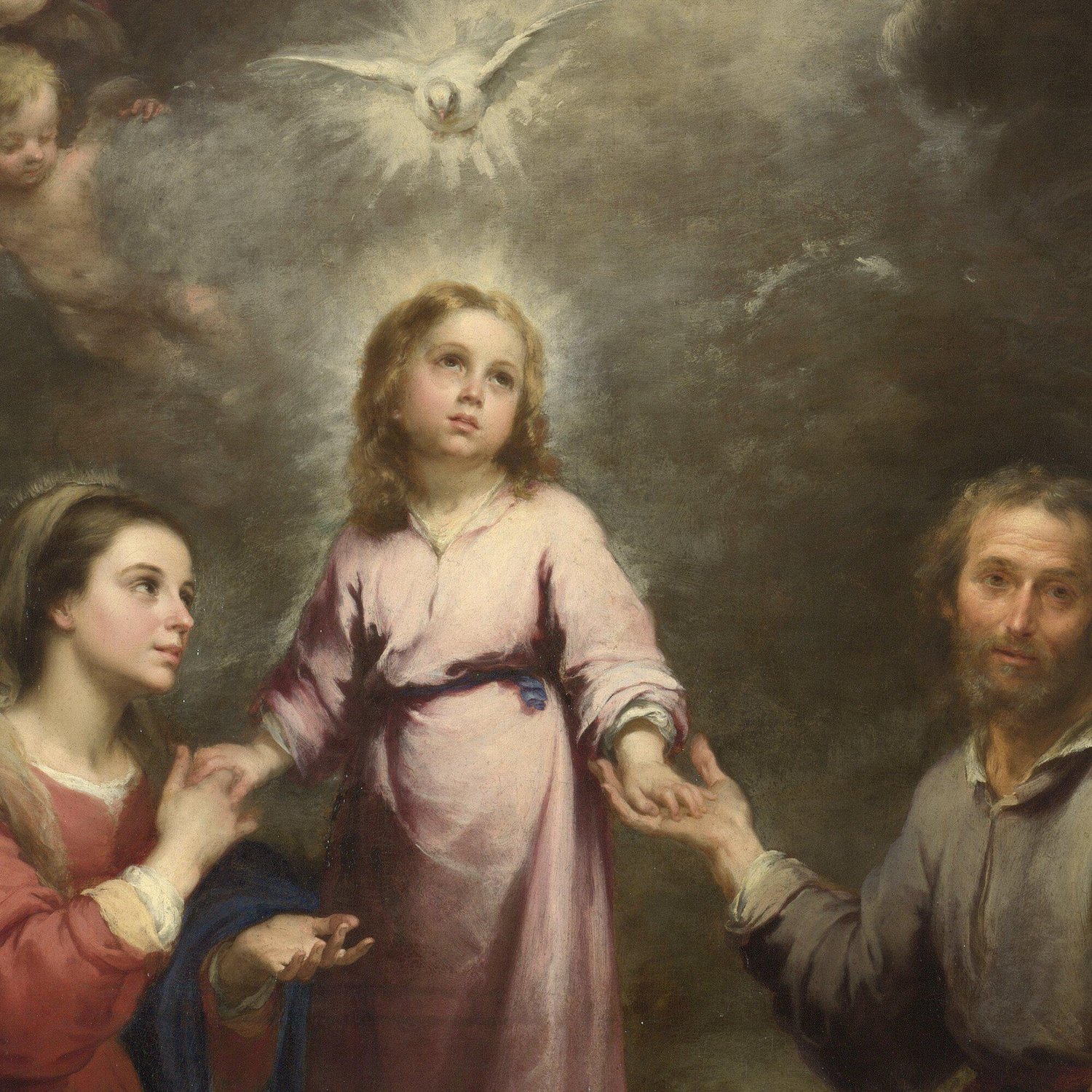
The young Christ stands between Mary and Joseph in the lower half of the composition, joining their hands to form the earthly Trinity. Above him, the dove of the Holy Spirit descends through radiant cloud toward God the Father, surrounded by lively angels, completing the heavenly Trinity. Christ’s upward gaze connects the intimate family group below with the celestial vision above.
Murillo arranges the figures along a strong vertical axis, using alternating zones of shadow and warm light to separate earth from heaven without breaking their unity. Deep blue, vermilion, rose, ochre, and soft gray draperies give the lower group weight, while vaporous clouds and loosely painted cherubs create movement overhead. Gentle gestures and idealized expressions transform complex doctrine into an accessible scene of tenderness and devotion.
Dated by the National Gallery to about 1675–1682, The Heavenly and Earthly Trinities is a mature example of Murillo’s late religious painting in Seville. The work visualizes Christ’s simultaneous human and divine identity through a clear two-part structure, combining Spanish Baroque drama with the artist’s characteristic softness and emotional immediacy. This high-resolution image supports close study of sacred iconography, figure relationships, drapery, light, and Murillo’s late technique.