Mulberry Tree by Vincent van Gogh
The Mulberry Tree by Vincent van Gogh (1889 Moerbeiboom)
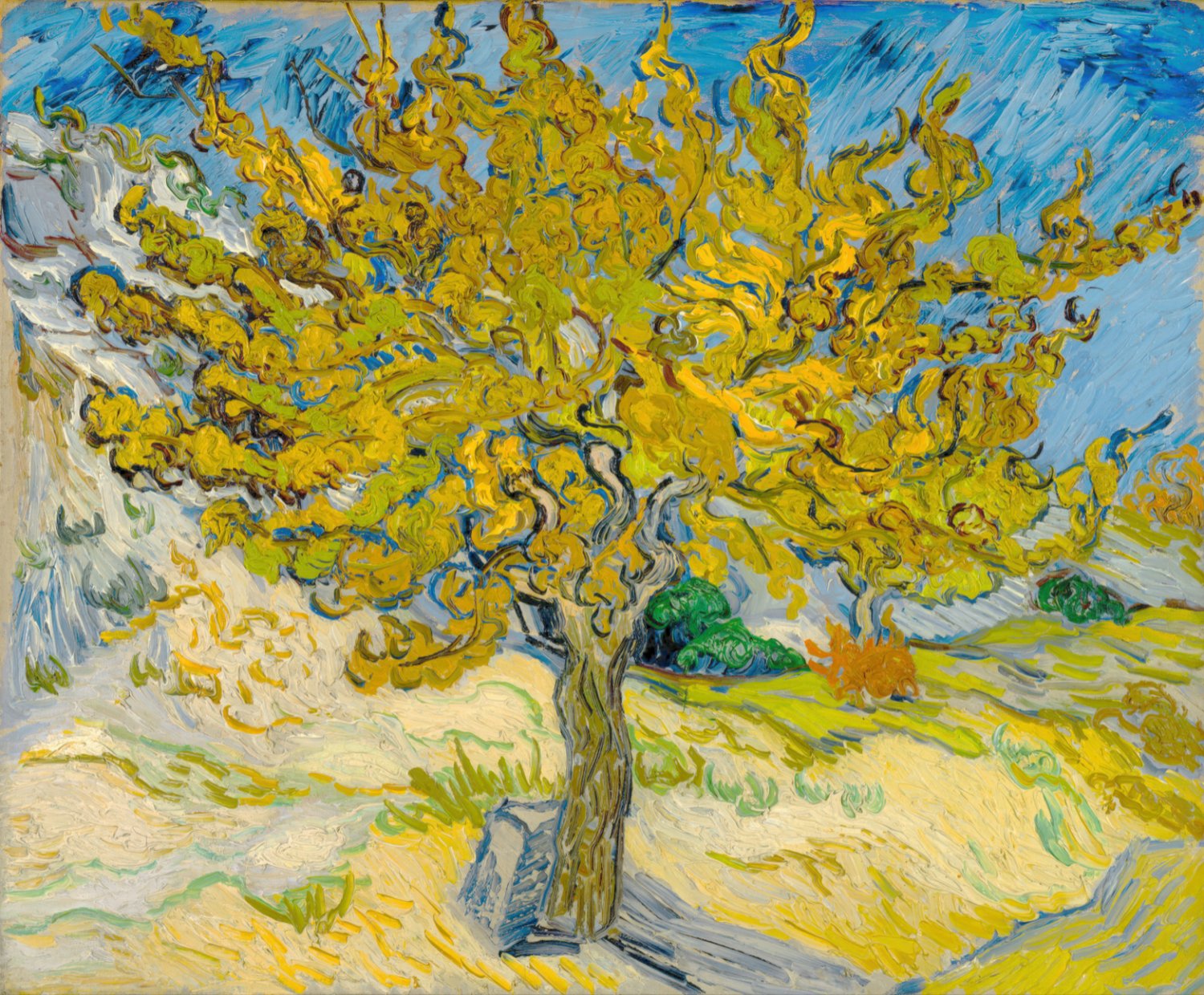
"The Mulberry Tree" (Dutch: Moerbeiboom) is an 1889 oil painting by Vincent van Gogh, created during his stay at the Saint-Paul-de-Mausole asylum in Saint-Rémy-de-Provence. The composition centers on a single, gnarled mulberry tree in full autumn foliage, its twisting gray-brown trunk and branches rendered in sinuous, almost serpentine lines against a vivid cobalt-blue sky. The tree's canopy is rendered in dense, swirling strokes of yellow, ochre, and olive-green, creating a sense of movement as if the leaves are being animated by wind. In the background, a low hillside with patches of green and orange scrubland stretches beneath a pale, sunlit ground rendered in strokes of cream, yellow, and light green, with a low stone wall or block visible at the base of the trunk.
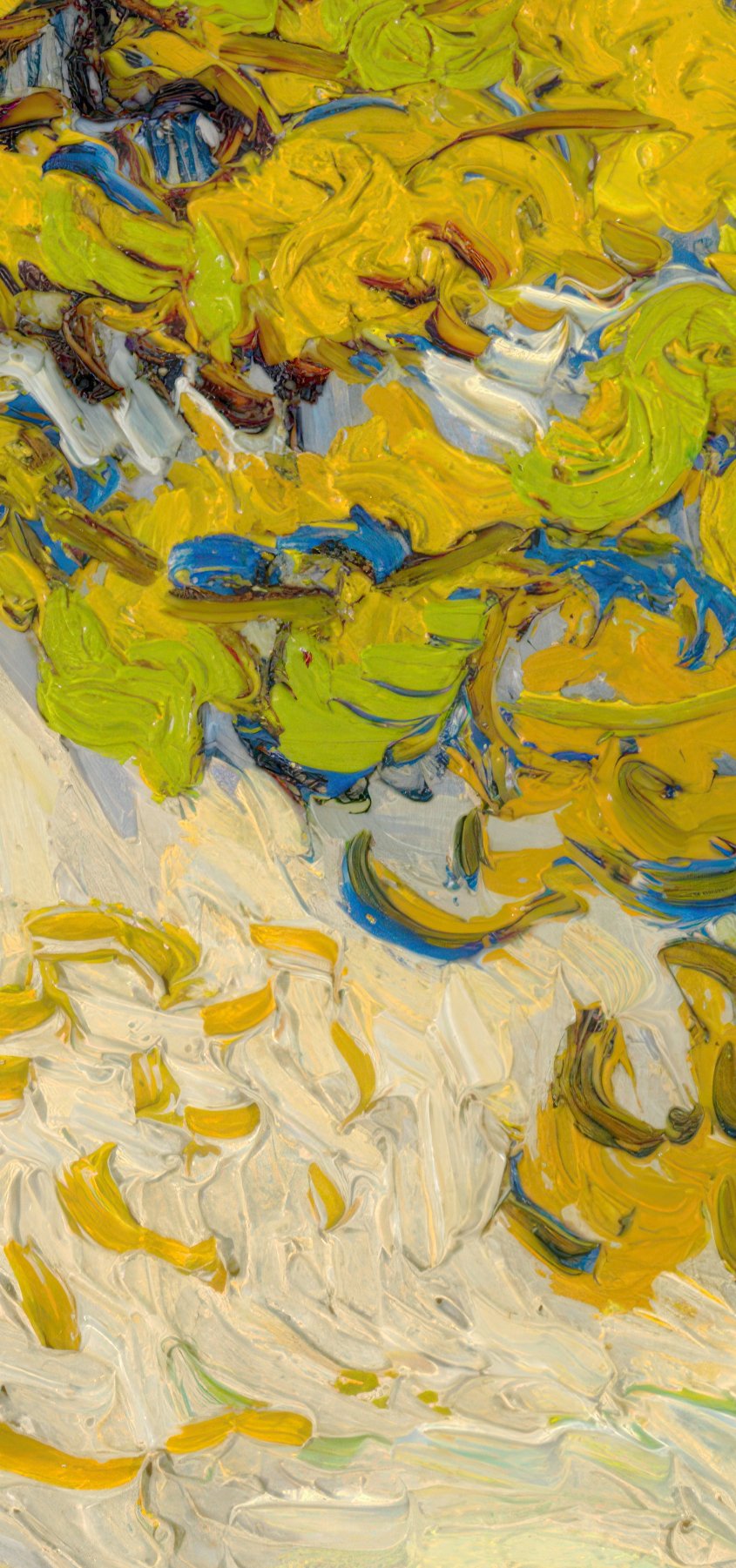
The painting is characteristic of van Gogh's mature Post-Impressionist style: thick impasto brushwork, high-key complementary color contrasts (blue against yellow-orange), and an emphasis on rhythmic, expressive line over naturalistic detail. The tree's twisting form and radiating branches echo the same energetic, almost vibrating brushwork found in works like "The Starry Night" and "Wheat Field with Cypresses," painted in the same period. Van Gogh himself considered this one of his best works from the Saint-Rémy period, valuing its intensity of color.
Resolution 6400 x 5288 px