Vertumnus and Pomona by Jacob Jordaens
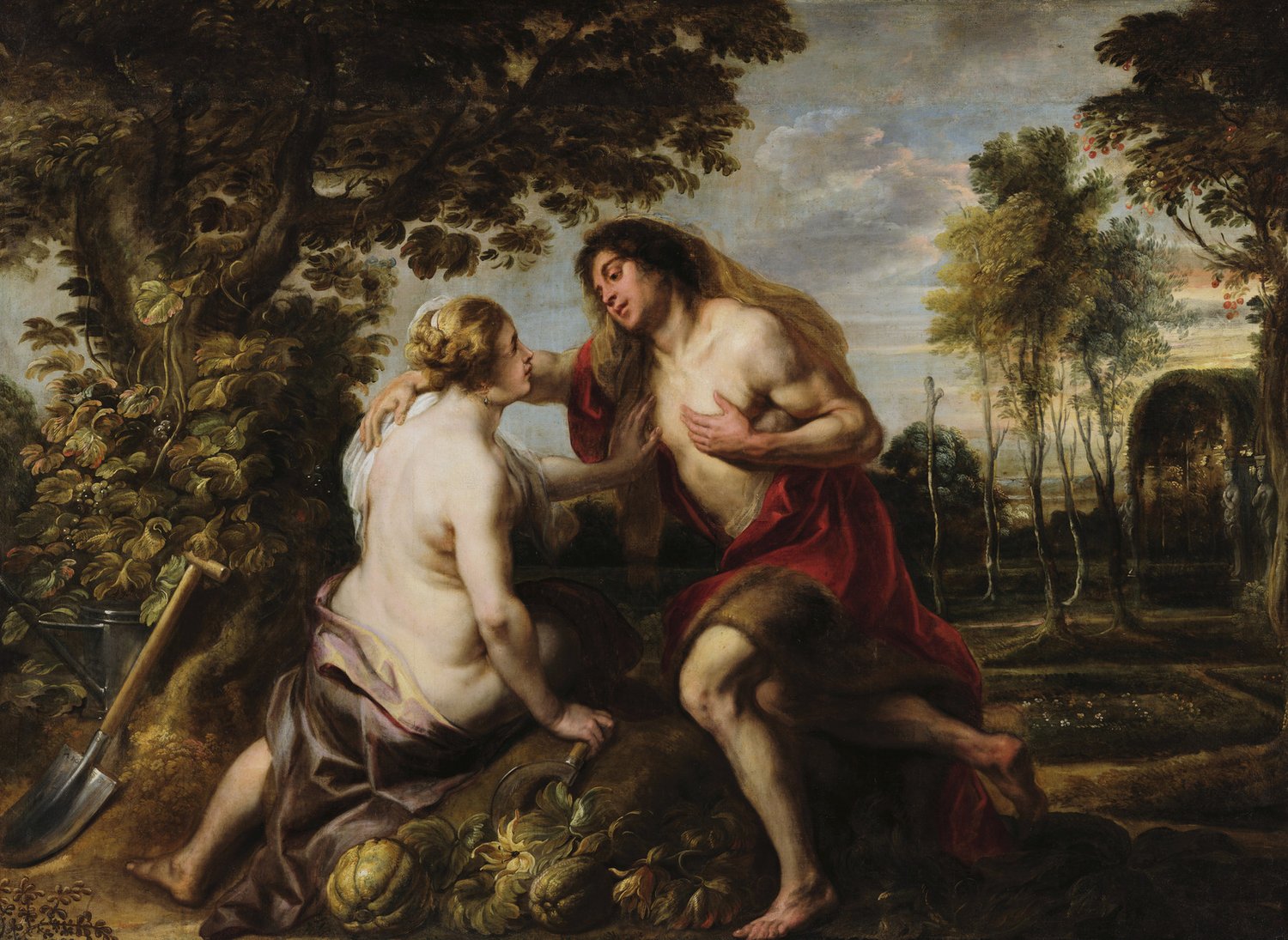
Vertumnus and Pomona by Jacob Jordaens (1638)
Resolution: 12774 × 9335 px
Jacob Jordaens stages the myth of Vertumnus and Pomona as an intimate encounter in a luxuriant garden. Pomona, the Roman goddess of fruit trees and cultivation, sits beside pruning tools, ripe gourds, and dense foliage. Vertumnus leans toward her in disguise, placing an arm around her shoulders while speaking persuasively. Their close gestures and exchanged gaze turn the mythological narrative into a vivid scene of courtship and transformation.
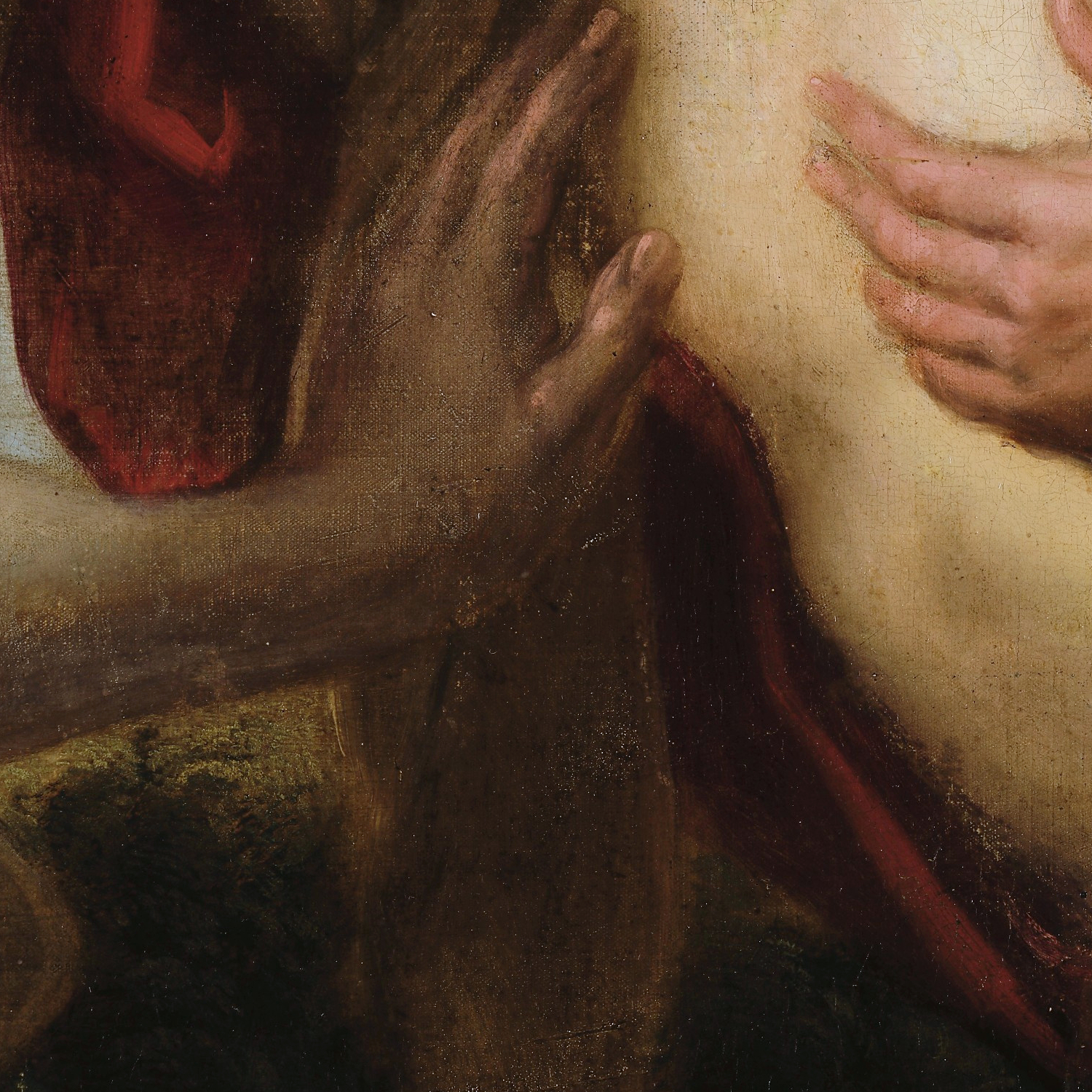
The composition combines monumental figures with abundant natural detail. Pomona’s pale back and softly modeled flesh form a luminous focus against deep olive foliage and earthy shadows. Vertumnus is wrapped in saturated crimson drapery, its red folds energizing the center of the painting. Brown soil, dark green leaves, golden fruit, muted violet cloth, and a cool blue sky create a rich Baroque palette. Jordaens’s robust bodies, animated hands, strong contrasts, and tactile treatment of fabric, skin, plants, and fruit give the scene a sensuous physical presence.
The story comes from Ovid’s Metamorphoses. Vertumnus, god of seasons and change, assumes different forms in an attempt to approach Pomona, who has devoted herself to her orchard. The garden’s cultivated abundance reinforces themes of fertility, persuasion, seasonal transformation, and love. Jordaens translates the classical tale into a warm, earthy Flemish Baroque world, balancing mythological meaning with the immediacy of ordinary human emotion.