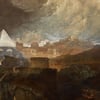
The Fifth Plague of Egypt by Joseph Mallord William Turner
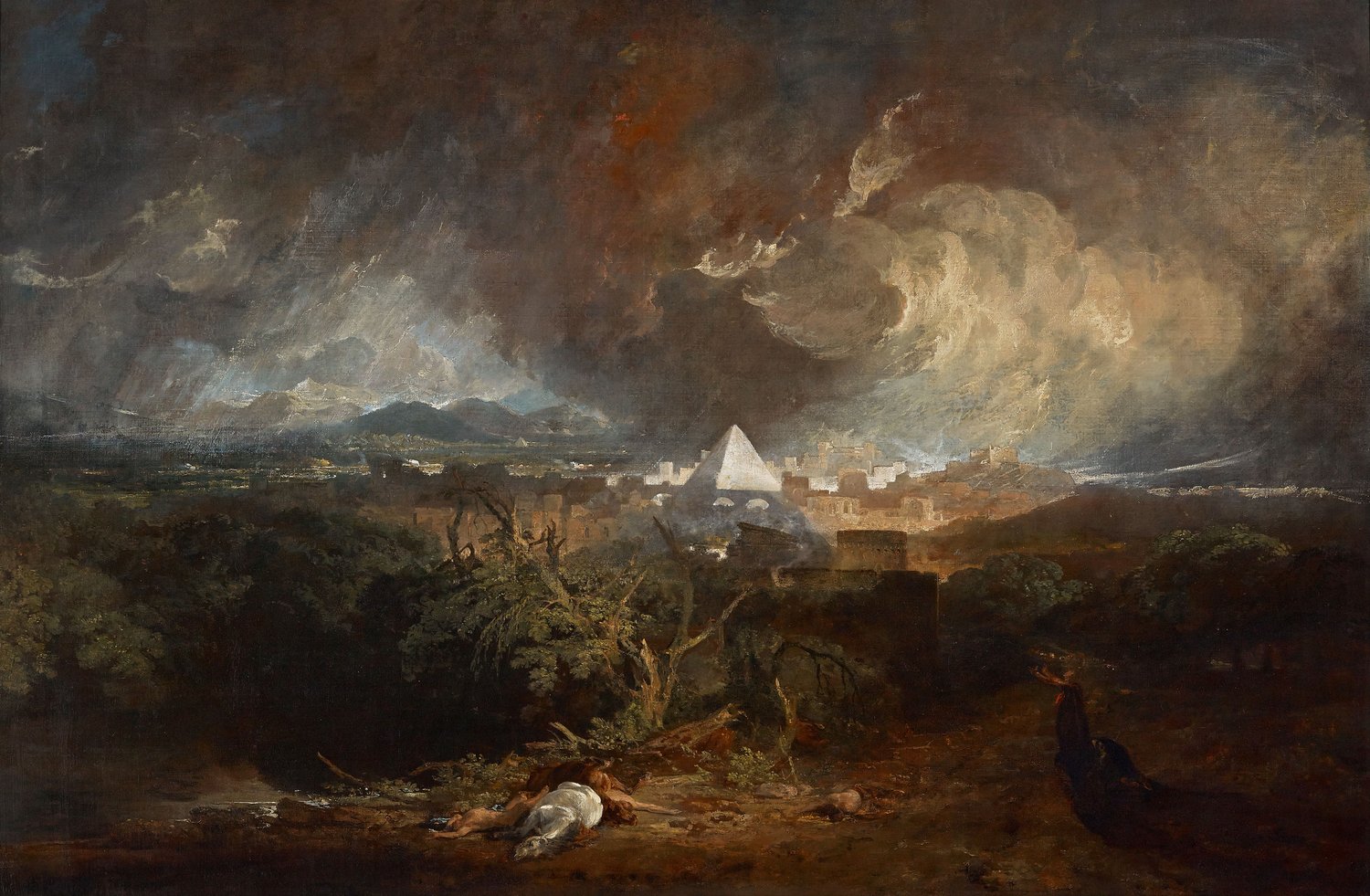
The Fifth Plague of Egypt by Joseph Mallord William Turner (1800)
Resolution: 6739 × 4408 px
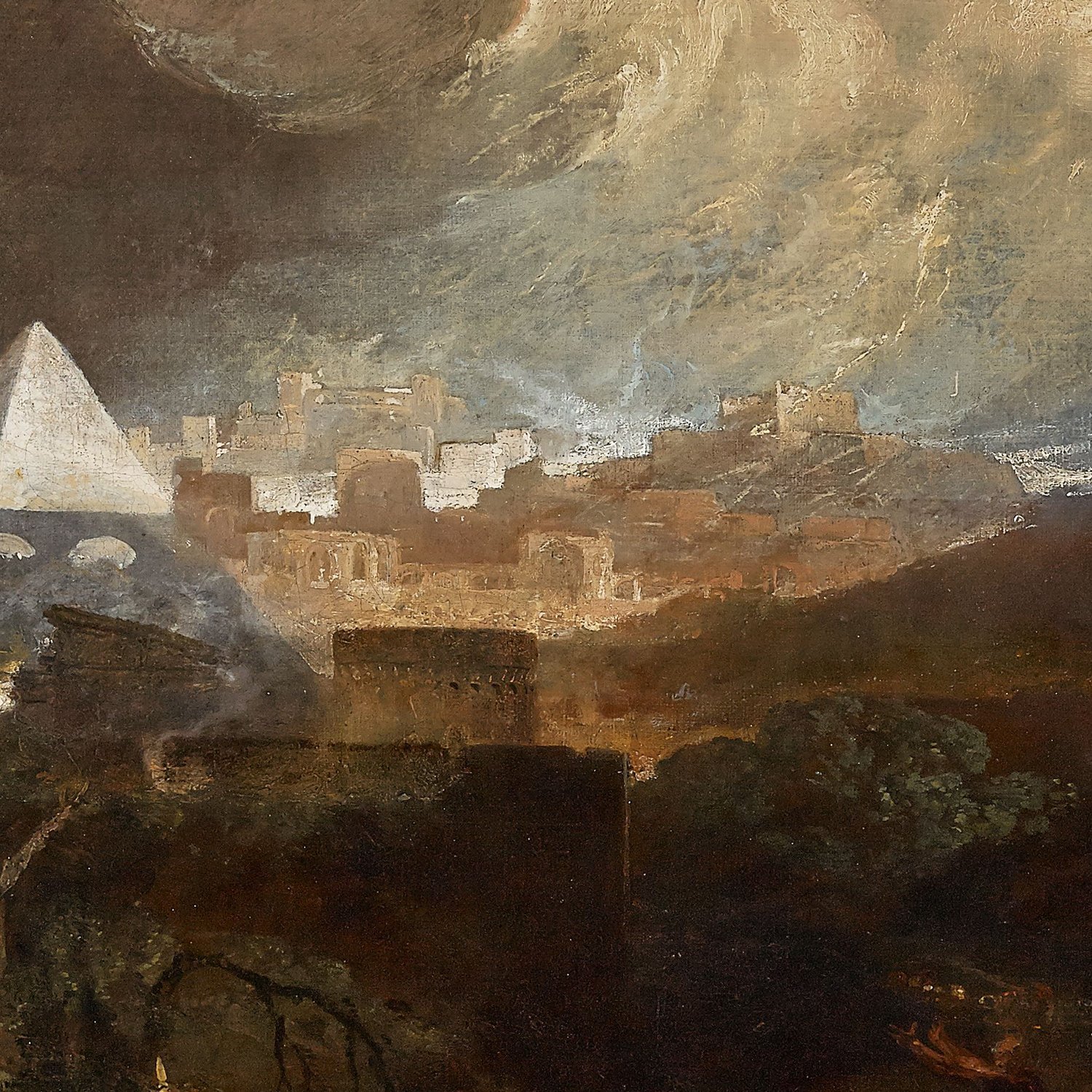
Joseph Mallord William Turner’s The Fifth Plague of Egypt unfolds beneath a vast, turbulent sky. A pyramid and low city structures stretch across the middle distance, while fallen animals and small figures occupy the dark foreground. Light breaks through the storm in sweeping bands, turning atmosphere into the dominant force of the scene.
Exhibited at the Royal Academy in 1800, the painting was Turner’s first major oil shown there. Although its traditional title names the fifth plague, the thunder, hail, and fire correspond more closely to the seventh plague described in Exodus. Turner uses this biblical subject as the basis for an ambitious historical landscape rather than a literal narrative illustration.
The work is significant because it announced the young artist’s ability to make landscape carry the emotional and moral weight normally associated with history painting. Architecture and figures are subordinated to a sublime collision of darkness, light, weather, and scale—an approach that anticipates Turner’s lifelong transformation of natural forces into expressive drama.
This high-resolution artwork preserves the luminous pyramid, distant city, devastated foreground, storm clouds, sweeping light, earthy palette, dramatic contrasts, and energetic paint handling of Turner’s early Royal Academy statement.