


Lilith by John Collier
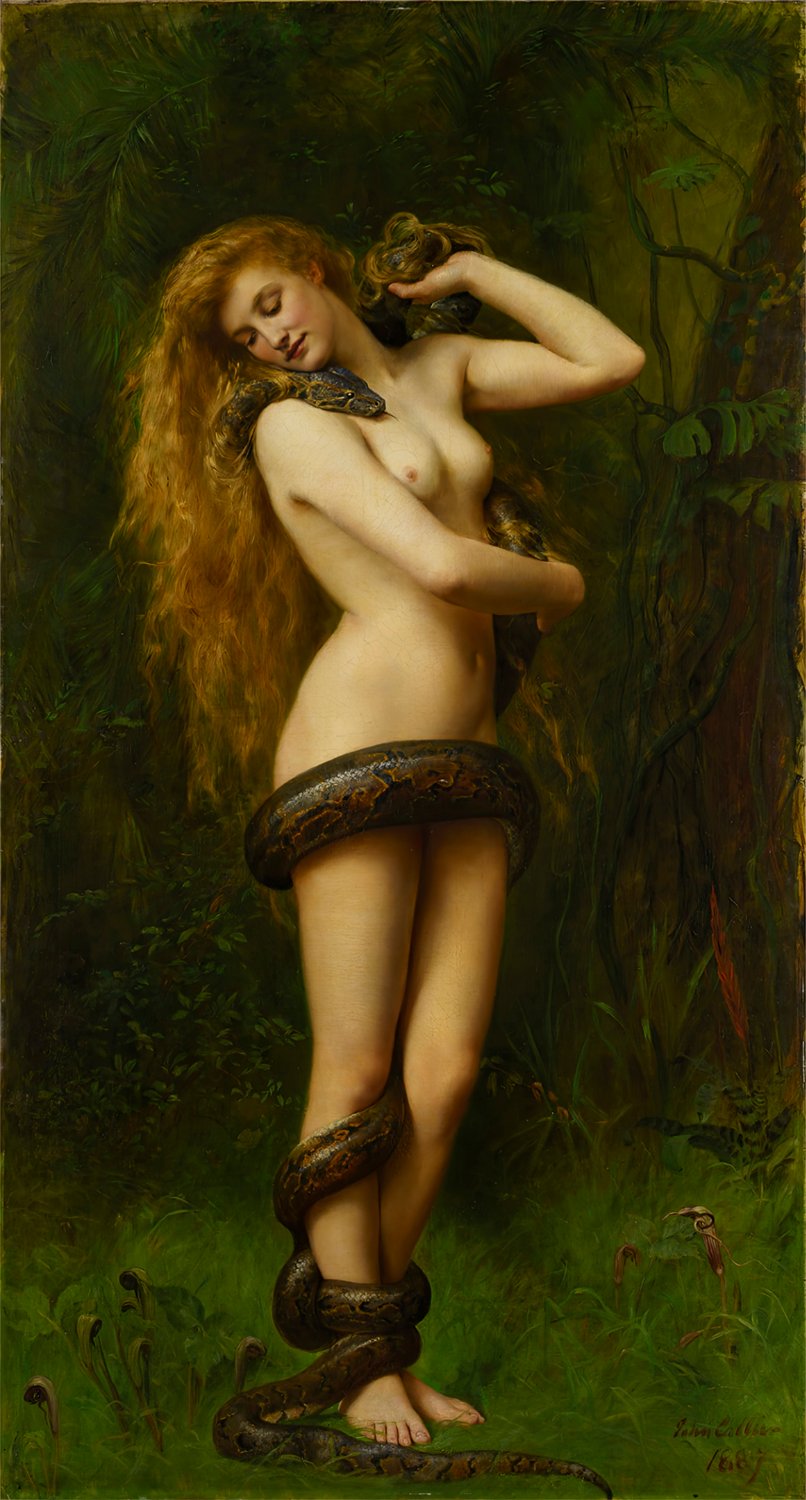
Lilith by John Collier (1887)
Lilith by John Collier, painted in 1887, is a striking example of Pre-Raphaelite influence in Collier's work, combining both mythological themes and naturalistic details. The painting depicts Lilith, a figure from Jewish folklore often associated with seduction, mystery, and the supernatural. She is shown as a beautiful, nude woman with long, flowing red hair, entwined with a large snake that wraps around her body, emphasizing her connection to nature and her seductive power.
In this captivating piece, Collier portrays Lilith standing in a lush, dark green forest, a setting that enhances the sense of mystique. Her expression is serene, almost hypnotic, suggesting a calm confidence and self-possession. The snake, a symbol of temptation and knowledge, coils around her body, highlighting her role as an enchanting and dangerous figure. The soft lighting and meticulous attention to detail in her skin and hair contrast with the dense, shadowy background, drawing the viewer’s focus to her ethereal beauty.
In mythology, Lilith is often portrayed as Adam's first wife who, refusing to submit to him, left the Garden of Eden. As a result, she has come to symbolize independence, rebellion, and feminine strength, often seen as a complex figure embodying both allure and danger. Collier’s meaning behind this painting could be interpreted as an exploration of these themes—Lilith as a symbol of untamed femininity, defying societal expectations. The use of the snake reinforces her association with the forbidden and the mystical, creating a powerful image of a woman in control of her own destiny.
Lilith by Collier remains a compelling artwork, embodying elements of both Pre-Raphaelite beauty and the darker aspects of myth, making it a celebrated piece that explores themes of power, seduction, and independence.
Resolution 4800 x 9000 px